Men of Tomorrow: Geeks, Gangsters and the Birth of the Comic Book
By Gerard Jones
Basic Books, 320 pages, $26.
Gerald Jones, himself a sometimes comic book and superhero screenwriter, describes the real origins of Superman and other superheroes in the gritty urban streets of the 1930s. In this mostly chronological narrative, we follow high school collaborators Jerry Seigel and Joe Shuster, who created Superman and the superheroes who reemerged in recent years to dominate the box office.
Jones also profiles Bob Kane of Batman fame (portrayed as a less than admirable figure) and Stan Lee, impresario of the Marvel superheroes, like Spider-Man and the Hulk.
But this is not a gee-whiz comic book portrayal, or a series of personality profiles. This is rich cultural history brought to life. By following these characters, readers will learn as much about Prohibition and the Depression, and what it was like for immigrants scrapping to make it in the teeming cities. Perhaps among the surprises is the involvement of gangsters in the success of the crime-fighting superheroes.
Jones shows how the superheroes established the comic book in American culture, as a kind of combination of several genres: the daily newspaper comic strips (so popular and important in immigrant life---as well as a way that they learned English), and the similarly popular crime and science fiction pulp magazines.
This book's publicity calls it "A real-life Kavalier and Clay." I read it just after reading that Michael Chabon novel, and though this non-fiction book is mostly about a different era, it also tells an engrossing story very well. I was also impressed by the author's care in telling what is known, what is generally believed but doesn't quite check out, and what is still speculation.
Tuesday, November 16, 2004
Sunday, October 03, 2004
Native Universe: Voices of Indian America
Edited by Gerald McMaster and Clifford Trafzer
National Museum of the American Indian/National Geographic
320 pages;$40
In 2002, when Chickasaw astronaut John Herrington became the first enrolled member of a Native American tribe to orbit the earth, he carried aboard the shuttle Endeavour a Hopi ceramic pot with a traditional corn motif. It was made by a contemporary Hopi artist and mechanical engineer, Al Qoyawayma, who has also patented internal guidance systems.
This is the new American Indian reality that this book portrays. It's the inaugural volume celebrating the opening of the Smithsonian's National Museum of the American Indian in Washington this fall, and its themes corresponds to the those of the first exhibition: "Our Universes," "Our Peoples," "Our Lives." Essays and poems by John Mohawk, N. Scott Momaday, Louise Erdrich, Wilma Mankiller, Linda Hogan, Victor Montejo, Sherman Alexie and others, plus historical photos and documents, provide context for lavish and evocative photographs of ancient and contemporary art and artifacts.
The presence of the past and the power of the timeless in the world of time that characterize Indian America are illustrated here in many ways. So essays on the political and cultural importance of the Alcatraz occupation coexist with a description of the Navajo First Laugh Ceremony. Yet this volume reminds us that the oldest cultures on the continent are still the least understood.
Perhaps the new National Museum, largely designed and administered by American Indians, will play a leading role in changing that. Then perhaps Allan Houser, for example, will finally be considered a great American sculptor, instead of solely a prominent Indian sculptor. And the important American tribal stories, so different in important ways from European myth, may be absorbed into our common cultural cornucopia, equal to the tales of Greece and Iceland. If so, this volume may also contribute, by attracting attention to the Museum, and enlarging upon the experience of travelers when they return home. It is also ably edited to perform that role on its own.
Edited by Gerald McMaster and Clifford Trafzer
National Museum of the American Indian/National Geographic
320 pages;$40
In 2002, when Chickasaw astronaut John Herrington became the first enrolled member of a Native American tribe to orbit the earth, he carried aboard the shuttle Endeavour a Hopi ceramic pot with a traditional corn motif. It was made by a contemporary Hopi artist and mechanical engineer, Al Qoyawayma, who has also patented internal guidance systems.
This is the new American Indian reality that this book portrays. It's the inaugural volume celebrating the opening of the Smithsonian's National Museum of the American Indian in Washington this fall, and its themes corresponds to the those of the first exhibition: "Our Universes," "Our Peoples," "Our Lives." Essays and poems by John Mohawk, N. Scott Momaday, Louise Erdrich, Wilma Mankiller, Linda Hogan, Victor Montejo, Sherman Alexie and others, plus historical photos and documents, provide context for lavish and evocative photographs of ancient and contemporary art and artifacts.
The presence of the past and the power of the timeless in the world of time that characterize Indian America are illustrated here in many ways. So essays on the political and cultural importance of the Alcatraz occupation coexist with a description of the Navajo First Laugh Ceremony. Yet this volume reminds us that the oldest cultures on the continent are still the least understood.
Perhaps the new National Museum, largely designed and administered by American Indians, will play a leading role in changing that. Then perhaps Allan Houser, for example, will finally be considered a great American sculptor, instead of solely a prominent Indian sculptor. And the important American tribal stories, so different in important ways from European myth, may be absorbed into our common cultural cornucopia, equal to the tales of Greece and Iceland. If so, this volume may also contribute, by attracting attention to the Museum, and enlarging upon the experience of travelers when they return home. It is also ably edited to perform that role on its own.
Monday, June 21, 2004


Sunday, June 20, 2004
Writing the Future
reviewed by William S. Kowinski
Writing the Future
Progress and Evolution
Edited by David Rothenberg and Wandee J. Pryor
A TERRA NOVA BOOK, THE MIT PRESS; 290 PAGES; $29.95
Our concepts of evolution, progress and the future all emerged from the same 19th century crucible. This anthology of essays plus some poems and pictures addresses questions they raise for us today, in science, culture and everyday experience. But it does so, as the title implies, through the revelations of the writing process, focused in one way or another on the natural world. Even the best collections are usually either good reading or incisive treatments of an important and neglected subject. This anthology is both.
There's plenty of variety in treatment and subject matter--- the scientific, metaphysical and metaphorical concepts flashing by in Dorion Sagan and Jessica Whiteside's aptly named essay, "Prismatic Progress," Valerie Hurley's memoir of ordinary life in the invisible shadow of nuclear weapons, Floyd Skloot's riveting tale of a son's dance with destiny in the living mythology wrought by ESPN and the NBA--- but the book leaves an overall impression of important matters approached with passion and humility. Even the essays centered on philosophical and historical concerns are generally grounded in place and time, and the writer's own life.
While the technological future of speeding into the unknown is explored in Joan Maloof's exegesis on Deevolution and Transhumanism and Kevin Warwick's startling account of joyfully turning himself into a cyborg, the growing recognition for the need to also include the pace of ancient wisdom is acknowledged in Stephen Miles Uzzo's evocation of knowledge lost forever as Native American petroglyphs and the elders who study them disappear, Carolynne Baker's description of a city's evolution in Vietnam, Andy Couturier's portrait of a Japanese artisan whose teacher is a Tibetan monk, and Richard Norgaard's essay on coevolution.
The work in this volume is of such high quality that it's unfair to name only a few authors, but I will: the essays by Theodore Roszak, Leslie Van Gelder, Kristjana Gunnars and David Petersen are especially outstanding, as are the poems by Ricardo Pau-Llosa, John Canaday and the verse by Buckminster Fuller that ends the volume perfectly. The editors have organized and orchestrated a book that will delight the reader racing through it or savoring it a little at a time, and it will certainly repay return visits. Well-framed by the editors' introduction, this exemplary anthology explores but does not exhaust its subject, while it rewards but does not exhaust its readers.
A shorter version of this review appears in the San Francisco Chronicle Book Review of June 20, 2004.
reviewed by William S. Kowinski
Writing the Future
Progress and Evolution
Edited by David Rothenberg and Wandee J. Pryor
A TERRA NOVA BOOK, THE MIT PRESS; 290 PAGES; $29.95
Our concepts of evolution, progress and the future all emerged from the same 19th century crucible. This anthology of essays plus some poems and pictures addresses questions they raise for us today, in science, culture and everyday experience. But it does so, as the title implies, through the revelations of the writing process, focused in one way or another on the natural world. Even the best collections are usually either good reading or incisive treatments of an important and neglected subject. This anthology is both.
There's plenty of variety in treatment and subject matter--- the scientific, metaphysical and metaphorical concepts flashing by in Dorion Sagan and Jessica Whiteside's aptly named essay, "Prismatic Progress," Valerie Hurley's memoir of ordinary life in the invisible shadow of nuclear weapons, Floyd Skloot's riveting tale of a son's dance with destiny in the living mythology wrought by ESPN and the NBA--- but the book leaves an overall impression of important matters approached with passion and humility. Even the essays centered on philosophical and historical concerns are generally grounded in place and time, and the writer's own life.
While the technological future of speeding into the unknown is explored in Joan Maloof's exegesis on Deevolution and Transhumanism and Kevin Warwick's startling account of joyfully turning himself into a cyborg, the growing recognition for the need to also include the pace of ancient wisdom is acknowledged in Stephen Miles Uzzo's evocation of knowledge lost forever as Native American petroglyphs and the elders who study them disappear, Carolynne Baker's description of a city's evolution in Vietnam, Andy Couturier's portrait of a Japanese artisan whose teacher is a Tibetan monk, and Richard Norgaard's essay on coevolution.
The work in this volume is of such high quality that it's unfair to name only a few authors, but I will: the essays by Theodore Roszak, Leslie Van Gelder, Kristjana Gunnars and David Petersen are especially outstanding, as are the poems by Ricardo Pau-Llosa, John Canaday and the verse by Buckminster Fuller that ends the volume perfectly. The editors have organized and orchestrated a book that will delight the reader racing through it or savoring it a little at a time, and it will certainly repay return visits. Well-framed by the editors' introduction, this exemplary anthology explores but does not exhaust its subject, while it rewards but does not exhaust its readers.
A shorter version of this review appears in the San Francisco Chronicle Book Review of June 20, 2004.
Monday, May 24, 2004
Sunday, May 23, 2004
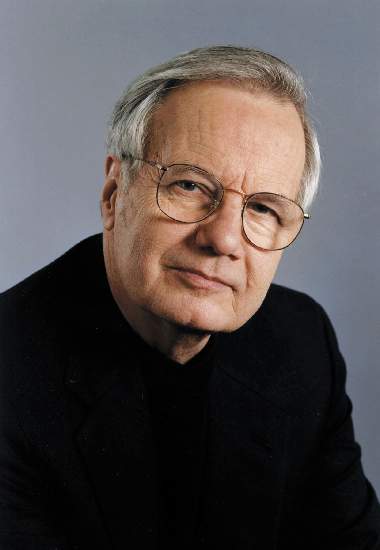
Moyers On America: A Journalist and His Times by Bill Moyers
by William S. Kowinski
After a half century of journalism, Bill Moyers is retiring at year's end. There has been no other broadcast journalist like him, and unfortunately it's unlikely there will be again. American television journalism does a notoriously poor job covering the arts, culture, science, humanities---in fact, ideas of any kind, and certainly of any complexity. Yet Bill Moyers was perfectly comfortable questioning Senators, foreign diplomats, and philosopher Martha Nussbaum, playwright August Wilson, and physicist Murray Gell-Man. His interviews with Joseph Campbell and Robert Bly changed the cultural landscape, and just last year his coverage helped stir public outrage which stopped (or at least slowed)the FCC from allowing media conglomerates to absorb even more news outlets.
Moyers made two significant detours in his journalistic journey: an early stint at a Baptist seminary, and several years working in the White House for the man who'd given him his first broadcast journalism job at a tiny Texas station, Lyndon Johnson. The impulse that led to each, and the experience gained, gave his journalism a rare richness. Viewers responded to his integrity and authenticity, and the courage behind the smile---also rare. All of these are on display in this collection taken from talks and commentaries, along with historical perspective and informal reminiscence too informative and entertaining for prime time.
Moyers'words in this book on the dangerous trends of celebrity journalism and conglomerate control should be required reading for young journalists, if not all citizens. His evaluations of his private and public past will be equally useful and inspiring to readers who have grown up with him. This is a penetrating yet companionable volume, from an exemplary journalist who says he still believes, and still doubts.
Moyers On America: A Journalist and His Times by Bill Moyers (The New Press; 204 pages,$34.95.)
by William S. Kowinski
After a half century of journalism, Bill Moyers is retiring at year's end. There has been no other broadcast journalist like him, and unfortunately it's unlikely there will be again. American television journalism does a notoriously poor job covering the arts, culture, science, humanities---in fact, ideas of any kind, and certainly of any complexity. Yet Bill Moyers was perfectly comfortable questioning Senators, foreign diplomats, and philosopher Martha Nussbaum, playwright August Wilson, and physicist Murray Gell-Man. His interviews with Joseph Campbell and Robert Bly changed the cultural landscape, and just last year his coverage helped stir public outrage which stopped (or at least slowed)the FCC from allowing media conglomerates to absorb even more news outlets.
Moyers made two significant detours in his journalistic journey: an early stint at a Baptist seminary, and several years working in the White House for the man who'd given him his first broadcast journalism job at a tiny Texas station, Lyndon Johnson. The impulse that led to each, and the experience gained, gave his journalism a rare richness. Viewers responded to his integrity and authenticity, and the courage behind the smile---also rare. All of these are on display in this collection taken from talks and commentaries, along with historical perspective and informal reminiscence too informative and entertaining for prime time.
Moyers'words in this book on the dangerous trends of celebrity journalism and conglomerate control should be required reading for young journalists, if not all citizens. His evaluations of his private and public past will be equally useful and inspiring to readers who have grown up with him. This is a penetrating yet companionable volume, from an exemplary journalist who says he still believes, and still doubts.
Moyers On America: A Journalist and His Times by Bill Moyers (The New Press; 204 pages,$34.95.)
Tuesday, April 13, 2004
Monday, April 12, 2004
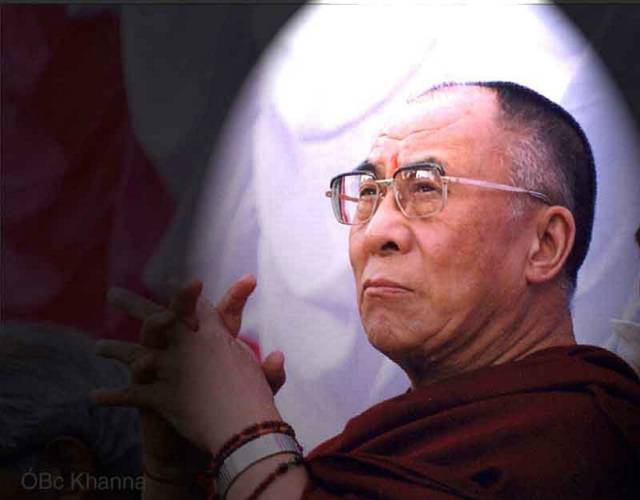
Dependent Arising: The Dalai Lama and the Scientists
by William S. Kowinski
The New Physics and Cosmology: Dialogues with the Dalai Lama
Edited and narrated by Arthur Zajonc
OXFORD UNIVERSITY PRESS; 256 PAGES; $29.95
Destructive Emotions: A Scientific Dialogue with the Dalai Lama
narrated by Daniel Goleman
BANTAM paperback; 448 PAGES; $16.
Visions of Compassion: Western Scientists and Tibetan Buddhists Examine Human Nature
edited by Richard J. Davidson & Anne Harrington
OXFORD UNIVERSITY PRESS, 2002; 263 PAGES; $27.50.
Healing Emotions: Conversations with the Dalai Lama on Mindfulness, Emotions and Health
Edited by Daniel Goleman
SHAMBHALA, 2003; 277 PAGES; $15.95
Sleeping, Dreaming, and Dying: An Exploration of Consciousness with the Dalai Lama
Edited and narrated by Francisco J. Varela
WISDOM PUBLICATIONS,1997; 254 PAGES; $16.95
Consciousness at the Crossroads: Conversations with the Dalai Lama on Brain Science and Buddhism
Edited by Zara Houshmand, Robert B. Livingston and B. Alan Wallace
SNOW LION,1999; 183 PAGES; $15.95
Gentle Bridges: Conversations with the Dalai Lama on the Sciences of Mind
Edited by Jeremy Hayward & Francisco Varela
SHAMBHALA, 2001; 272 PAGES; $17.95
When Charles Darwin proposed the crowning scientific theory of the 19th century, a wide public understood enough of it to passionately debate evolution and natural selection. But not even physicists today fully understand the similarly significant theories of quantum mechanics, first proposed early in the 20th century. With western scientific thought apparently at its limits, a group of scientists recently looked for help from a man who, until he was a teenager, believed the world was flat.
The resulting dialogue between Tenzin Gyatso, the 14th Dalai Lama, several other Buddhist scholars, and a group of western physicists and philosophers (including Tu Weiming, formerly of UC Berkeley) provides the substance and the narrative energy of physicist Arthur Zajonc's graceful and insightful new book.
This five-day conference at the Dalai Lama's compound in Dharamsala, India in 1997 was not the first or last of these conclaves. Since they began a decade earlier, there have been 11 discussions convened by the organization created to arrange them, the Mind and Life Institute. Seven books have resulted so far (though video DVDs of the most recent conference, at MIT in Cambridge last fall, are available from www.mindandlife.org.)
These are not the only books that have emerged from discussions between the Dalai Lama and western scientists (others include Worlds in Harmony from Berkeley's Parallax Press, and MindScience: An East-West Dialogue from Wisdom Publications) but the Mind and Life series is itself a kind of story, of continuing and fascinating cross-cultural collaboration---even a kind of convergence---on subjects suddenly of common importance.
Most of the conferences didn't deal with physics. They began with the mind. Though largely self-educated in western science, the Dalai Lama expressed keen interest in new developments in brain sciences and related fields, to test his belief that ethical behavior is inherent in human nature, and can be nurtured without reference to any religious doctrine. As leader of Tibetan Buddhism, he was also intrigued by what western science had to say on workings of the mind that Buddhist scholars and advanced meditation practitioners had been exploring for several thousand years.
At the same time, neuroscientists using new technologies were challenging old assumptions about the relationship of brain and body. Psychologists were trying to account for abilities to change physical states (such as body temperature) as specifically demonstrated by individuals adept at meditation, when such influences on the body by the mind was thought impossible. Western science had emphasized external influences, and was just beginning to investigate human life from the inside. So in various disciplines loosely grouped as mind sciences, some scientists were eager to experiment with more advanced meditation subjects, and they were ready to hear new points of view.
These attractive and carefully edited books chronicle this unique journey, though each is also self-contained. Gentle Bridges impressed me as a kind of crash course in contemporary mind sciences, while Consciousness at the Crossroads most eloquently explicates Buddhist thought, particularly in Alan Wallace's afterword. Healing Emotions and Sleeping, Dreaming, and Dying delves into research in those subjects and pertinent Buddhist thought, while Visions of Compassion investigates the growing scientific interest in altruism, empathy and the psychology of violence. These all turn out to be at the cutting edge of science in these decades.
The mood of the early conferences seemed eager but uncertain, with the scientists especially amazed by the Dalai Lama's scientific mind. Scientists exclaiming that his questions anticipate their next area of research, or otherwise demonstrate remarkable analytical acuity, is a recurring theme throughout these books. The Dalai Lama often repeats that if science can prove a Buddhist assumption wrong, it should be discarded. Trust is established as the Buddhists find the scientists both forthright and respectful, and the scientists appreciate the sophistication of Buddhist thought, which is based on rigorous training in logical debate as well as introspection. As Alan Watts noted elsewhere, "Buddhism is absolutely, fundamentally a dialogue."
While personalities percolate more obviously on video, they manifest in print as well: in questions, quick exchanges and presentations of doggedly systematic, briskly trenchant and passionately eloquent character. These dialogues had to navigate deeply different assumptions (just the differences between Buddhist enlightenment and the European Enlightenment is revealing), but the findings and methods of each tradition illuminate the other, so for readers these books become an education in both.
By the conference in 2000, the subject of Destructive Emotions, scientists were collaborating with Tibetan Buddhists in designing and conducting new laboratory experiments involving skills of advanced meditators to influence activities of mind measurable in the brain, and in designing educational programs on emotional literacy. Some scientists took their own research in new directions partly as a result of these dialogues. (Participants from the Bay Area include UC Berkeley psychologist Eleanor Rosch, UC San Francisco psychologist Paul Ekman, psychologist Jeanne Tsai and professor of religion Lee Yearly of Stanford.)
Along with Daniel Goleman's Destructive Emotions and Francisco Varela's Sleeping, Dreaming, and Dying,Arthur Zajonc's New Physics provides narrative that suggests the dramatic quality of the dialogues as well as the emotional impact of the conference experience. Physics became a topic partly because of the Dalai Lama's curiosity, but western scientists had their own reasons. Because quantum physics implies an apparently determining role for the human mind on the phenomena observed, it shatters western notions of objective reality. Tibetan Buddhism has been investigating the correlations of thought and reality for centuries. The nuanced Buddhist ideas of "dependent arising," which explore relationships of perception, expectations and reality, were particularly intriguing to both physicists and mind scientists.
The physics dialogue didn't create a new way of understanding quantum reality, but did suggest a path to it. The new physics and mind science both lead quickly to questions once considered the sole province of spirituality, and also to other traditions---not only to Buddhism, but as Tu Weiming points out, to indigenous thought such as "Hawaiian, Maori, and Native American." "I think the time is ripe for imagining a new kind of education," he asserts. "It is highly desirable, maybe even necessary, that this new education integrates the self-cultivation of the Buddhist and other traditions...It will enhance the communal, critical self-awareness of some of the most creative and reflective members of the scientific community. This is absolutely necessary for a new breakthrough."
For the Dalai Lama, the emphasis on the human mind's profound role in reality has an ethical dimension. "Therefore, the future of humanity is in the hands of humanity itself," he says, concluding the physics dialogue. "We have the responsibility to create a better world, a happier world, and a more peaceful world." These books illuminate just how deep, common and unavoidable a responsibility that is, even if we don't believe it.
by William S. Kowinski
The New Physics and Cosmology: Dialogues with the Dalai Lama
Edited and narrated by Arthur Zajonc
OXFORD UNIVERSITY PRESS; 256 PAGES; $29.95
Destructive Emotions: A Scientific Dialogue with the Dalai Lama
narrated by Daniel Goleman
BANTAM paperback; 448 PAGES; $16.
Visions of Compassion: Western Scientists and Tibetan Buddhists Examine Human Nature
edited by Richard J. Davidson & Anne Harrington
OXFORD UNIVERSITY PRESS, 2002; 263 PAGES; $27.50.
Healing Emotions: Conversations with the Dalai Lama on Mindfulness, Emotions and Health
Edited by Daniel Goleman
SHAMBHALA, 2003; 277 PAGES; $15.95
Sleeping, Dreaming, and Dying: An Exploration of Consciousness with the Dalai Lama
Edited and narrated by Francisco J. Varela
WISDOM PUBLICATIONS,1997; 254 PAGES; $16.95
Consciousness at the Crossroads: Conversations with the Dalai Lama on Brain Science and Buddhism
Edited by Zara Houshmand, Robert B. Livingston and B. Alan Wallace
SNOW LION,1999; 183 PAGES; $15.95
Gentle Bridges: Conversations with the Dalai Lama on the Sciences of Mind
Edited by Jeremy Hayward & Francisco Varela
SHAMBHALA, 2001; 272 PAGES; $17.95
When Charles Darwin proposed the crowning scientific theory of the 19th century, a wide public understood enough of it to passionately debate evolution and natural selection. But not even physicists today fully understand the similarly significant theories of quantum mechanics, first proposed early in the 20th century. With western scientific thought apparently at its limits, a group of scientists recently looked for help from a man who, until he was a teenager, believed the world was flat.
The resulting dialogue between Tenzin Gyatso, the 14th Dalai Lama, several other Buddhist scholars, and a group of western physicists and philosophers (including Tu Weiming, formerly of UC Berkeley) provides the substance and the narrative energy of physicist Arthur Zajonc's graceful and insightful new book.
This five-day conference at the Dalai Lama's compound in Dharamsala, India in 1997 was not the first or last of these conclaves. Since they began a decade earlier, there have been 11 discussions convened by the organization created to arrange them, the Mind and Life Institute. Seven books have resulted so far (though video DVDs of the most recent conference, at MIT in Cambridge last fall, are available from www.mindandlife.org.)
These are not the only books that have emerged from discussions between the Dalai Lama and western scientists (others include Worlds in Harmony from Berkeley's Parallax Press, and MindScience: An East-West Dialogue from Wisdom Publications) but the Mind and Life series is itself a kind of story, of continuing and fascinating cross-cultural collaboration---even a kind of convergence---on subjects suddenly of common importance.
Most of the conferences didn't deal with physics. They began with the mind. Though largely self-educated in western science, the Dalai Lama expressed keen interest in new developments in brain sciences and related fields, to test his belief that ethical behavior is inherent in human nature, and can be nurtured without reference to any religious doctrine. As leader of Tibetan Buddhism, he was also intrigued by what western science had to say on workings of the mind that Buddhist scholars and advanced meditation practitioners had been exploring for several thousand years.
At the same time, neuroscientists using new technologies were challenging old assumptions about the relationship of brain and body. Psychologists were trying to account for abilities to change physical states (such as body temperature) as specifically demonstrated by individuals adept at meditation, when such influences on the body by the mind was thought impossible. Western science had emphasized external influences, and was just beginning to investigate human life from the inside. So in various disciplines loosely grouped as mind sciences, some scientists were eager to experiment with more advanced meditation subjects, and they were ready to hear new points of view.
These attractive and carefully edited books chronicle this unique journey, though each is also self-contained. Gentle Bridges impressed me as a kind of crash course in contemporary mind sciences, while Consciousness at the Crossroads most eloquently explicates Buddhist thought, particularly in Alan Wallace's afterword. Healing Emotions and Sleeping, Dreaming, and Dying delves into research in those subjects and pertinent Buddhist thought, while Visions of Compassion investigates the growing scientific interest in altruism, empathy and the psychology of violence. These all turn out to be at the cutting edge of science in these decades.
The mood of the early conferences seemed eager but uncertain, with the scientists especially amazed by the Dalai Lama's scientific mind. Scientists exclaiming that his questions anticipate their next area of research, or otherwise demonstrate remarkable analytical acuity, is a recurring theme throughout these books. The Dalai Lama often repeats that if science can prove a Buddhist assumption wrong, it should be discarded. Trust is established as the Buddhists find the scientists both forthright and respectful, and the scientists appreciate the sophistication of Buddhist thought, which is based on rigorous training in logical debate as well as introspection. As Alan Watts noted elsewhere, "Buddhism is absolutely, fundamentally a dialogue."
While personalities percolate more obviously on video, they manifest in print as well: in questions, quick exchanges and presentations of doggedly systematic, briskly trenchant and passionately eloquent character. These dialogues had to navigate deeply different assumptions (just the differences between Buddhist enlightenment and the European Enlightenment is revealing), but the findings and methods of each tradition illuminate the other, so for readers these books become an education in both.
By the conference in 2000, the subject of Destructive Emotions, scientists were collaborating with Tibetan Buddhists in designing and conducting new laboratory experiments involving skills of advanced meditators to influence activities of mind measurable in the brain, and in designing educational programs on emotional literacy. Some scientists took their own research in new directions partly as a result of these dialogues. (Participants from the Bay Area include UC Berkeley psychologist Eleanor Rosch, UC San Francisco psychologist Paul Ekman, psychologist Jeanne Tsai and professor of religion Lee Yearly of Stanford.)
Along with Daniel Goleman's Destructive Emotions and Francisco Varela's Sleeping, Dreaming, and Dying,Arthur Zajonc's New Physics provides narrative that suggests the dramatic quality of the dialogues as well as the emotional impact of the conference experience. Physics became a topic partly because of the Dalai Lama's curiosity, but western scientists had their own reasons. Because quantum physics implies an apparently determining role for the human mind on the phenomena observed, it shatters western notions of objective reality. Tibetan Buddhism has been investigating the correlations of thought and reality for centuries. The nuanced Buddhist ideas of "dependent arising," which explore relationships of perception, expectations and reality, were particularly intriguing to both physicists and mind scientists.
The physics dialogue didn't create a new way of understanding quantum reality, but did suggest a path to it. The new physics and mind science both lead quickly to questions once considered the sole province of spirituality, and also to other traditions---not only to Buddhism, but as Tu Weiming points out, to indigenous thought such as "Hawaiian, Maori, and Native American." "I think the time is ripe for imagining a new kind of education," he asserts. "It is highly desirable, maybe even necessary, that this new education integrates the self-cultivation of the Buddhist and other traditions...It will enhance the communal, critical self-awareness of some of the most creative and reflective members of the scientific community. This is absolutely necessary for a new breakthrough."
For the Dalai Lama, the emphasis on the human mind's profound role in reality has an ethical dimension. "Therefore, the future of humanity is in the hands of humanity itself," he says, concluding the physics dialogue. "We have the responsibility to create a better world, a happier world, and a more peaceful world." These books illuminate just how deep, common and unavoidable a responsibility that is, even if we don't believe it.
crash course in science and mind
Gentle Bridges: Conversations with the Dalai Lama on the Sciences of Mind
Edited by Jeremy Hayward & Francisco Varela
SHAMBHALA, 2001; 272 PAGES; $17.95
Readers shouldn't think this book is of interest only to Buddhist adherents of any school. In a series of presentations and dialogues, contemporary scientists---Newcomb Greenleaf, mathematician and artificial intelligence researcher; physicist Jeremy Hayward, neuroscientist Robert Livingston, biochemist Luigi Luisi, cognitive psychologist Eleanor Rosch, and biologist Francisco Varela---present a wonderfully succinct and relevant crash course in contemporary science from its methodologies to its latest findings (as of 1991) and their implications for questions that western science has in common with Tibetan Buddhist thought.
For it turns out that various schools of Tibetan Buddhism have been systematically investigating and building theories about the mind-how it perceives, what knowledge and thinking are, what the relationship of the individual is to common reality---for centuries. So this book reflects a true dialogue, in which western scientists and the Dalai Lama and other Buddhists present each learn from the other.
In fact, several of the scientists comment on how pertinent the Dalai Lama's questions are, often anticipating the next line of research they're going to talk about. "You think like a scientist!" one of them exclaims.
While the Dalai Lama explains the theories and explorations of various Buddhist schools with remarkably easy erudition, the emphasis of material in this book is on western science. This is the first of at least eight books emanating from conferences that the Dalai Lama has hosted with western scientists, on questions of mind. A much fuller presentation of Tibetan Buddhist theories of mind can be found in "Consciousness at the Crossroads," dialogues from the next conference, published by Snow Lion Press. The presentation and dialogue on the recent history of scientific theory pertaining to Darwinian evolution is especially valuable. There's more information about the series at www.mindandlife.org.
Personally I like dialogues, perhaps because I'm an aural learner. To me these books are like plays in the mind, about the mind. Some of these scientists know a lot about Buddhism already, while others know very little. But they all seem impressed by the long tradition of Tibetan Buddhists in investigating phenomena of mind, and in developing a sophisticated view of how mind relates to the universe. I'm sure they are heartened as well by the Dalai Lama's attitude that Buddhist doctrine is not dogma, and if science disproves these theories, they ought to be abandoned. But it's clear that western science has much to consider that Buddhist scholars have already thought about in a way more relevant to the most advanced western science than the science of even a few decades ago. Together they may help answer perennial questions about humanity's role in the universe. Maybe even the meaning of life, the universe and everything.
Gentle Bridges: Conversations with the Dalai Lama on the Sciences of Mind
Edited by Jeremy Hayward & Francisco Varela
SHAMBHALA, 2001; 272 PAGES; $17.95
Readers shouldn't think this book is of interest only to Buddhist adherents of any school. In a series of presentations and dialogues, contemporary scientists---Newcomb Greenleaf, mathematician and artificial intelligence researcher; physicist Jeremy Hayward, neuroscientist Robert Livingston, biochemist Luigi Luisi, cognitive psychologist Eleanor Rosch, and biologist Francisco Varela---present a wonderfully succinct and relevant crash course in contemporary science from its methodologies to its latest findings (as of 1991) and their implications for questions that western science has in common with Tibetan Buddhist thought.
For it turns out that various schools of Tibetan Buddhism have been systematically investigating and building theories about the mind-how it perceives, what knowledge and thinking are, what the relationship of the individual is to common reality---for centuries. So this book reflects a true dialogue, in which western scientists and the Dalai Lama and other Buddhists present each learn from the other.
In fact, several of the scientists comment on how pertinent the Dalai Lama's questions are, often anticipating the next line of research they're going to talk about. "You think like a scientist!" one of them exclaims.
While the Dalai Lama explains the theories and explorations of various Buddhist schools with remarkably easy erudition, the emphasis of material in this book is on western science. This is the first of at least eight books emanating from conferences that the Dalai Lama has hosted with western scientists, on questions of mind. A much fuller presentation of Tibetan Buddhist theories of mind can be found in "Consciousness at the Crossroads," dialogues from the next conference, published by Snow Lion Press. The presentation and dialogue on the recent history of scientific theory pertaining to Darwinian evolution is especially valuable. There's more information about the series at www.mindandlife.org.
Personally I like dialogues, perhaps because I'm an aural learner. To me these books are like plays in the mind, about the mind. Some of these scientists know a lot about Buddhism already, while others know very little. But they all seem impressed by the long tradition of Tibetan Buddhists in investigating phenomena of mind, and in developing a sophisticated view of how mind relates to the universe. I'm sure they are heartened as well by the Dalai Lama's attitude that Buddhist doctrine is not dogma, and if science disproves these theories, they ought to be abandoned. But it's clear that western science has much to consider that Buddhist scholars have already thought about in a way more relevant to the most advanced western science than the science of even a few decades ago. Together they may help answer perennial questions about humanity's role in the universe. Maybe even the meaning of life, the universe and everything.
Sunday, November 23, 2003
Charles Murray's Human Accomplishment
reviewed by William S. Kowinski
A longer version of the review which appears here, in the San Francisco Chronicle Sunday Book Review, November 23, 2003.
Human Accomplishment: The Pursuit of Excellence in the Arts and Sciences, 800 B.C. to 1950
By Charles Murray
HARPERCOLLINS; 720 PAGES; $29.95
A TV commercial some years ago began with a perky young woman chirping, "Want to see the best movies? Look for the longest lines!" There's something to be said for ranking achievement based on quantity of expert comment over time, which more or less is what Charles Murray did to statistically evaluate achievers in the arts and sciences for the 2800 years preceding 1950 for this book. After some 700 pages of text and appendices, for me that something turns out to be: so what?
Or perhaps the pertinent question is: who cares? Some people evidently do. Murray is the co-author of "The Bell Curve," and judging from Internet buzz this book is a long awaited cultural counterpart, especially for its conclusions: white European males achieved more of importance in this period than anyone else, but in both art and science great achievements have declined significantly since at least the early 20th century, when the western tradition weakened.
No doubt this book will be praised for proving what the appraisers already believe, but it seems to me that the conclusions are foregone, determined by Murray's assumptions, choices and sources.
Though his announced goal is to produce a resume of the best of the human species by looking at worldwide achievement, the actual territory he covers is more limited. In literature he considers China, India, Japan, the West and the Arab world; in philosophy, China, India and the West; China, Japan and the West in visual art (painting and sometimes sculpture but not architecture); music only in the West. For some of these choices he gives reasons, for others he doesn't.
There are caveats within categories as well--for instance, literature in Arabic qualifies, but not Persian (so no Rumi.) Murray neutralizes national chauvinism in literature by not considering sources written in the same language as the writer being evaluated, which also increases the likelihood that most of this literature is judged only in translation.
Murray's rankings of the significant achievers in the arts and philosophy are derived from the amount of ink each gets in a selection of reference books on the subject. For the sciences, he uses his encyclopedic sources to determine significant "firsts" (discoveries, inventions, theories) in astronomy, biology, chemistry, earth sciences, physics, mathematics, medicine and technology, wherever they occurred.
The accompanying blizzard of charts, graphs and curves may blind the reader to what's missing. Murray only counts names, so the nameless achievers of the distant past, or the unknowns overlooked by industrialized world experts, as well as the anonymous achievements integral to the customs and worldview of particular cultures, aren't included.
While Murray acknowledges that many people didn't get the chance to achieve because they were the wrong gender, race or class, he quite logically points out that he can't count what doesn't exist, and anyway "those barriers are not the subject of this book."
Murray's sources also turn out to be quite limited, both in number and type. He uses as many as nine sources (western art, western literature) and as few as four (for technology.) (He used 17 sources for music, but mostly to see if he could break the tie at the top between Beethoven and Mozart.) Japan's literature is ranked from seven sources, three by the same author. Giants in medicine are discerned from five sources, two by the same author. Except for medicine and math, he uses 21 general sources for the hard sciences, many with "timetable," "milestones," "encyclopedia' and "dictionary" in the title.
As a whole his sources appear to be the kind of broad surveys it's safe to use for your high school term paper. He explicitly excludes sources on the arts he deems "alternative." So it's a nearly tautological piece of cake to conclude that relatively advantaged white males were the predominant achievers when and where such achievements were not possible for others, and that in selected categories that reflect a European way of dividing knowledge, Europeans predominate. Similarly, it's pretty easy to support your belief in a "heroic view of mankind" if you exclude achievements you can't attribute to a named hero. This has the added benefit of skewing your statistics towards the cultures you and your sources know best. It's hardly surprising then that most of the names here come from 19th century Europe.
What Murray doesn't deal with, and the sources he uses, pretty much guarantee his conclusions. If he didn't come up with these, he'd probably have to reexamine his data to see what went wrong. He often finds more meaning in the obvious than is warranted. He notes that achievement increases when places are wealthy, but that peace is not a precondition--though he quickly illustrates with one of his more devastating lists, that there never was much peace for very long in European history, so we don't know if peace would have fostered more and better achievements. He has already acknowledged that relative wealth and access to education meant that many people who weren't born the right gender, race or class never got a chance to achieve. But since you can't name potential great achievements that weren't achieved, these people literally don't count in his appraisal.
Still, people love lists, and so Murray's unsurprising pantheons are destined for the crawl under the cable news, and they'll have their fifteen seconds of intellectual sports discussion (What-Euripides but no Sophocles? No way!) But vaguely worthless is not necessarily harmless. Murray's major books ("The Bell Curve," " Losing Ground") were widely condemned on moral, political and technical grounds, and yet arguably influenced subsequent policy in such areas as welfare and affirmative action. The practical effect of this book might be in education, if gun-shy academics absorb Murray's lists as the definitive canon. In a larger sense, it turns human achievement into a political spitting contest, and these conclusions can be used to justify imposing the will of the higher achieving nations on the inferior.
Murray is battling what he sees as dominant trends: "intellectual rejection of the idea of progress" and modern technology, and above all, the Multiculturalism that "urges us to accept all cultures as equally praiseworthy...Embedded in this mindset is hostility to the idea that discriminating judgments are appropriate in assessing art and literature, or that hierarchies of values exist---hostility as well to the idea that objective truth exists."
As California's newly reigning political philosopher put it, where there's smoke, there's fire. The excesses of weightless postmodernists, indecipherable semioticists and the leaden commissars of over-politicized culture studies who insult the real achievements and the humanity of white male Europeans (among others) or scorn any notions of beauty, feeling, virtue and the good, have pretty much invited strong reaction; they're the cultural equivalents of Gray Davis. But on many counts for many readers, Murray is either tilting at windmills or distorting people and positions to project straw men he can profitably oppose, or both.
Another cultural conservative (but political liberal), critic Roger Shattuck suggests a middle way: "I would argue there are books everyone should read. And we should never stop discussing which ones those are." Shattuck mentions Mary Shelley and Frederick Douglass as authors who have recently moved onto this list. Neither is on Murray's.
My "so what" reaction is partly based on a bias: as a Euro-American white male as well as an earthling I'm proud of our achievements and chastened by our failures in this historical time, and I would be happy to learn more about achievements and cultures that establishment surveys have ignored. But what I find more intellectually intriguing as well as more pertinent to the future is synthesis of the worldview and achievements of pre-agricultural era humanity and indigenous cultures with the insights of unifying sciences since 1950. This little chunk of human time and place Murray deals with has been done to death and needs to be put into a more significant context. There's little here that modifies the standard view of the world from somewhat less inclusive 1950s textbooks.
This book has virtues--readability, good organization, some interesting vignettes and discussion--but paying good money for it is a gamble. For some readers, half a loaf will be more fun than none. But for others, the appropriate statistical formula might be that half-truths can be twice as pernicious as 100% lies.
reviewed by William S. Kowinski
A longer version of the review which appears here, in the San Francisco Chronicle Sunday Book Review, November 23, 2003.
Human Accomplishment: The Pursuit of Excellence in the Arts and Sciences, 800 B.C. to 1950
By Charles Murray
HARPERCOLLINS; 720 PAGES; $29.95
A TV commercial some years ago began with a perky young woman chirping, "Want to see the best movies? Look for the longest lines!" There's something to be said for ranking achievement based on quantity of expert comment over time, which more or less is what Charles Murray did to statistically evaluate achievers in the arts and sciences for the 2800 years preceding 1950 for this book. After some 700 pages of text and appendices, for me that something turns out to be: so what?
Or perhaps the pertinent question is: who cares? Some people evidently do. Murray is the co-author of "The Bell Curve," and judging from Internet buzz this book is a long awaited cultural counterpart, especially for its conclusions: white European males achieved more of importance in this period than anyone else, but in both art and science great achievements have declined significantly since at least the early 20th century, when the western tradition weakened.
No doubt this book will be praised for proving what the appraisers already believe, but it seems to me that the conclusions are foregone, determined by Murray's assumptions, choices and sources.
Though his announced goal is to produce a resume of the best of the human species by looking at worldwide achievement, the actual territory he covers is more limited. In literature he considers China, India, Japan, the West and the Arab world; in philosophy, China, India and the West; China, Japan and the West in visual art (painting and sometimes sculpture but not architecture); music only in the West. For some of these choices he gives reasons, for others he doesn't.
There are caveats within categories as well--for instance, literature in Arabic qualifies, but not Persian (so no Rumi.) Murray neutralizes national chauvinism in literature by not considering sources written in the same language as the writer being evaluated, which also increases the likelihood that most of this literature is judged only in translation.
Murray's rankings of the significant achievers in the arts and philosophy are derived from the amount of ink each gets in a selection of reference books on the subject. For the sciences, he uses his encyclopedic sources to determine significant "firsts" (discoveries, inventions, theories) in astronomy, biology, chemistry, earth sciences, physics, mathematics, medicine and technology, wherever they occurred.
The accompanying blizzard of charts, graphs and curves may blind the reader to what's missing. Murray only counts names, so the nameless achievers of the distant past, or the unknowns overlooked by industrialized world experts, as well as the anonymous achievements integral to the customs and worldview of particular cultures, aren't included.
While Murray acknowledges that many people didn't get the chance to achieve because they were the wrong gender, race or class, he quite logically points out that he can't count what doesn't exist, and anyway "those barriers are not the subject of this book."
Murray's sources also turn out to be quite limited, both in number and type. He uses as many as nine sources (western art, western literature) and as few as four (for technology.) (He used 17 sources for music, but mostly to see if he could break the tie at the top between Beethoven and Mozart.) Japan's literature is ranked from seven sources, three by the same author. Giants in medicine are discerned from five sources, two by the same author. Except for medicine and math, he uses 21 general sources for the hard sciences, many with "timetable," "milestones," "encyclopedia' and "dictionary" in the title.
As a whole his sources appear to be the kind of broad surveys it's safe to use for your high school term paper. He explicitly excludes sources on the arts he deems "alternative." So it's a nearly tautological piece of cake to conclude that relatively advantaged white males were the predominant achievers when and where such achievements were not possible for others, and that in selected categories that reflect a European way of dividing knowledge, Europeans predominate. Similarly, it's pretty easy to support your belief in a "heroic view of mankind" if you exclude achievements you can't attribute to a named hero. This has the added benefit of skewing your statistics towards the cultures you and your sources know best. It's hardly surprising then that most of the names here come from 19th century Europe.
What Murray doesn't deal with, and the sources he uses, pretty much guarantee his conclusions. If he didn't come up with these, he'd probably have to reexamine his data to see what went wrong. He often finds more meaning in the obvious than is warranted. He notes that achievement increases when places are wealthy, but that peace is not a precondition--though he quickly illustrates with one of his more devastating lists, that there never was much peace for very long in European history, so we don't know if peace would have fostered more and better achievements. He has already acknowledged that relative wealth and access to education meant that many people who weren't born the right gender, race or class never got a chance to achieve. But since you can't name potential great achievements that weren't achieved, these people literally don't count in his appraisal.
Still, people love lists, and so Murray's unsurprising pantheons are destined for the crawl under the cable news, and they'll have their fifteen seconds of intellectual sports discussion (What-Euripides but no Sophocles? No way!) But vaguely worthless is not necessarily harmless. Murray's major books ("The Bell Curve," " Losing Ground") were widely condemned on moral, political and technical grounds, and yet arguably influenced subsequent policy in such areas as welfare and affirmative action. The practical effect of this book might be in education, if gun-shy academics absorb Murray's lists as the definitive canon. In a larger sense, it turns human achievement into a political spitting contest, and these conclusions can be used to justify imposing the will of the higher achieving nations on the inferior.
Murray is battling what he sees as dominant trends: "intellectual rejection of the idea of progress" and modern technology, and above all, the Multiculturalism that "urges us to accept all cultures as equally praiseworthy...Embedded in this mindset is hostility to the idea that discriminating judgments are appropriate in assessing art and literature, or that hierarchies of values exist---hostility as well to the idea that objective truth exists."
As California's newly reigning political philosopher put it, where there's smoke, there's fire. The excesses of weightless postmodernists, indecipherable semioticists and the leaden commissars of over-politicized culture studies who insult the real achievements and the humanity of white male Europeans (among others) or scorn any notions of beauty, feeling, virtue and the good, have pretty much invited strong reaction; they're the cultural equivalents of Gray Davis. But on many counts for many readers, Murray is either tilting at windmills or distorting people and positions to project straw men he can profitably oppose, or both.
Another cultural conservative (but political liberal), critic Roger Shattuck suggests a middle way: "I would argue there are books everyone should read. And we should never stop discussing which ones those are." Shattuck mentions Mary Shelley and Frederick Douglass as authors who have recently moved onto this list. Neither is on Murray's.
My "so what" reaction is partly based on a bias: as a Euro-American white male as well as an earthling I'm proud of our achievements and chastened by our failures in this historical time, and I would be happy to learn more about achievements and cultures that establishment surveys have ignored. But what I find more intellectually intriguing as well as more pertinent to the future is synthesis of the worldview and achievements of pre-agricultural era humanity and indigenous cultures with the insights of unifying sciences since 1950. This little chunk of human time and place Murray deals with has been done to death and needs to be put into a more significant context. There's little here that modifies the standard view of the world from somewhat less inclusive 1950s textbooks.
This book has virtues--readability, good organization, some interesting vignettes and discussion--but paying good money for it is a gamble. For some readers, half a loaf will be more fun than none. But for others, the appropriate statistical formula might be that half-truths can be twice as pernicious as 100% lies.

Saturday, November 22, 2003
November 22, 1914
I suppose once you become aware of an historical date, you may be likely to notice other events that occur on that date. Nevertheless, it so happened that today, on the day I posted my 40th anniversary remembrance of JFK and his assassination (on my Blue Voice blog, eventually to be archived under November 22, 2003), I happened to read a book in which the central event happens on another November 22.
Even though it was in Berlin during World War I, what happened on this November 22 is quite different in many ways. It was an intensely private event, involving only one person. Its significance was not completely understood for a long time, even by that person. But the author of the book in question, Brian Swimme, considers it to be one of the most important dates in the twentieth century, perhaps in human history.
Swimme is writing not about geopolitics or culture, but cosmology, in The Hidden Heart of the Cosmos, first published in 1996. For Swimme, "cosmology is the story of the birth, development, and destiny of the universe, told with the aim of assisting humans in their task of identifying their roles within the great drama....Science is not the same as cosmology, even when a cosmology is deeply informed by science" which Swimme's is. Which is why that date is important. For what happened on November 22, 1914 happened in the study of Albert Einstein.
According to Swimme, this was the night that Einstein made the calculations that would result in his General Theory of Relativity, which changed how science viewed the universe at least as profoundly as Copernicus, Galileo or Newton. But, Swimme says, those calculations implied a picture of the universe Einstein himself did not accept, and so he essentially fudged part of his theory by adding what he called the cosmological constant. With it, the universe was essentially unchanging. But without it, his figures showed that the universe is expanding.
Eventually of course that became the standard view, though Swimme makes a convincing case that its meaning is still poorly understood. Swimme is a maverick among scientists, but he is a remarkable clear writer with a gift for visualizations and narrative. So this short book is a mind-opening journey that makes a particular case for Einstein's insight as leading to revelations of an "omnicentric universe" (where everywhere is the center and origin of the universe), in which creation and destruction happen everywhere at every moment, in the universe as "all-nourishing abyss."
Swimme helps you swim up this tough stream of consciousness with remarkable images, like imagining the universe as a loaf of bread baking in the oven, and you on a raisin in the bread, which is also the planet earth. I didn't understand all of this on first reading, but I got a lot. For instance, I felt a more profound sense of what an expanding universe really means (for it's not just that stars are rushing outward, but so is time and space itself.)
He actually starts off with riffs on consumerism and the overwhelming brainwashing effects of advertising (teens spend more time watching commercials than in their total time in high school) but with an intriguing and appropriate point: corporate advertising creates our common cosmology. It prejudices our minds in certain ways: what explanations we value and accept or can even understand. He contrasts this with the experiences of young people in traditional indigenous cultures and their initiation into a different kind of cosmology.
The connection is in reducing the universe to matter, which limits our ability to appreciate what Einstein and other physicists and scientists in other fields, as well as indigenous cultures, are telling us about our universe, and our place in it. We're stuck not just in a Newtonian mind-set, but a fig Newtonian one. A cosmology based on a picture of the universe based on new science, Swimme writes, would mean that "young people educated in the new cosmology will experience the Moon not as a frozen lump but as an event that trembles into existence each moment."
He brings it all back to Einstein: "this chunk of the Milky Way jotted down the dynamics of the Milky Way." (Where neither is a candy bar.) What links Einstein to the Arapaho is the understanding that everything in the universe is alive, including the universe itself, and we are all inextricably part of it, and of each other.
I suppose once you become aware of an historical date, you may be likely to notice other events that occur on that date. Nevertheless, it so happened that today, on the day I posted my 40th anniversary remembrance of JFK and his assassination (on my Blue Voice blog, eventually to be archived under November 22, 2003), I happened to read a book in which the central event happens on another November 22.
Even though it was in Berlin during World War I, what happened on this November 22 is quite different in many ways. It was an intensely private event, involving only one person. Its significance was not completely understood for a long time, even by that person. But the author of the book in question, Brian Swimme, considers it to be one of the most important dates in the twentieth century, perhaps in human history.
Swimme is writing not about geopolitics or culture, but cosmology, in The Hidden Heart of the Cosmos, first published in 1996. For Swimme, "cosmology is the story of the birth, development, and destiny of the universe, told with the aim of assisting humans in their task of identifying their roles within the great drama....Science is not the same as cosmology, even when a cosmology is deeply informed by science" which Swimme's is. Which is why that date is important. For what happened on November 22, 1914 happened in the study of Albert Einstein.
According to Swimme, this was the night that Einstein made the calculations that would result in his General Theory of Relativity, which changed how science viewed the universe at least as profoundly as Copernicus, Galileo or Newton. But, Swimme says, those calculations implied a picture of the universe Einstein himself did not accept, and so he essentially fudged part of his theory by adding what he called the cosmological constant. With it, the universe was essentially unchanging. But without it, his figures showed that the universe is expanding.
Eventually of course that became the standard view, though Swimme makes a convincing case that its meaning is still poorly understood. Swimme is a maverick among scientists, but he is a remarkable clear writer with a gift for visualizations and narrative. So this short book is a mind-opening journey that makes a particular case for Einstein's insight as leading to revelations of an "omnicentric universe" (where everywhere is the center and origin of the universe), in which creation and destruction happen everywhere at every moment, in the universe as "all-nourishing abyss."
Swimme helps you swim up this tough stream of consciousness with remarkable images, like imagining the universe as a loaf of bread baking in the oven, and you on a raisin in the bread, which is also the planet earth. I didn't understand all of this on first reading, but I got a lot. For instance, I felt a more profound sense of what an expanding universe really means (for it's not just that stars are rushing outward, but so is time and space itself.)
He actually starts off with riffs on consumerism and the overwhelming brainwashing effects of advertising (teens spend more time watching commercials than in their total time in high school) but with an intriguing and appropriate point: corporate advertising creates our common cosmology. It prejudices our minds in certain ways: what explanations we value and accept or can even understand. He contrasts this with the experiences of young people in traditional indigenous cultures and their initiation into a different kind of cosmology.
The connection is in reducing the universe to matter, which limits our ability to appreciate what Einstein and other physicists and scientists in other fields, as well as indigenous cultures, are telling us about our universe, and our place in it. We're stuck not just in a Newtonian mind-set, but a fig Newtonian one. A cosmology based on a picture of the universe based on new science, Swimme writes, would mean that "young people educated in the new cosmology will experience the Moon not as a frozen lump but as an event that trembles into existence each moment."
He brings it all back to Einstein: "this chunk of the Milky Way jotted down the dynamics of the Milky Way." (Where neither is a candy bar.) What links Einstein to the Arapaho is the understanding that everything in the universe is alive, including the universe itself, and we are all inextricably part of it, and of each other.
Wednesday, November 19, 2003
Notes on a couple of recent books I enjoyed...
The Pueblo Imagination: Landscape and Memory in the Photography of Lee Marmon
Beacon Press. 157 pages, $35.
Lee Marmon is a Laguna Pueblo Indian who has been taking photographs of Laguna with professional cameras since 1946. If you've seen the poster of the elderly Indian man wearing Converse All Stars (“White Man’s Moccasins”,the image on this book's cover), you've seen Marmon's work.
This collection of his work since 1946 would be worthwhile if it simply documented the ceremonies, buildings, landscapes, faces and figures-what had changed and what did not---over more than a half century. But this volume is so much more. These are dazzling, beautiful photographs, mostly in black and white. The stark magic of the Southwestern landscape was captured in the abstract paintings of artists like Georgia O'Keefe and Max Ernst. But black and white photos are inherently abstract, since they turn the world of color into shades and grains. Put a master photographer who knows his subject so intimately together with this landscape and you get one astonishing image after another.
Every page is a different experience. There are wonderful faces, dramatic landscapes, close-ups that let you feel the grain of old wood. There's a different feeling in every photo,and the feelings can be surprising, like the strange joy in "Girls at a clothesline," with white clothes flying against a wisp of cloud, yet in the foreground is a harsh and radiant edge of stone. Or the strange sinister appearance of black clad priests against the whitened adobe geometry.
There are a smaller number of color photos, just as accomplished and evocative. There's some prose by Marmon's daughter, writer Leslie Marmon Silko, as well as by writers Joy Harjo and Simon Ortiz. But it's the photographs that are important here. They draw you in, and your eyes and heart expand. If you know someone who loves the mystery and arid majesty of the Southwest, or relishes authentic and beautiful images of American Indian life, this book makes an elegant gift for Christmas or any other occasion. If that person is you, do yourself a favor. You won't have any trouble entering these images, and you can stay in them for a long time. The secrets are there.
Writing on Air
by David Rothenberg (Editor), Wandee J. Pryor (Editor)
MIT Press
I love looking at clouds. But I don't often get the chance to read about them. "The sun, too, is a burning cloud..." writes John P. O'Grady in his essay in this collection. The theme of air includes atmospheres of various kinds, breathing (and not being able to), flying through the air (and what flight has and hasn't meant versus human dreams about it), wind, song and sound carried by air...all kinds of neat stuff.
There are a few fairly well known bloomers in this florilegium but most of the writers are probably unfamiliar. There's verse by Lori Anderson, but no Laurie Anderson (though her "From the Air" riff would be perfect for this volume.) But mostly that only adds to the feeling of discovery. Unlike some anthologies, the selections don't seem like parts of something else; each is intriguing and usually satisfying. Just the right length to read easily one at a time and let them fill your sense of wonder with oxygen. It's playfully serious, thoughtful fun. This is a book that opens your mind and lets some fresh air in.
...and one I sort of enjoyed but didn't like...
Why Smart People Can Be So Stupid
edited by Robert J. Sternberg
Yale University Press 272 pages, $18
When you think about it, the topic of why smart people can be so stupid---or at least how they can---is a central motif in a whole lot of storytelling, from Greek tragedy through grand opera to slapstick comedy: from Oedipus to "The Blue Angel" and the Marx Brothers running a college. It is also a central problem addressed by various forms of psychology applied to people who are not mentally ill---neurotics, say, rather than schizophrenics. You might even say it's a major moral concern of many religions.
Literature's answers include hubris, obsession, weakness, social arrogance and people who love too much. Psychology talks variously about complexes (including one that takes its name from Oedipus), inflation, projection, displacement, even group and self-hypnosis. Religion posits sin, including the seven deadlies.
So what's remarkable about this new anthology is that virtually none of these things are even mentioned. It's emotionless in more than one sense of the word. For a book put together by a psychologist, it seems striking to me that Freud is referenced once, for a study on childhood development (though "Forrest Gump" gets four citations for an analysis extending through some 13 pages) and Jung not at all. But then, the kind of contemporary psychology that is used in some of these essays is not to my taste. It's mainly the reductive, mechanistic, classify this, apply that drug school.
Instead, the useful parts apply logical analysis in the old ordinary language philosophy way to the terms (although I'm sure the authors would prefer to call it deconstruction. Ordinary language philosophy no longer gets tenure). What do we mean by "smart people"? What do we mean by "stupid?" Do we mean smart people who do unintelligent things, or smart people who act foolishly? (Sometimes one, sometimes the other.)
There are some wonderful examples of smart people being stupid and/or foolish, especially applied to scientific howlers, like Jean Joseph Leverrier, a mid-19th century mathematician who dazzled the world by applying strict Newtonian physics to perturbations in the orbit of Uranus to correctly predict the existence of Neptune, and its precise location (although he got a little lucky with that.) Suffused with the fame he accrued, he then went on to apply the same kind of calculations to the wobbly orbit of Mercury to predict the existence and location closer to the sun of the planet Vulcan. Despite failing to find it for some 17 years, Leverrier never conceded error.
It took Einstein to explain Mercury's orbit with a new non-Newtonian theory of relativity. And of course, it took Gene Roddenberry to eventually discover the planet Vulcan in a completely different part of the universe, and impishly populated it with a race that stuck to logic and suppressed any idea that emotion---like pride, or a taste for the warm sun of fame--could influence them: a whole planet of smart beings who could be so stupid.
One answer to the title question that emerges is that smart people are often "domain-dependent," that is, mostly smart about one thing, and mostly stupid about others. This, along with the other explanations offered, don't explain very much. Even domain dependence is given a more sophisticated explanation by Jung's theories of types, and how the inferior functions work. The unconscious, the shadow, even the seven deadly sins, offer richer grounds for explanations or at least discussion than the mechanistic mumblings in this volume. By my lights then, a whole bunch of sometimes entertaining smart people have collaborated on an essentially stupid book.
The Pueblo Imagination: Landscape and Memory in the Photography of Lee Marmon
Beacon Press. 157 pages, $35.
Lee Marmon is a Laguna Pueblo Indian who has been taking photographs of Laguna with professional cameras since 1946. If you've seen the poster of the elderly Indian man wearing Converse All Stars (“White Man’s Moccasins”,the image on this book's cover), you've seen Marmon's work.
This collection of his work since 1946 would be worthwhile if it simply documented the ceremonies, buildings, landscapes, faces and figures-what had changed and what did not---over more than a half century. But this volume is so much more. These are dazzling, beautiful photographs, mostly in black and white. The stark magic of the Southwestern landscape was captured in the abstract paintings of artists like Georgia O'Keefe and Max Ernst. But black and white photos are inherently abstract, since they turn the world of color into shades and grains. Put a master photographer who knows his subject so intimately together with this landscape and you get one astonishing image after another.
Every page is a different experience. There are wonderful faces, dramatic landscapes, close-ups that let you feel the grain of old wood. There's a different feeling in every photo,and the feelings can be surprising, like the strange joy in "Girls at a clothesline," with white clothes flying against a wisp of cloud, yet in the foreground is a harsh and radiant edge of stone. Or the strange sinister appearance of black clad priests against the whitened adobe geometry.
There are a smaller number of color photos, just as accomplished and evocative. There's some prose by Marmon's daughter, writer Leslie Marmon Silko, as well as by writers Joy Harjo and Simon Ortiz. But it's the photographs that are important here. They draw you in, and your eyes and heart expand. If you know someone who loves the mystery and arid majesty of the Southwest, or relishes authentic and beautiful images of American Indian life, this book makes an elegant gift for Christmas or any other occasion. If that person is you, do yourself a favor. You won't have any trouble entering these images, and you can stay in them for a long time. The secrets are there.
Writing on Air
by David Rothenberg (Editor), Wandee J. Pryor (Editor)
MIT Press
I love looking at clouds. But I don't often get the chance to read about them. "The sun, too, is a burning cloud..." writes John P. O'Grady in his essay in this collection. The theme of air includes atmospheres of various kinds, breathing (and not being able to), flying through the air (and what flight has and hasn't meant versus human dreams about it), wind, song and sound carried by air...all kinds of neat stuff.
There are a few fairly well known bloomers in this florilegium but most of the writers are probably unfamiliar. There's verse by Lori Anderson, but no Laurie Anderson (though her "From the Air" riff would be perfect for this volume.) But mostly that only adds to the feeling of discovery. Unlike some anthologies, the selections don't seem like parts of something else; each is intriguing and usually satisfying. Just the right length to read easily one at a time and let them fill your sense of wonder with oxygen. It's playfully serious, thoughtful fun. This is a book that opens your mind and lets some fresh air in.
...and one I sort of enjoyed but didn't like...
Why Smart People Can Be So Stupid
edited by Robert J. Sternberg
Yale University Press 272 pages, $18
When you think about it, the topic of why smart people can be so stupid---or at least how they can---is a central motif in a whole lot of storytelling, from Greek tragedy through grand opera to slapstick comedy: from Oedipus to "The Blue Angel" and the Marx Brothers running a college. It is also a central problem addressed by various forms of psychology applied to people who are not mentally ill---neurotics, say, rather than schizophrenics. You might even say it's a major moral concern of many religions.
Literature's answers include hubris, obsession, weakness, social arrogance and people who love too much. Psychology talks variously about complexes (including one that takes its name from Oedipus), inflation, projection, displacement, even group and self-hypnosis. Religion posits sin, including the seven deadlies.
So what's remarkable about this new anthology is that virtually none of these things are even mentioned. It's emotionless in more than one sense of the word. For a book put together by a psychologist, it seems striking to me that Freud is referenced once, for a study on childhood development (though "Forrest Gump" gets four citations for an analysis extending through some 13 pages) and Jung not at all. But then, the kind of contemporary psychology that is used in some of these essays is not to my taste. It's mainly the reductive, mechanistic, classify this, apply that drug school.
Instead, the useful parts apply logical analysis in the old ordinary language philosophy way to the terms (although I'm sure the authors would prefer to call it deconstruction. Ordinary language philosophy no longer gets tenure). What do we mean by "smart people"? What do we mean by "stupid?" Do we mean smart people who do unintelligent things, or smart people who act foolishly? (Sometimes one, sometimes the other.)
There are some wonderful examples of smart people being stupid and/or foolish, especially applied to scientific howlers, like Jean Joseph Leverrier, a mid-19th century mathematician who dazzled the world by applying strict Newtonian physics to perturbations in the orbit of Uranus to correctly predict the existence of Neptune, and its precise location (although he got a little lucky with that.) Suffused with the fame he accrued, he then went on to apply the same kind of calculations to the wobbly orbit of Mercury to predict the existence and location closer to the sun of the planet Vulcan. Despite failing to find it for some 17 years, Leverrier never conceded error.
It took Einstein to explain Mercury's orbit with a new non-Newtonian theory of relativity. And of course, it took Gene Roddenberry to eventually discover the planet Vulcan in a completely different part of the universe, and impishly populated it with a race that stuck to logic and suppressed any idea that emotion---like pride, or a taste for the warm sun of fame--could influence them: a whole planet of smart beings who could be so stupid.
One answer to the title question that emerges is that smart people are often "domain-dependent," that is, mostly smart about one thing, and mostly stupid about others. This, along with the other explanations offered, don't explain very much. Even domain dependence is given a more sophisticated explanation by Jung's theories of types, and how the inferior functions work. The unconscious, the shadow, even the seven deadly sins, offer richer grounds for explanations or at least discussion than the mechanistic mumblings in this volume. By my lights then, a whole bunch of sometimes entertaining smart people have collaborated on an essentially stupid book.
Sunday, September 07, 2003
Maxine Hong Kingston's "Fifth Book of Peace" reviewed
by William Severini Kowinski
An edited version of this review was published on p.1 of the San Francisco Chronicle Sunday Book Review on 9/7/03. You can find it here. What follows is the Director's Cut. It preserves my actual lead, which expresses more clearly my admiration for this book. And it keeps in some of the nuances, like the double meaning of "vibrance" which links color to life, as in the paragraph in which it appears, the absense of color is linked to death. It retains the expression "talk story" which Kingston readers will recognize. Plus, as they say, so much more...
The Fifth Book of Peace
By Maxine Hong Kingston
KNOPF; 416 PAGES; $26
Maxine Hong Kingston's long-awaited new book combines fiction and memoir in a "tour de force"--or more appropriately, a "tour de paix"--- that's full of thought and feeling, with interweaving themes and literary layers to keep her Berkeley students busy, and wonderful reading for us all.
As far back as her late 1980s interview with Bill Moyers, Kingston talked about re-imagining the contents of ancient China's three Books of Peace, instructions on how to avoid war and induce tranquility, which according to legend were all deliberately burned by incoming emperors. She also planned to follow the further adventures of Wittman Ah Sing, protagonist of her novel, "Tripmaster Monkey," during the Viet Nam war. She combined these intentions in 156 pages she spent two years writing, the beginning of a fourth Book of Peace. But then in 1991 came the devastating fire in the Berkeley-Oakland hills that destroyed her home and turned her manuscript to ashes: the fourth book of peace had suffered the fate of the first three. And so her new book, "The Fifth Book of Peace," begins with a section called "Fire."
She was returning from "the red ceremony," a family memorial for her recently deceased father, in which the living fend off the temptation to join the black and white world of the dead by wearing red; by displaying vibrance. Then she was walking in the ash-blackened and heat-scorched white landscape that had been her neighborhood, where the only color left was the red of flame.
Starting with a fiery disaster is a dramatic way to begin a book, and by documenting her sense impressions, thoughts, feelings and encounters with others in the fire zone, Kingston produces a mesmerizing description of an event creating its own fatal landscape, both stark and hallucinatory. But it is also a thematic initiation: before they get to peace, many have gone through fire. The devastation is itself an object lesson. Kingston quotes an Oakland fire captain and Viet Nam vet who looked down from a helicopter on the melted phantoms of beloved neighborhoods and cautioned, "When we decide to send our military and our bombs into a country, this is what we're deciding to do." [p14](He's quoted again, applying this observation to 9/11 in the book's epilogue.)
The next section, "Paper," is about the Books of Peace, and about books, writing, words and storytelling; paper is the human element. These sections are memoir as in "The Woman Warrior" and "China Men," though more weighted to contemporary America. "Water" is the re-written remnant of the intended earlier book, a fiction following Wittman, his wife and young son to Hawaii where he hides from the Vietnam era draft. If "Tripmaster Monkey" is discursive, hermetic and Whitmanesque in its frenetic energies, this tale is more descriptive, economical and open, imbued with the magic of discovery, of first times. In its depiction of young war resisters from within the military, it is both generous and accurate to the era. If asked for prose that reflects the realities of the Viet Nam 60s in America, I'd have no hesitation in recommending these pages. There's also memorable writing, like the description of two men walking: "The small soldier and the tall soldier walked the same way; they made their shoulders big, and moved shoulders and feet in rhythm, one side of the body at a step." [234-5]
The last section, "Earth," is a reportorial and collaborative account of writing and meditation workshops Kingston held in the mid 90s with war veterans---mostly Viet Nam vets (including civilian women), but also World War II Americans and veterans of other armies and wars. Again she brings her considerable skills to describing the emotionally ragged process that leads to a series of dramatic and revelatory moments, including several of reconciliation and even peace. The war veterans find their way back to community through honest saying and story. There are countless little jewels to admire glittering on the path throughout this book, such as a different ending for the woman warrior tale, and the true account of how Thich Nhat Hanh invented the Hugging Meditation.
The relevance of all this to our current moment, as we revisit in Iraq the slowly unfolding horrors of quagmire, gives these journeys a particular resonance. But the issues and emotions of war and peace are always with us, and this book does a service for all seasons. The author doesn't back off from uncomfortable observations, such as the vets' willingness to forgive Vietnamese enemies but not American war protestors. Liberation through self-expression turns out to be not enough; some shadow work is also indicated. But others must write more books of peace to follow this inspirational example. For now, we have this marvelous opus to talk story to us on all our roads to peace.
by William Severini Kowinski
An edited version of this review was published on p.1 of the San Francisco Chronicle Sunday Book Review on 9/7/03. You can find it here. What follows is the Director's Cut. It preserves my actual lead, which expresses more clearly my admiration for this book. And it keeps in some of the nuances, like the double meaning of "vibrance" which links color to life, as in the paragraph in which it appears, the absense of color is linked to death. It retains the expression "talk story" which Kingston readers will recognize. Plus, as they say, so much more...
The Fifth Book of Peace
By Maxine Hong Kingston
KNOPF; 416 PAGES; $26
Maxine Hong Kingston's long-awaited new book combines fiction and memoir in a "tour de force"--or more appropriately, a "tour de paix"--- that's full of thought and feeling, with interweaving themes and literary layers to keep her Berkeley students busy, and wonderful reading for us all.
As far back as her late 1980s interview with Bill Moyers, Kingston talked about re-imagining the contents of ancient China's three Books of Peace, instructions on how to avoid war and induce tranquility, which according to legend were all deliberately burned by incoming emperors. She also planned to follow the further adventures of Wittman Ah Sing, protagonist of her novel, "Tripmaster Monkey," during the Viet Nam war. She combined these intentions in 156 pages she spent two years writing, the beginning of a fourth Book of Peace. But then in 1991 came the devastating fire in the Berkeley-Oakland hills that destroyed her home and turned her manuscript to ashes: the fourth book of peace had suffered the fate of the first three. And so her new book, "The Fifth Book of Peace," begins with a section called "Fire."
She was returning from "the red ceremony," a family memorial for her recently deceased father, in which the living fend off the temptation to join the black and white world of the dead by wearing red; by displaying vibrance. Then she was walking in the ash-blackened and heat-scorched white landscape that had been her neighborhood, where the only color left was the red of flame.
Starting with a fiery disaster is a dramatic way to begin a book, and by documenting her sense impressions, thoughts, feelings and encounters with others in the fire zone, Kingston produces a mesmerizing description of an event creating its own fatal landscape, both stark and hallucinatory. But it is also a thematic initiation: before they get to peace, many have gone through fire. The devastation is itself an object lesson. Kingston quotes an Oakland fire captain and Viet Nam vet who looked down from a helicopter on the melted phantoms of beloved neighborhoods and cautioned, "When we decide to send our military and our bombs into a country, this is what we're deciding to do." [p14](He's quoted again, applying this observation to 9/11 in the book's epilogue.)
The next section, "Paper," is about the Books of Peace, and about books, writing, words and storytelling; paper is the human element. These sections are memoir as in "The Woman Warrior" and "China Men," though more weighted to contemporary America. "Water" is the re-written remnant of the intended earlier book, a fiction following Wittman, his wife and young son to Hawaii where he hides from the Vietnam era draft. If "Tripmaster Monkey" is discursive, hermetic and Whitmanesque in its frenetic energies, this tale is more descriptive, economical and open, imbued with the magic of discovery, of first times. In its depiction of young war resisters from within the military, it is both generous and accurate to the era. If asked for prose that reflects the realities of the Viet Nam 60s in America, I'd have no hesitation in recommending these pages. There's also memorable writing, like the description of two men walking: "The small soldier and the tall soldier walked the same way; they made their shoulders big, and moved shoulders and feet in rhythm, one side of the body at a step." [234-5]
The last section, "Earth," is a reportorial and collaborative account of writing and meditation workshops Kingston held in the mid 90s with war veterans---mostly Viet Nam vets (including civilian women), but also World War II Americans and veterans of other armies and wars. Again she brings her considerable skills to describing the emotionally ragged process that leads to a series of dramatic and revelatory moments, including several of reconciliation and even peace. The war veterans find their way back to community through honest saying and story. There are countless little jewels to admire glittering on the path throughout this book, such as a different ending for the woman warrior tale, and the true account of how Thich Nhat Hanh invented the Hugging Meditation.
The relevance of all this to our current moment, as we revisit in Iraq the slowly unfolding horrors of quagmire, gives these journeys a particular resonance. But the issues and emotions of war and peace are always with us, and this book does a service for all seasons. The author doesn't back off from uncomfortable observations, such as the vets' willingness to forgive Vietnamese enemies but not American war protestors. Liberation through self-expression turns out to be not enough; some shadow work is also indicated. But others must write more books of peace to follow this inspirational example. For now, we have this marvelous opus to talk story to us on all our roads to peace.
Wednesday, July 16, 2003
STRANGERS IN PARADISE: stories by Lee K. Abbott
Ohio State University Press
It's a sad tale indeed told on the back of this quality paperback. It starts with a sticky yellow tag on top of the bar code, with the university bookstore's name, the designation TRADE BOOK and the price of $14.95. It degenerates quickly to the florescent orange tag marked CLEARANCE, and the $6.72 price.
But wait, it gets worse. There is a cluster of orange tags asymmetrically obscuring the author's bio, marking the downward spiral of prices--$5.04, $2.49, until the final insult: 99.
At which point, embarrassed for the author (though I'd never heard of him) I bought it. I was not as incensed (and of course, in another way pleased) when I snapped up similiarly defaced poetry collections by Joseph Brodsky and John Ashberry on the same sale table, though in another year (and paid a somewhat higher price for each.) But I did have the feeling that I owed it to the author to spare him further humiliation.
Good for me, and lucky me. These are eye-opening stories. The parts of the bio I can read between the stickers says that Lee K. Abbott teaches English at Ohio State, and has several other story collections. I wonder what they're like. This one is pretty remarkable.
It's no mere collection: the stories are linked in various ways. All seem to be about the same contemporary southwestern town, or quasi-suburb without an urb, as so much of America is these days. Characters recur. Golf recurs a lot. So does drinking and the varieties of drunken experience, religious and otherwise. Something that somebody says in one story becomes the title of another story. The action moves back to the Vietnam war, forward to a dystopian future.
This is Richard Ford and Raymond Carver territory, but the language is more DeLillo and Pynchon. DeLillo in suburbia? Hard to imagine it, but it probably would be something like these stories.
There's moral weight to it all, and lots of dark comedy. The language dazzles, and over the course of the stories (the golf course of the stories?) some of it becomes incantatory, a kind of personal shorthand, a vague reaching out to a vanishing moral universe.
What else can I say? The fate of this book and this author pretty much confirms the dourness of society that his heroes try valiantly to deal with. (Not just the sale table, but the general obscurity.) These are not cheerful and not depressing stories, they bespeak a tragic sort of heroic impulse, of men (usually) trying to find delight and meaning in willfully and institutionalized, proud cultural wastelands, with very nice golf courses.
Sinclair Lewis wrote with pathos and a good deal of satirical anger about what we now call babbitry. Fat lot of good it did, and the consequences are in the truths of these stories. Anger is pointless anymore. On the mark satire should lead to a general recognition and quick change of the obvious absurdity. But it hardly ever does. The emperor has no clothes? Yeah? Well my taxes are low, business is good, don't rock the boat, if we have to see a coat of many colors we damn well will.
So the game goes on, people are born into it and have to try to find some happiness in what they’re given. It involves a fair amount of self-deception, perhaps more than can be sustained. You get that sense in these stories.
Maybe you won't get the great deal on this book I fortunately and unfortunately did, but these stories are worth finding and reading.
Ohio State University Press
It's a sad tale indeed told on the back of this quality paperback. It starts with a sticky yellow tag on top of the bar code, with the university bookstore's name, the designation TRADE BOOK and the price of $14.95. It degenerates quickly to the florescent orange tag marked CLEARANCE, and the $6.72 price.
But wait, it gets worse. There is a cluster of orange tags asymmetrically obscuring the author's bio, marking the downward spiral of prices--$5.04, $2.49, until the final insult: 99.
At which point, embarrassed for the author (though I'd never heard of him) I bought it. I was not as incensed (and of course, in another way pleased) when I snapped up similiarly defaced poetry collections by Joseph Brodsky and John Ashberry on the same sale table, though in another year (and paid a somewhat higher price for each.) But I did have the feeling that I owed it to the author to spare him further humiliation.
Good for me, and lucky me. These are eye-opening stories. The parts of the bio I can read between the stickers says that Lee K. Abbott teaches English at Ohio State, and has several other story collections. I wonder what they're like. This one is pretty remarkable.
It's no mere collection: the stories are linked in various ways. All seem to be about the same contemporary southwestern town, or quasi-suburb without an urb, as so much of America is these days. Characters recur. Golf recurs a lot. So does drinking and the varieties of drunken experience, religious and otherwise. Something that somebody says in one story becomes the title of another story. The action moves back to the Vietnam war, forward to a dystopian future.
This is Richard Ford and Raymond Carver territory, but the language is more DeLillo and Pynchon. DeLillo in suburbia? Hard to imagine it, but it probably would be something like these stories.
There's moral weight to it all, and lots of dark comedy. The language dazzles, and over the course of the stories (the golf course of the stories?) some of it becomes incantatory, a kind of personal shorthand, a vague reaching out to a vanishing moral universe.
What else can I say? The fate of this book and this author pretty much confirms the dourness of society that his heroes try valiantly to deal with. (Not just the sale table, but the general obscurity.) These are not cheerful and not depressing stories, they bespeak a tragic sort of heroic impulse, of men (usually) trying to find delight and meaning in willfully and institutionalized, proud cultural wastelands, with very nice golf courses.
Sinclair Lewis wrote with pathos and a good deal of satirical anger about what we now call babbitry. Fat lot of good it did, and the consequences are in the truths of these stories. Anger is pointless anymore. On the mark satire should lead to a general recognition and quick change of the obvious absurdity. But it hardly ever does. The emperor has no clothes? Yeah? Well my taxes are low, business is good, don't rock the boat, if we have to see a coat of many colors we damn well will.
So the game goes on, people are born into it and have to try to find some happiness in what they’re given. It involves a fair amount of self-deception, perhaps more than can be sustained. You get that sense in these stories.
Maybe you won't get the great deal on this book I fortunately and unfortunately did, but these stories are worth finding and reading.
Wednesday, June 11, 2003
The Devil and Daniel Silverman
I don't keep up with contemporary literary fiction as I used to. But then, I don't keep up with contemporary anything anymore, even in areas of professional as well as personal interest. Even as a former rock critic I gave up on following popular music in the early 90s, just after those great albums by Sting (the first three solos), Paul Simon (Rhythm of the Saints, etc.), Peter Gabriel, Laurie Anderson's "Mr. Heartbreak." The last great singles I can remember were around then, too. For awhile I dutifully followed the music of the artists I'd admired most, from George Harrison and Paul McCartney to Joni Mitchell, Neil Young, James Taylor and the aforementioned. By the mid 90s I didn't recognize half the top ten. By the end of the decade, it was all as foreign to me as the "Wax to Watch" on KQV was to my parents when I was 15.
Ditto for movies. The video store is a violent blaring blur. I don't go to the movie theatre with much enthusiasm anymore. I mostly feel I'm being conned. How many cops (or supercops) and robbers (or supervillains) movies and TV shows am I condemned to watch in this lifetime? Isn't there something else to do drama or comedy about?
Literary fiction is a bit different, though not really. There's the charged fog of hype to deal with. And there's so much of it, so little time left. Part of it I'm sure is that I am not part of any community that has or follows enthusiasms in new novels and writers (for in fact it was always impossible to keep up with everything.) I started my own explorations, first of Latin American writers, then of contemporary American Indian fictions, which was very rewarding. And I'd catch on to a more or less mainstream novelist once in awhile with great enthusiasm. Some of those have waned (David Lodge, for instance) but others have joined a personal pantheon whose new work I try to follow: Pynchon, DeLillo (who I've been reading since his first novel; I think my name's still on a blurb on the paperback of his third), Jim Harrison, Linda Hogan, Leslie Marmon Silko, a few others.
But I'm falling behind even in that. Richard Powers is literally writing novels faster than I can read them. In some ways it's because my horizons broadened: I listened to more classical and jazz and world music, explored directors from all over the world in depth on video, and read classic fictions I'd faked my way through in school. But now it's probably just the sound of the winged chariot, and a general discouragement. What does it matter anymore?
Which is a long way (which is my way) of saying that I probably wouldn't have picked up The Devil and Daniel Silverman (Leapfrog Press) if I hadn't been conducting an email correspondence with the author, Theodore Roszak. All his work that I knew was non-fiction. I vaguely remember seeing one novel, "Pontifex," a long time ago, but I assumed that was the one indulgence a celebrated non-fiction author used to be permitted by publishers in a different age. Turns out this is his fifth novel, and judging by its merits, I've been missing something.
The subtitle/blurb is "A Wickedly Funny Novel about an Outraged Liberal Trapped in a Fundamentalist Bible College." With the novel's title, it doesn't have to add "outraged Jewish Liberal." So in this "high concept" (which is mogolspeak for "obvious cliché") era in which the trailer is the movie, I'm expecting a lot of Jim Carrey fish-out-of-water scenes, although involving a relatively exotic fish. (Insert your own Jewish joke here.)
Well, the only part of this I want to give away is that this novel is a lot better than that. Daniel Silverman (who is gay as well as Jewish and liberal) is a more subtle character, more individualized, who finds himself forced to confront some transcendent issues, even if he'd rather not. Without spoiling the story, I can say I was impressed by how he changes within the main action, which is itself not as predictable as the title and blurb led me to believe.
This is the kind of contemporary novel that should be part of our popular fiction today. It deals conscientiously with important social issues but it's full of humanity and it's very entertaining, with elements of suspense, humor, and---now don't tell your friends this part---intellectual debate.
Sure, there's enough irony and puckish literary allusion for David Lodge fans, maybe even for devotees of Delmore Schwartz. But even the fundamentalist characters have dimension, life and a weird sort of sympathy. The all-too typical bicoastal portrait of the frozen and hearty Midwest, and all those tall, toothy folks who actually say, "you betcha," yields after the first pages to a more nuanced though no less paranoid portrayal. It's just that the paranoia gets more and more justified, even as the characters get more and more human. The exegesis of fundamentalist beliefs is thorough and thoroughly frightening, but Silverman's suppression of hysteria for an anthropological analytical calm is both effective in engaging these doctrines, and funny in a spooky, edgy way, so as readers we may find ourselves freaked by our own suppressed hysteria.
A couple of Roszak's previous novels have been optioned for film and you can see why---even in this era when it's extremely hard to get a good script made, especially if it's about contemporary American reality not involving serial killers, his writing is cinema-sympathetic. And in this novel there's a terrific central scene, that plays awfully well in the cinema of the mind.
Anyway, there should be more novels like this one, and this one should be read. Now I am going to read previous Roszak novels? You betcha.
I don't keep up with contemporary literary fiction as I used to. But then, I don't keep up with contemporary anything anymore, even in areas of professional as well as personal interest. Even as a former rock critic I gave up on following popular music in the early 90s, just after those great albums by Sting (the first three solos), Paul Simon (Rhythm of the Saints, etc.), Peter Gabriel, Laurie Anderson's "Mr. Heartbreak." The last great singles I can remember were around then, too. For awhile I dutifully followed the music of the artists I'd admired most, from George Harrison and Paul McCartney to Joni Mitchell, Neil Young, James Taylor and the aforementioned. By the mid 90s I didn't recognize half the top ten. By the end of the decade, it was all as foreign to me as the "Wax to Watch" on KQV was to my parents when I was 15.
Ditto for movies. The video store is a violent blaring blur. I don't go to the movie theatre with much enthusiasm anymore. I mostly feel I'm being conned. How many cops (or supercops) and robbers (or supervillains) movies and TV shows am I condemned to watch in this lifetime? Isn't there something else to do drama or comedy about?
Literary fiction is a bit different, though not really. There's the charged fog of hype to deal with. And there's so much of it, so little time left. Part of it I'm sure is that I am not part of any community that has or follows enthusiasms in new novels and writers (for in fact it was always impossible to keep up with everything.) I started my own explorations, first of Latin American writers, then of contemporary American Indian fictions, which was very rewarding. And I'd catch on to a more or less mainstream novelist once in awhile with great enthusiasm. Some of those have waned (David Lodge, for instance) but others have joined a personal pantheon whose new work I try to follow: Pynchon, DeLillo (who I've been reading since his first novel; I think my name's still on a blurb on the paperback of his third), Jim Harrison, Linda Hogan, Leslie Marmon Silko, a few others.
But I'm falling behind even in that. Richard Powers is literally writing novels faster than I can read them. In some ways it's because my horizons broadened: I listened to more classical and jazz and world music, explored directors from all over the world in depth on video, and read classic fictions I'd faked my way through in school. But now it's probably just the sound of the winged chariot, and a general discouragement. What does it matter anymore?
Which is a long way (which is my way) of saying that I probably wouldn't have picked up The Devil and Daniel Silverman (Leapfrog Press) if I hadn't been conducting an email correspondence with the author, Theodore Roszak. All his work that I knew was non-fiction. I vaguely remember seeing one novel, "Pontifex," a long time ago, but I assumed that was the one indulgence a celebrated non-fiction author used to be permitted by publishers in a different age. Turns out this is his fifth novel, and judging by its merits, I've been missing something.
The subtitle/blurb is "A Wickedly Funny Novel about an Outraged Liberal Trapped in a Fundamentalist Bible College." With the novel's title, it doesn't have to add "outraged Jewish Liberal." So in this "high concept" (which is mogolspeak for "obvious cliché") era in which the trailer is the movie, I'm expecting a lot of Jim Carrey fish-out-of-water scenes, although involving a relatively exotic fish. (Insert your own Jewish joke here.)
Well, the only part of this I want to give away is that this novel is a lot better than that. Daniel Silverman (who is gay as well as Jewish and liberal) is a more subtle character, more individualized, who finds himself forced to confront some transcendent issues, even if he'd rather not. Without spoiling the story, I can say I was impressed by how he changes within the main action, which is itself not as predictable as the title and blurb led me to believe.
This is the kind of contemporary novel that should be part of our popular fiction today. It deals conscientiously with important social issues but it's full of humanity and it's very entertaining, with elements of suspense, humor, and---now don't tell your friends this part---intellectual debate.
Sure, there's enough irony and puckish literary allusion for David Lodge fans, maybe even for devotees of Delmore Schwartz. But even the fundamentalist characters have dimension, life and a weird sort of sympathy. The all-too typical bicoastal portrait of the frozen and hearty Midwest, and all those tall, toothy folks who actually say, "you betcha," yields after the first pages to a more nuanced though no less paranoid portrayal. It's just that the paranoia gets more and more justified, even as the characters get more and more human. The exegesis of fundamentalist beliefs is thorough and thoroughly frightening, but Silverman's suppression of hysteria for an anthropological analytical calm is both effective in engaging these doctrines, and funny in a spooky, edgy way, so as readers we may find ourselves freaked by our own suppressed hysteria.
A couple of Roszak's previous novels have been optioned for film and you can see why---even in this era when it's extremely hard to get a good script made, especially if it's about contemporary American reality not involving serial killers, his writing is cinema-sympathetic. And in this novel there's a terrific central scene, that plays awfully well in the cinema of the mind.
Anyway, there should be more novels like this one, and this one should be read. Now I am going to read previous Roszak novels? You betcha.
Wednesday, June 04, 2003
The Manticore
This is a kind of addendum to the previous (that is, the following) essay on Jung. After I'd written it, I watched yet another video on Jung, which I "happened to see" on the return table at the library. Called "Matter of Heart," it might have been the best I've seen so far, though I wouldn't recommend it as a starting point. There's no narration, and there are a lot of interviews with analysts who worked with Jung (out of some 40 hours recorded for the Los Angeles Jung Society) and with their accents (especially Barbara Hannah's English one) it's tough going at times. (The John Adams score is great, though.)
But hearing analysts talk about the process suddenly reminded me of something else that led me to read Jung. It was a novel I read by Robertson Davies, that was largely the account of a Jungian analysis.It's The Manticore, the middle book of the Deptford Trilogy, probably his best known fiction. Davies was at various times a magazine and newspaper editor, scholar and teacher, playwright and screenwriter, essayist and more or less always, a well-regarded novelist. He was born in Canada in 1913 and lived there most of his life; he died in 1995.
He was greatly influenced by Jung, and was president of the Ontario Jung Society. But as far as I can make out, it was all from reading Jung's books and books and articles about Jung. I can't find a reference to him being analyzed in Zurich, as the narrator of The Manticore is. Of course he may have known Jungian analysts, and he seems to know Zurich and environs pretty well. So the irony I suppose is compounded in my case, since I learned about Jungian analysis largely from a writer who hadn't experienced it either.
I suppose I found a used copy of The Manticore and knowing Davies name, acquired it, because I read it before either the book that precedes it or the one that follows it in the trilogy, which is somewhat (though not completely) sequential. (I now have all three in a single King Penguin paperback edition.) I know I read it in Greensburg, which means it was before 1988, and probably after 1984.
I've just re-read it, for the third time. Clearly I was fascinated the first two times by the illustrations and descriptions of Jungian concepts, such as the shadow, projection and the Anima. So fascinated in fact that I largely forgot the plot. The three novels unravel the multiple mysteries and delve into several characters involved in a violent death, which may be a murder or a suicide (until the final pages seems to clear it up.) Though the story is serpentine, the diction and structure of these novels are pretty straightforward, so they are the kind of novels that hook readers: nice and somewhat spooky summer reading, perhaps, with the additional benefit of absorbing Jungian archetypes.
In The Manticore, both the character being analyzed (the son of the very wealthy murdered man) and the analyst (a woman roughly his age) are very believable. Analysis, as Davies knew, has its own plot which in outline is usually repeated in the course of an analysis. So there is something of a built-in structure and of course the built-in drama of what the analyst describes, which bears directly on the death and on the major characters of the other volumes. It's also a good dramatic device for largely first person narration.
Since Jungian analysis differs from the Freudian particularly in not being so fixated on either early childhood or sex, more biographical material is naturally presented. Jungian analysis also offers the person analyzed some conceptual tools to use, which in this case are also tools for readers to try to "figure out" the mystery. The Jungian use of archetypes and myth, and Jung's profound interest in alchemy as a psychological system (rather than the profane and reductionistic image of it as superstitious unscientific fools trying to turn lead into gold) also play into Davies mood of the uncanny and occasionally the grotesque. (He's also written ghost stories.) And after all, one of the major characters in this trilogy is a famous magician.
But to return to my first concern, I find that The Manticore still provides some of the best brief descriptions of Jungian concepts such as the shadow and the Anima, and how they work in real life. The narrator's initial resistance is often the reader's, though the narrator brings more obvious baggage unique to this character. He's a famous lawyer, and prides himself on being very rational. While Jungian psychology challenges some of his assumptions, his training in the law helps him accept others. His most important teacher of the law, for example, warned him about witnesses or clients whose view of the world "is absolutely clear because they cannot understand that our personal point of view colours what we perceive; they think everything seems exactly the same to everyone as it does to themselves. After all, they say, the world is utterly objective; it is plain before our eyes; therefore what the ordinary intelligent man (this is always themselves) sees is all there is to be seen, and anyone who sees differently is mad, or malign, or just plain stupid."
Knowing the error of this is also a novelist's wisdom, of course. But the narrator goes beyond even his mentor's understanding. "I am beginning to recognize the objectivity of the world, while knowing also that because I am who and what I am, I both perceive the world in terms of who and what I am and project onto the world a great deal of who and what I am. If I know this, I ought to be able to escape the stupider kinds of illusion."
"All very fine," he adds. "Not too hard to formulate and accept intellectually. But to know it; to bring it to daily life---that's the problem. And it would be real humility, not just the mock-modesty that generally passes for humility."
The last part of that video, "Matter of the Heart," emphases piece by piece what's at stake these days. Humanity is about to destroy itself and it daily deeply wounds the world without knowing-that is, believing---what it is doing. Yet the skills to know that, to at least begin working on that, are available to all. Someone mentions that Jung said if people stopped projecting the evil they fear that's in themselves on their neighbor, that alone could change the world. The more people who understand these concepts and learn to use these skills, the easier it will be for all to use them, to debate their application but simply to acknowledge that we have to look inside ourselves and our relationship to what's outside, and not just blame others.
These are fundamental skills. That's another word we need to take back. There's nothing fundamental about fundamentalism. The fundamentals of baseball are hitting, running and catching. Swinging at the ball with a tireiron is not fundamental, it's crude. Getting everybody on your team to throw the ball into the stands and call it a home run, and getting your umpires to throw everybody out of the park who doesn't agree---well, it just ain't really baseball, is it?
It's time to grow up. Reading the Deptford Trilogy is a pretty good way to start learning these skills. For all you thinking, feeling, sensation and intuitive types alike. Besides, you'll also learn what a Manticore is.
This is a kind of addendum to the previous (that is, the following) essay on Jung. After I'd written it, I watched yet another video on Jung, which I "happened to see" on the return table at the library. Called "Matter of Heart," it might have been the best I've seen so far, though I wouldn't recommend it as a starting point. There's no narration, and there are a lot of interviews with analysts who worked with Jung (out of some 40 hours recorded for the Los Angeles Jung Society) and with their accents (especially Barbara Hannah's English one) it's tough going at times. (The John Adams score is great, though.)
But hearing analysts talk about the process suddenly reminded me of something else that led me to read Jung. It was a novel I read by Robertson Davies, that was largely the account of a Jungian analysis.It's The Manticore, the middle book of the Deptford Trilogy, probably his best known fiction. Davies was at various times a magazine and newspaper editor, scholar and teacher, playwright and screenwriter, essayist and more or less always, a well-regarded novelist. He was born in Canada in 1913 and lived there most of his life; he died in 1995.
He was greatly influenced by Jung, and was president of the Ontario Jung Society. But as far as I can make out, it was all from reading Jung's books and books and articles about Jung. I can't find a reference to him being analyzed in Zurich, as the narrator of The Manticore is. Of course he may have known Jungian analysts, and he seems to know Zurich and environs pretty well. So the irony I suppose is compounded in my case, since I learned about Jungian analysis largely from a writer who hadn't experienced it either.
I suppose I found a used copy of The Manticore and knowing Davies name, acquired it, because I read it before either the book that precedes it or the one that follows it in the trilogy, which is somewhat (though not completely) sequential. (I now have all three in a single King Penguin paperback edition.) I know I read it in Greensburg, which means it was before 1988, and probably after 1984.
I've just re-read it, for the third time. Clearly I was fascinated the first two times by the illustrations and descriptions of Jungian concepts, such as the shadow, projection and the Anima. So fascinated in fact that I largely forgot the plot. The three novels unravel the multiple mysteries and delve into several characters involved in a violent death, which may be a murder or a suicide (until the final pages seems to clear it up.) Though the story is serpentine, the diction and structure of these novels are pretty straightforward, so they are the kind of novels that hook readers: nice and somewhat spooky summer reading, perhaps, with the additional benefit of absorbing Jungian archetypes.
In The Manticore, both the character being analyzed (the son of the very wealthy murdered man) and the analyst (a woman roughly his age) are very believable. Analysis, as Davies knew, has its own plot which in outline is usually repeated in the course of an analysis. So there is something of a built-in structure and of course the built-in drama of what the analyst describes, which bears directly on the death and on the major characters of the other volumes. It's also a good dramatic device for largely first person narration.
Since Jungian analysis differs from the Freudian particularly in not being so fixated on either early childhood or sex, more biographical material is naturally presented. Jungian analysis also offers the person analyzed some conceptual tools to use, which in this case are also tools for readers to try to "figure out" the mystery. The Jungian use of archetypes and myth, and Jung's profound interest in alchemy as a psychological system (rather than the profane and reductionistic image of it as superstitious unscientific fools trying to turn lead into gold) also play into Davies mood of the uncanny and occasionally the grotesque. (He's also written ghost stories.) And after all, one of the major characters in this trilogy is a famous magician.
But to return to my first concern, I find that The Manticore still provides some of the best brief descriptions of Jungian concepts such as the shadow and the Anima, and how they work in real life. The narrator's initial resistance is often the reader's, though the narrator brings more obvious baggage unique to this character. He's a famous lawyer, and prides himself on being very rational. While Jungian psychology challenges some of his assumptions, his training in the law helps him accept others. His most important teacher of the law, for example, warned him about witnesses or clients whose view of the world "is absolutely clear because they cannot understand that our personal point of view colours what we perceive; they think everything seems exactly the same to everyone as it does to themselves. After all, they say, the world is utterly objective; it is plain before our eyes; therefore what the ordinary intelligent man (this is always themselves) sees is all there is to be seen, and anyone who sees differently is mad, or malign, or just plain stupid."
Knowing the error of this is also a novelist's wisdom, of course. But the narrator goes beyond even his mentor's understanding. "I am beginning to recognize the objectivity of the world, while knowing also that because I am who and what I am, I both perceive the world in terms of who and what I am and project onto the world a great deal of who and what I am. If I know this, I ought to be able to escape the stupider kinds of illusion."
"All very fine," he adds. "Not too hard to formulate and accept intellectually. But to know it; to bring it to daily life---that's the problem. And it would be real humility, not just the mock-modesty that generally passes for humility."
The last part of that video, "Matter of the Heart," emphases piece by piece what's at stake these days. Humanity is about to destroy itself and it daily deeply wounds the world without knowing-that is, believing---what it is doing. Yet the skills to know that, to at least begin working on that, are available to all. Someone mentions that Jung said if people stopped projecting the evil they fear that's in themselves on their neighbor, that alone could change the world. The more people who understand these concepts and learn to use these skills, the easier it will be for all to use them, to debate their application but simply to acknowledge that we have to look inside ourselves and our relationship to what's outside, and not just blame others.
These are fundamental skills. That's another word we need to take back. There's nothing fundamental about fundamentalism. The fundamentals of baseball are hitting, running and catching. Swinging at the ball with a tireiron is not fundamental, it's crude. Getting everybody on your team to throw the ball into the stands and call it a home run, and getting your umpires to throw everybody out of the park who doesn't agree---well, it just ain't really baseball, is it?
It's time to grow up. Reading the Deptford Trilogy is a pretty good way to start learning these skills. For all you thinking, feeling, sensation and intuitive types alike. Besides, you'll also learn what a Manticore is.
Sunday, May 25, 2003
Jung at Heart
I've been reading Carl Jung, and reading about him and his work, for only about a decade now. In fact I've read very little out of all that exists. His writings and writings about him could easily occupy the remainder of my years. I enjoy the experience of reading him; I enjoy his voice. And of course I learn a great deal.
When the millennium turned there was some mild media attempt to name the most significant figures of the 20th century. Names like Churchill and Einstein were usually at the top. As I've mentioned elsewhere, I firmly believe that if humanity in some civilized condition manages to survive this century, historians of the 22nd century will look back and judge Carl Jung as among the two or three most important figures of the 20th century. Partly because, if our civilization doesn't learn what Jung knew, it's very unlikely to get past this century.
I don't profess to any special insight or authority, and certainly not background, to evaluate his work. Apart from my draft physical, I've never seen a psychologist or psychiatrist as a patient. I've never wanted to be an analyst, and I don't seem to have the knack for dream analysis or insights. I took psychology in college for about a week---I dropped out almost immediately, appalled. Reading the opening chapters of Anthony Stevens' book called Archetypes, I realized why. In the mid-60s academic psychology was in the throes of what Stevens' calls "neobehaviorist fundamentalism." All that was real was observable behavior. Stimulus and response, reward and punishment, humans as rats in the maze. The psyche had literally been taken out of psychology. No wonder I fled for my life.
I read some Freud and R.D. Laing in college and afterwards, some Maslow, May, Erikson, Fromm, Karen Horney,etc. The closest I got to Jung was reading Robertson Davies' account of a Jungian analysis in his novel The Manticore. This de-mystified analysis for me. All I'd known about was Freud, and he seemed too dogmatic and, well, fixated.
Much of this was interesting and intriguing. But what really hit home was when somehow I glommed onto James Hillman's formidable work in the early 90s. I think it started with a magazine article in which he was quoted, and maybe also by way of Robert Bly and his poetry readings for men (he and Hillman and Michael Meade edited an excellent anthology of poems, The Rag and Bone Shop of the Heart). I do remember my first conversation about Hillman---it may have been how I heard about his books--- was with a ceramics artist. Artists, he said, especially male artists, and most especially depressed male artists, like Hillman.
I read as much Hillman as I could find. By now I've read almost everything in book form, though one reading is generally just a fly-by, with moments of startling recognition, affirmation or shocking not-what-I-want-to-hear insight . His earlier work in particular referred back to Jung. I was additionally initiated into Jung by Joseph Cambell's interviews with Bill Moyers, and by Chris in the Morning on Northern Exposure, and even Counsellor Troi on The Next Generation, and probably lots more I've forgotten. And so I started reading Jung. I was amazed that I seemed to understand much of it, what I seemed to understand made sense, and I enjoyed reading a good deal of the rest as well. So that kept me reading.
I began with the usual anthologies, such as Modern Man in Search of a Soul, Psyche and Symbol and the Portable Jung. Eventually I got to his Memories, Dreams and Reflections, a kind of soul autobiography,which is one of the most amazing and important books I've ever read.
Over the years I'd buy whatever I found by or about Jung at used bookstores, thrift stores, library sales, etc. I managed to assemble a nice little collection that way. Jung is famous for the women who studied and worked with him, and who had distinguished careers on their own that continued after his death. I have books on Jung by five of them, some now hard to find.
In recent years I've scavenged for volumes in the Princeton/Bollengen series, which is the closest you can get to his collected works in paperback. And I've searched out a few books I'd read about, such as the one I just finished reading, Laurens van der Post's memoir, Jung And the Story of Our Time.
This Vintage paperback from the 70s (which I found on the Internet at a quite reasonable price) is just about the only one available. Even with an ineradicable staleness wafting from its yellowing pages, it was compelling. Van der Post knew Jung for the last 16 years of his life. This book contains recollections and a few anecdotes, but is really van der Post's brief on Jung's importance, to the journey of his own life and for the human prospect.
Van der Post is a fascinating person in his own right: a soldier, traveler and much admired writer and filmmaker. But as a white South African who was repelled by racism, and a soldier dismayed by war, he had a lonely time of it. In this book he writes movingly about Richard Wilhelm, the westerner who re-discovered and translated the I Ching. For this service Wilhelm was generally treated as a madman, and apparently began to wonder if perhaps he was, until Jung took up his cause, collaborated with him, and befriended him. There's a clear sense here that Jung did something similar for van der Post. Just as Jung recognized kindred spirits in Wilhelm and this traveler who spent months each year traveling among tribal peoples in remote areas of Africa, finding his heart of enlightenment, they found in Jung a philosophical paterfamilias, beacon of hope and genius of their times.
Van der Post considers Jung one of the most important religious thinkers of the century, as well as a great healer. He praises Jung's insights in practical terms as well. He finds in Jung's psychological concepts the keys to communication across differences, and ultimately to the end of war. He quotes Anatole France: "Human beings are forever killing each other over words, whereas if they had only understood what the words were trying to say, they would have embraced each other." Van der Post adds, " After Jung's Psychological Types, I am convinced, we no longer have any valid excuse for not realizing that we are all ultimately trying to say the same things and express the same longings in terms of our own unique natures." Together with Jung's theories of the unconscious---of its methods and manifestations, and of the balances necessary between conscious and unconscious-humanity had the tools to match the sophistication of self-understanding to the power of its deadly machines...even to emerge from this period of what Jung called our "technological savagery."
Once when Jung seemed disconsolate, van der Post tried to convince him of all this. But in a letter soon afterwards Jung told him, "I am an increasingly lonely old man writing for other lonely men."
Recently I found at the Humboldt University Library several videotaped documentaries about Jung (including the one van der Post did for the BBC, with the eerie moment that Post is in Jung's house, describing that at the moment of his death there was a peal of thunder . And as he says this, there is a peal of thunder. Not dubbed in later. ) Several of them used parts of a series of taped interviews with Jung done by Richard Evans of the University of Houston. HSU also had the programs originally edited from these interviews. Their transcripts were published in a handy little Insight paperback; mine is a 1964 edition in great shape (printed on better paper than the van der Post.)
These interviews reveal other aspects of Jung that van der Post and others write about: his warmth, his humanity, maybe a little of his temper, and certainly his humor.
One of the documentary series' using the interviews is called "The Wisdom of the Dream," made in the late 1980s for England's Channel Four. Psychologist Merrill Berger and TV producer Stephen Segaller who created the programs also co-authored a book based on them, published in paperback by TV Books in 2000. (In a postscript, we learn they're a married couple.) Though it has the earmarks of the TV series in repetitions and fragmentation, it works remarkably well on its own. It allows for more detailed and sensitive exploration of Jung's work and its significance, and especially for more extended quotes from the people interviewed---including many of the last people then still alive who worked with Jung himself (he died in 1962) and some of Jung's children and grandchildren.
One anecdote reminded me of something I said to a class of mostly nurses taking an evening literature course many years ago---I was subbing for their regular instructor. Somehow I got to talking about words and the physical world. "Impacted" was a big word then, and I guess still is. Something is always impacting on something. But that's not always what's really meant. Impact means to hit hard, like the impact of one car smashing into another. But what's meant sometimes is closer to the word "influence." Influence is fluid, it has to do with flow: it's right there in the word.
So here is something one of Jung's grandsons remembers from a day on the lakeside, where rivulets were combining to flow into the lake:
"In the main stream it was cloudy. There something had been moved. And then a tributary came, very fresh and clean water. We saw that picture of this pure and limpid water going into the cloudy one and it made a special kind of design. And then I said to him 'Look at this interesting phenomenon' and then he looked and he said 'Yes. That is influence.'"
Today Jung's influence is considerable, though his impact may not be so obvious. The practice of psychology has embraced a new kind of mechanistic approach that mirrors behaviorism in that it sees the psyche as meaningless: namely matching the drug to the diagnosis. No more talk! Why try to understand the psyche when you can just take a pill to make it behave efficiently? Gene therapy and other interventions are just around the corner. That many in the field and in general can't figure out that you can have better drugs without negating the need for a better understanding of yourself, that you don't have to choose one or the other, that you can have gene therapy and use the tools and skills of Jungian analysis, as well as meditation, etc.---it all just proves Jung's point, that until we acknowledge the reality of the psyche and the conflicts within it, we're doomed to lurch back and forth from one one-sidedness to another, in perpetual dizzy stupidity.
On the other hand, Jung's influence is everywhere, from the cheesiest self-help books to the most complex attempts to reconcile and unify new and old knowledge-quantum physics, chaos theory, ecology, spirituality, neuroscience, myth, evolution...all that stuff. It's in Thomas More and his Soul books, Robert Johnson's little volumes, and it used to be on TV every week via Northern Exposure and Star Trek: The Next Generation. I hope this influence grows fast enough. I don't know if his ideas are a way to universal peace. But I'm pretty sure the conceptual tools he provides, and the skills to use them, are likely to be essential if humanity is to have a civilized future.
Berger and Segaller pretty much agree with van der Post on the meaning and significance of Jung's work: "In Jung's life, the buried treasure was the human soul, was the deeper dimension of the unconscious which could be united with the conscious life and thus help to make a person whole."
I have most of Jung's actual work yet to read, and read again. (Reading it again is another opportunity to learn what I missed. For example, a feature of extraversion jumped out at me the most recent time I saw a certain passage---that extraverts "definitely are more influenced by their surroundings than by their own intentions." Of course! Since--as other researchers maintain--some 75% of the American population are extraverts, this explains a lot. For instance why people are taking polls all the time to see what they think.)
Several memoirs (Barbara Hannah's for example) and books on Jung's psychology (Anthony Storr's) also await. Van der Post recommends Jung's letters. But I think the next volume I'll peruse is Gerhard Wehr's biography of Jung-a chronological view from the outside, just for the perspective. Knowing that it's only one kind of context, and not the most important. Not the heart of Jung.
I've been reading Carl Jung, and reading about him and his work, for only about a decade now. In fact I've read very little out of all that exists. His writings and writings about him could easily occupy the remainder of my years. I enjoy the experience of reading him; I enjoy his voice. And of course I learn a great deal.
When the millennium turned there was some mild media attempt to name the most significant figures of the 20th century. Names like Churchill and Einstein were usually at the top. As I've mentioned elsewhere, I firmly believe that if humanity in some civilized condition manages to survive this century, historians of the 22nd century will look back and judge Carl Jung as among the two or three most important figures of the 20th century. Partly because, if our civilization doesn't learn what Jung knew, it's very unlikely to get past this century.
I don't profess to any special insight or authority, and certainly not background, to evaluate his work. Apart from my draft physical, I've never seen a psychologist or psychiatrist as a patient. I've never wanted to be an analyst, and I don't seem to have the knack for dream analysis or insights. I took psychology in college for about a week---I dropped out almost immediately, appalled. Reading the opening chapters of Anthony Stevens' book called Archetypes, I realized why. In the mid-60s academic psychology was in the throes of what Stevens' calls "neobehaviorist fundamentalism." All that was real was observable behavior. Stimulus and response, reward and punishment, humans as rats in the maze. The psyche had literally been taken out of psychology. No wonder I fled for my life.
I read some Freud and R.D. Laing in college and afterwards, some Maslow, May, Erikson, Fromm, Karen Horney,etc. The closest I got to Jung was reading Robertson Davies' account of a Jungian analysis in his novel The Manticore. This de-mystified analysis for me. All I'd known about was Freud, and he seemed too dogmatic and, well, fixated.
Much of this was interesting and intriguing. But what really hit home was when somehow I glommed onto James Hillman's formidable work in the early 90s. I think it started with a magazine article in which he was quoted, and maybe also by way of Robert Bly and his poetry readings for men (he and Hillman and Michael Meade edited an excellent anthology of poems, The Rag and Bone Shop of the Heart). I do remember my first conversation about Hillman---it may have been how I heard about his books--- was with a ceramics artist. Artists, he said, especially male artists, and most especially depressed male artists, like Hillman.
I read as much Hillman as I could find. By now I've read almost everything in book form, though one reading is generally just a fly-by, with moments of startling recognition, affirmation or shocking not-what-I-want-to-hear insight . His earlier work in particular referred back to Jung. I was additionally initiated into Jung by Joseph Cambell's interviews with Bill Moyers, and by Chris in the Morning on Northern Exposure, and even Counsellor Troi on The Next Generation, and probably lots more I've forgotten. And so I started reading Jung. I was amazed that I seemed to understand much of it, what I seemed to understand made sense, and I enjoyed reading a good deal of the rest as well. So that kept me reading.
I began with the usual anthologies, such as Modern Man in Search of a Soul, Psyche and Symbol and the Portable Jung. Eventually I got to his Memories, Dreams and Reflections, a kind of soul autobiography,which is one of the most amazing and important books I've ever read.
Over the years I'd buy whatever I found by or about Jung at used bookstores, thrift stores, library sales, etc. I managed to assemble a nice little collection that way. Jung is famous for the women who studied and worked with him, and who had distinguished careers on their own that continued after his death. I have books on Jung by five of them, some now hard to find.
In recent years I've scavenged for volumes in the Princeton/Bollengen series, which is the closest you can get to his collected works in paperback. And I've searched out a few books I'd read about, such as the one I just finished reading, Laurens van der Post's memoir, Jung And the Story of Our Time.
This Vintage paperback from the 70s (which I found on the Internet at a quite reasonable price) is just about the only one available. Even with an ineradicable staleness wafting from its yellowing pages, it was compelling. Van der Post knew Jung for the last 16 years of his life. This book contains recollections and a few anecdotes, but is really van der Post's brief on Jung's importance, to the journey of his own life and for the human prospect.
Van der Post is a fascinating person in his own right: a soldier, traveler and much admired writer and filmmaker. But as a white South African who was repelled by racism, and a soldier dismayed by war, he had a lonely time of it. In this book he writes movingly about Richard Wilhelm, the westerner who re-discovered and translated the I Ching. For this service Wilhelm was generally treated as a madman, and apparently began to wonder if perhaps he was, until Jung took up his cause, collaborated with him, and befriended him. There's a clear sense here that Jung did something similar for van der Post. Just as Jung recognized kindred spirits in Wilhelm and this traveler who spent months each year traveling among tribal peoples in remote areas of Africa, finding his heart of enlightenment, they found in Jung a philosophical paterfamilias, beacon of hope and genius of their times.
Van der Post considers Jung one of the most important religious thinkers of the century, as well as a great healer. He praises Jung's insights in practical terms as well. He finds in Jung's psychological concepts the keys to communication across differences, and ultimately to the end of war. He quotes Anatole France: "Human beings are forever killing each other over words, whereas if they had only understood what the words were trying to say, they would have embraced each other." Van der Post adds, " After Jung's Psychological Types, I am convinced, we no longer have any valid excuse for not realizing that we are all ultimately trying to say the same things and express the same longings in terms of our own unique natures." Together with Jung's theories of the unconscious---of its methods and manifestations, and of the balances necessary between conscious and unconscious-humanity had the tools to match the sophistication of self-understanding to the power of its deadly machines...even to emerge from this period of what Jung called our "technological savagery."
Once when Jung seemed disconsolate, van der Post tried to convince him of all this. But in a letter soon afterwards Jung told him, "I am an increasingly lonely old man writing for other lonely men."
Recently I found at the Humboldt University Library several videotaped documentaries about Jung (including the one van der Post did for the BBC, with the eerie moment that Post is in Jung's house, describing that at the moment of his death there was a peal of thunder . And as he says this, there is a peal of thunder. Not dubbed in later. ) Several of them used parts of a series of taped interviews with Jung done by Richard Evans of the University of Houston. HSU also had the programs originally edited from these interviews. Their transcripts were published in a handy little Insight paperback; mine is a 1964 edition in great shape (printed on better paper than the van der Post.)
These interviews reveal other aspects of Jung that van der Post and others write about: his warmth, his humanity, maybe a little of his temper, and certainly his humor.
One of the documentary series' using the interviews is called "The Wisdom of the Dream," made in the late 1980s for England's Channel Four. Psychologist Merrill Berger and TV producer Stephen Segaller who created the programs also co-authored a book based on them, published in paperback by TV Books in 2000. (In a postscript, we learn they're a married couple.) Though it has the earmarks of the TV series in repetitions and fragmentation, it works remarkably well on its own. It allows for more detailed and sensitive exploration of Jung's work and its significance, and especially for more extended quotes from the people interviewed---including many of the last people then still alive who worked with Jung himself (he died in 1962) and some of Jung's children and grandchildren.
One anecdote reminded me of something I said to a class of mostly nurses taking an evening literature course many years ago---I was subbing for their regular instructor. Somehow I got to talking about words and the physical world. "Impacted" was a big word then, and I guess still is. Something is always impacting on something. But that's not always what's really meant. Impact means to hit hard, like the impact of one car smashing into another. But what's meant sometimes is closer to the word "influence." Influence is fluid, it has to do with flow: it's right there in the word.
So here is something one of Jung's grandsons remembers from a day on the lakeside, where rivulets were combining to flow into the lake:
"In the main stream it was cloudy. There something had been moved. And then a tributary came, very fresh and clean water. We saw that picture of this pure and limpid water going into the cloudy one and it made a special kind of design. And then I said to him 'Look at this interesting phenomenon' and then he looked and he said 'Yes. That is influence.'"
Today Jung's influence is considerable, though his impact may not be so obvious. The practice of psychology has embraced a new kind of mechanistic approach that mirrors behaviorism in that it sees the psyche as meaningless: namely matching the drug to the diagnosis. No more talk! Why try to understand the psyche when you can just take a pill to make it behave efficiently? Gene therapy and other interventions are just around the corner. That many in the field and in general can't figure out that you can have better drugs without negating the need for a better understanding of yourself, that you don't have to choose one or the other, that you can have gene therapy and use the tools and skills of Jungian analysis, as well as meditation, etc.---it all just proves Jung's point, that until we acknowledge the reality of the psyche and the conflicts within it, we're doomed to lurch back and forth from one one-sidedness to another, in perpetual dizzy stupidity.
On the other hand, Jung's influence is everywhere, from the cheesiest self-help books to the most complex attempts to reconcile and unify new and old knowledge-quantum physics, chaos theory, ecology, spirituality, neuroscience, myth, evolution...all that stuff. It's in Thomas More and his Soul books, Robert Johnson's little volumes, and it used to be on TV every week via Northern Exposure and Star Trek: The Next Generation. I hope this influence grows fast enough. I don't know if his ideas are a way to universal peace. But I'm pretty sure the conceptual tools he provides, and the skills to use them, are likely to be essential if humanity is to have a civilized future.
Berger and Segaller pretty much agree with van der Post on the meaning and significance of Jung's work: "In Jung's life, the buried treasure was the human soul, was the deeper dimension of the unconscious which could be united with the conscious life and thus help to make a person whole."
I have most of Jung's actual work yet to read, and read again. (Reading it again is another opportunity to learn what I missed. For example, a feature of extraversion jumped out at me the most recent time I saw a certain passage---that extraverts "definitely are more influenced by their surroundings than by their own intentions." Of course! Since--as other researchers maintain--some 75% of the American population are extraverts, this explains a lot. For instance why people are taking polls all the time to see what they think.)
Several memoirs (Barbara Hannah's for example) and books on Jung's psychology (Anthony Storr's) also await. Van der Post recommends Jung's letters. But I think the next volume I'll peruse is Gerhard Wehr's biography of Jung-a chronological view from the outside, just for the perspective. Knowing that it's only one kind of context, and not the most important. Not the heart of Jung.
Friday, May 23, 2003
Darwin's Blog Spot
Asked to name the most important scientist of the twentieth century, most people would probably say Einstein, and physics would be the popular choice for the most influential of the sciences. But a case can be made that the most important and influential scientist of the twentieth century was the most important and influential scientist of the nineteenth century: Charles Darwin.
While 20th century science and its technology certainly changed the world in many respects, there is something to the point of view expressed by J.B. Priestly in Literature and Western Man: "The nineteenth century produced the ideas that, after some modifying and vulgarizing, our own [20th] century has transformed into action and history."
And while it is likely that the greatest impact of quantum physics and the chaos and complexity and other theories it helped spawn is yet to come in this century, so far it is impressive how dominant Darwin remains in the early 21st century. Perhaps part of the reason is that few people profess to understand relativity and quantum mechanics, while almost everyone thinks they understand Darwin's theory of "evolution"---even though they disagree greatly on what it is. And that's even before they start arguing about whether it is true or scandalously wrong.
Darwin reverberates through politics and society, and remains a hot button issue in wars of religion. His theories were almost immediately and erroneously used to justify eugenics and predatory capitalism in the 19th century, and common misunderstandings and misapplications of Darwin's theory of natural selection and the consequent meanings of evolution have become part of the conventional wisdom.
The issues are many and complex, but they are also basic to how we see ourselves, our world and our future. Many books in many fields touch upon these issues, and there are many that deal more directly with Darwin's theories, their "evolution" and their ramifications. A few of the ones I'd recommend are Robert Wright's Non Zero: The Logic of Human Destiny (Pantheon) and his earlier, The Moral Animal: Why We Are the Way We Are (Vintage) which is explicitly a foray into the new field of evolutionary psychology. For a witty analysis of Darwinism's internal logic and faulty reductionism, nobody can beat Mary Midgley and her newly revised Evolution As A Religion (Routledge.) Her quarrel is mostly with Darwinists rather than Darwin---in fact she dedicates the book " To The Memory of Charles Darwin, who did not say these things."
I have a small stack of other books in the field I've dipped into---some I intend to look at more intently, others seem more problematic, but I am very pleased to be able to say that I have just read the one I've been looking for, that both surveys the essential issues that have concerned and confused me, and adds new evidence from an overlooked area of evolutionary biology---an overlooked area, in fact, of life.
This admirable, essential book is Darwin's Blind Spot: Evolution Beyond Natural Selection by Frank Ryan, published in 2002 by Houghton Mifflin. There are two interlocking areas of contention regarding Darwin these days: in the public sphere, where it involves ethics, religion, and our general understanding of life; and among biologists testing and debating Darwin's theories against new discoveries (especially in genetics) as well as new experimental tests of those theories (thanks to more precise technologies, for instance.) This book surveys both areas with a clarity, transparency and generosity I haven't seen anywhere else. The early chapters of this book comprise simply the best description of what's been going on in both spheres from Darwin's time right into the 21st century.
But it is not just a survey: there's a definite argument here, a point of view, and a number of assertions and judgments. Ryan says what has been recognized as proven, and what he thinks has been proven, though others may disagree. His analysis of the history, though, is itself so cogent, and says so well what I've gathered from my own reading, that I tend to confer the presumption of credibility about the newer research . In any case, he's quite generous in naming other sources, so once again, this book is a great resource.
Much of the rest of the book is about those overlooked areas of life, namely bacteria, viruses, and fungi. They are often implicated in a phenomenon that biologists ignored even in better known creatures: symbiosis. It was ignored partly because Darwin's theories were shaped both for biologists and for the world at large by the prevailing politics of predatory capitalism and the cult of every man for himself. They combined to deny such observable realities as, for example, the fact that almost all trees cannot live without the fungi that clings to their roots.
Research into how symbiotic organisms can transfer or engage genes is also providing evidence for theories that explain the origin of species (which, oddly enough, Darwin could not explain in The Origin of Species)-that is, not change within a species (which natural selection does explain) but changing into a different species.
I also got the impression that another reason today's theorists of evolution ignore viruses and bacteria is that they are beneath them. They're bugs; they cause diseases. They aren't to be studied, just eradicated. The bigger animals were fashionable in the 19th century; now it's the genome. But if Ryan is right, they hold the key to explaining as well as linking both the other ends of this chain.
Ryan spins this out like a mystery, involving lots of detectives. They include well-known names of the past and present, and some obscure figures that emerge as unsung heroes. In the process Ryan creates context. For example, a lot of people have heard of the concept of Gaia, and many may have heard the names of James Lovelock and Lynn Margulis associated with it. But usually it's either in the context of Earth Day evocations or the neo-Darwinists' dark mutterings of unscientific heresy and New Age babble. But Ryan describes the actual scientific achievements (and misses) of Lovelock and Margulis in historical context. We get a sense of their personalities, and the politics of evolutionary science.
I think I would be grateful for this book even if it hadn't suddenly appeared in my view just after I had ventured to say in print that the study of altruism, a sticky point in evolutionary theory and a matter of raging controversy today, might find some biological basis in the study of symbiosis. I made that suggestion as a provocation, because it was just an idea I had. (I do know of other scientific arguments in support of an evolutionary role for altruism.) It made sense to me intuitively, as I mused over such phenomena as biomimicry, animal learning and communication, animal use of medicines, and human learning of those medicines from animals, as well as a range of other intraspecies and interspecies learning and communication.
Nobody reacted to that provocation, not to me directly. Yet a few days later there was Ryan's book, where it really shouldn't have been: a 2002 book among a bookstore section of new books published five or more months later. Ryan comes at the subject from completely different places, and while some of his descriptions of symbiosis support my intuition, I've learned to think about the link in a more complicated way.
But even without this impetus, I think I would have found this book accessible and absorbing. If you going to read just one book on the state of evolutionary theory, I'd say start here.
Asked to name the most important scientist of the twentieth century, most people would probably say Einstein, and physics would be the popular choice for the most influential of the sciences. But a case can be made that the most important and influential scientist of the twentieth century was the most important and influential scientist of the nineteenth century: Charles Darwin.
While 20th century science and its technology certainly changed the world in many respects, there is something to the point of view expressed by J.B. Priestly in Literature and Western Man: "The nineteenth century produced the ideas that, after some modifying and vulgarizing, our own [20th] century has transformed into action and history."
And while it is likely that the greatest impact of quantum physics and the chaos and complexity and other theories it helped spawn is yet to come in this century, so far it is impressive how dominant Darwin remains in the early 21st century. Perhaps part of the reason is that few people profess to understand relativity and quantum mechanics, while almost everyone thinks they understand Darwin's theory of "evolution"---even though they disagree greatly on what it is. And that's even before they start arguing about whether it is true or scandalously wrong.
Darwin reverberates through politics and society, and remains a hot button issue in wars of religion. His theories were almost immediately and erroneously used to justify eugenics and predatory capitalism in the 19th century, and common misunderstandings and misapplications of Darwin's theory of natural selection and the consequent meanings of evolution have become part of the conventional wisdom.
The issues are many and complex, but they are also basic to how we see ourselves, our world and our future. Many books in many fields touch upon these issues, and there are many that deal more directly with Darwin's theories, their "evolution" and their ramifications. A few of the ones I'd recommend are Robert Wright's Non Zero: The Logic of Human Destiny (Pantheon) and his earlier, The Moral Animal: Why We Are the Way We Are (Vintage) which is explicitly a foray into the new field of evolutionary psychology. For a witty analysis of Darwinism's internal logic and faulty reductionism, nobody can beat Mary Midgley and her newly revised Evolution As A Religion (Routledge.) Her quarrel is mostly with Darwinists rather than Darwin---in fact she dedicates the book " To The Memory of Charles Darwin, who did not say these things."
I have a small stack of other books in the field I've dipped into---some I intend to look at more intently, others seem more problematic, but I am very pleased to be able to say that I have just read the one I've been looking for, that both surveys the essential issues that have concerned and confused me, and adds new evidence from an overlooked area of evolutionary biology---an overlooked area, in fact, of life.
This admirable, essential book is Darwin's Blind Spot: Evolution Beyond Natural Selection by Frank Ryan, published in 2002 by Houghton Mifflin. There are two interlocking areas of contention regarding Darwin these days: in the public sphere, where it involves ethics, religion, and our general understanding of life; and among biologists testing and debating Darwin's theories against new discoveries (especially in genetics) as well as new experimental tests of those theories (thanks to more precise technologies, for instance.) This book surveys both areas with a clarity, transparency and generosity I haven't seen anywhere else. The early chapters of this book comprise simply the best description of what's been going on in both spheres from Darwin's time right into the 21st century.
But it is not just a survey: there's a definite argument here, a point of view, and a number of assertions and judgments. Ryan says what has been recognized as proven, and what he thinks has been proven, though others may disagree. His analysis of the history, though, is itself so cogent, and says so well what I've gathered from my own reading, that I tend to confer the presumption of credibility about the newer research . In any case, he's quite generous in naming other sources, so once again, this book is a great resource.
Much of the rest of the book is about those overlooked areas of life, namely bacteria, viruses, and fungi. They are often implicated in a phenomenon that biologists ignored even in better known creatures: symbiosis. It was ignored partly because Darwin's theories were shaped both for biologists and for the world at large by the prevailing politics of predatory capitalism and the cult of every man for himself. They combined to deny such observable realities as, for example, the fact that almost all trees cannot live without the fungi that clings to their roots.
Research into how symbiotic organisms can transfer or engage genes is also providing evidence for theories that explain the origin of species (which, oddly enough, Darwin could not explain in The Origin of Species)-that is, not change within a species (which natural selection does explain) but changing into a different species.
I also got the impression that another reason today's theorists of evolution ignore viruses and bacteria is that they are beneath them. They're bugs; they cause diseases. They aren't to be studied, just eradicated. The bigger animals were fashionable in the 19th century; now it's the genome. But if Ryan is right, they hold the key to explaining as well as linking both the other ends of this chain.
Ryan spins this out like a mystery, involving lots of detectives. They include well-known names of the past and present, and some obscure figures that emerge as unsung heroes. In the process Ryan creates context. For example, a lot of people have heard of the concept of Gaia, and many may have heard the names of James Lovelock and Lynn Margulis associated with it. But usually it's either in the context of Earth Day evocations or the neo-Darwinists' dark mutterings of unscientific heresy and New Age babble. But Ryan describes the actual scientific achievements (and misses) of Lovelock and Margulis in historical context. We get a sense of their personalities, and the politics of evolutionary science.
I think I would be grateful for this book even if it hadn't suddenly appeared in my view just after I had ventured to say in print that the study of altruism, a sticky point in evolutionary theory and a matter of raging controversy today, might find some biological basis in the study of symbiosis. I made that suggestion as a provocation, because it was just an idea I had. (I do know of other scientific arguments in support of an evolutionary role for altruism.) It made sense to me intuitively, as I mused over such phenomena as biomimicry, animal learning and communication, animal use of medicines, and human learning of those medicines from animals, as well as a range of other intraspecies and interspecies learning and communication.
Nobody reacted to that provocation, not to me directly. Yet a few days later there was Ryan's book, where it really shouldn't have been: a 2002 book among a bookstore section of new books published five or more months later. Ryan comes at the subject from completely different places, and while some of his descriptions of symbiosis support my intuition, I've learned to think about the link in a more complicated way.
But even without this impetus, I think I would have found this book accessible and absorbing. If you going to read just one book on the state of evolutionary theory, I'd say start here.
Monday, May 19, 2003
Reading Einstein
I recently reviewed Thomas Levenson's Einstein in Berlin (Bantam) in the San Francisco Chronicle---in fact, right here. I was asked to do this review, as opposed to suggesting the book myself, though if I had known about it I might well have asked to do it. I've been fascinated by Einstein, and recently had been dipping into a selection of his own non-scientific essays, called Ideas and Opinions. But I don't write reviews for myself. I write them for readers of the Chronicle, and specifically readers who might be interested in reading the book I'm reviewing.
Of course I can't know who they are, but I can make educated guesses. Who would be interested in a book on Einstein? First of all, I guessed, readers interested in physics and the history of twentieth century science. Because Einstein was and remains famous as a pacifist, there would be readers interested in that aspect, particularly in this time of fresh debate and heartache over issues of war and peace. And there would be people tempted just by the magic of Einstein's name, his image as the model of scientific genius, his celebrity status. Just a few years ago, Time Magazine picked him as the most influential figure of the twentieth century. He's the kind of known name with a little known life that probably attracts readers who simply like reading biographies. These days, there are lots of those people; biographies are high on the list of the most popular nonfiction books.
So I tried to answer questions each of these "readers" might have, as well as answer one of my own---a question that had occurred to me recently: how did Einstein reconcile his pacifism with his letter to FDR that, history says, strongly suggested that the U.S. develop an atomic bomb before Germany did?
For readers of biography and people specifically interested in Einstein, I wrote that this wasn't actually a biography. It was limited to Einstein's years in Berlin, from just before World War I until just before World War II. And at least half of the book was about Berlin in those years, and the various figures that dominated German history, politics, and the arts as well as science---including following Adolf Hitler from his years as a low-ranking, generally enthusiastic and incredibly lucky soldier in World War I. Readers interested in physics and the history of science would find that those topics were treated with economy and precision.
I tried to answer my own question, even though (as I wrote) it wasn't one that Levenson ever asked. The bare facts of it are partly in his book, and partly in another book I read as I was preparing this review, called Einstein in America by Jamie Sayen (Crown, 1985). I liked the Sayen book very much, and it was a delightful companion to Levenson's. They were very interesting to read one after the other.
Though Einstein was pretty much out of the loop on atomic research by the late 1930s, there were few physicists who believed an atomic bomb was possible or practical. Some didn't believe it until Hiroshima. Einstein had already escaped Germany and was vacationing on Long Island in the summer of 1939 when his old friend, Leo Szilard, told him of his own research which suggested that a chain reaction was possible. Einstein immediately realized what this meant, and the two discussed what to do. At a second meeting, Einstein dictated a letter to President Roosevelt, which Szilard rewrote, and possibly others worked on, but that Einstein signed. It warned that an atomic bomb might be possible and that German scientists appeared to be working along lines that would lead them to that conclusion as well. He noted that Germany had stopped the export of uranium from Czechoslovakian mines. He requested that the U.S. government "establish contact with the scientists working on nuclear physics, and that it help subsidize research and the procurement of uranium," Sayen writes.
President Roosevelt responded to this letter by appointing a team to study the matter, and they quickly recommended the actions suggested in the letter, but did little more after that . Szilard got Einstein to write a second letter in 1940 "designed to rekindle Roosevelt's interest in uranium research" and to suggest that the results of the research of Szilard and others be kept secret.
There's an interesting sidelight here, that appears in none of these books, but which I ran across in reading about H.G. Wells for my "Soul of the Future/of Star Trek" projects. Wells is credited with being the first to foresee the possibility of atomic bombs, in his 1913 novel, The World Set Free. It remains one of the more astonishing acts of prophecy in imaginative fiction.
By the 1940s so many science fiction writers were exploding atomic bombs in their stories that pulp magazine editors were complaining, and as real thing got nearer but was still a secret project, the U.S. government was knocking on their doors. But Wells had anticipated the first attempts to figure out if such a device was practicable by about thirty years. When he wrote about it, the atomic bomb didn't even yet have a name. Wells named it. Even dropping a bomb-any kind of bomb-from an airplane was a new idea, and it would be only a small factor in World War I, which had not yet begun. Science didn't even yet have a generally accepted rough sketch of the atom. The Rutherford-Bohr model-the atom as a miniature solar system that was still be drawn on the blackboard when I was in high school-didn't exist yet.
All that had happened was the discovery of radioactivity and radium. Wells apparently understood more of the implications of Einstein's E=mc2 formula, announced in 1905, than did many scientists. But from these and a few other bare beginnings, he made a series of astonishingly accurate surmises in his fictional history of the past that hadn't happened yet. For example, that the neutron would be the trigger of an explosive reaction (discovered in 1932), and the existence of twin atoms, or isotopes (the actual discoverer of that got the Nobel Prize in 1921.)
He speculated on the properties of a substance yet to be discovered that he called carolinium. It turned out to be plutonium. He also nailed the year of a preliminary discovery. In his future history, artificial radioactivity is produced for the first time in 1933. It was.
Wells also got a lot of things wrong, but he did dramatize an atomic war, and that caught the attention of Leo Szilard, who happened to read Wells novel in 1932. It impressed him, even though he wasn't yet working on nuclear physics. But by 1939 he was, and once he suddenly realized how to set up a nuclear chain reaction, he thought at once that it must be kept secret. He knew what this discovery could mean---"and I knew it because I had read H.G. Wells," he said.
So Szilard prevailed on Einstein to suggest keeping the research secret. He did, and it was. (And a decade after reading Wells, Szilard was working with Enrico Fermi at the University of Chicago where they created the first nuclear chain reaction.) But that turns out to probably be the extent of Einstein's influence and involvement in decisions concerning the atomic bomb.
Even after Einstein's second letter, the U.S. government, still officially neutral, kept uranium research limited. Then in the fall of 1941 a report by British scientists concluded that atomic weapons could very well be created and used in the current war. This report was shown to Vannevar Bush, Chairman of the National Defense Research Committee, who passed it on. "It was this information, not Einstein's two letters," Sayen writes," which inspired the United State government to make a full commitment to the development of atomic weapons by the creation of the Manhattan Project on December 6, 1941."
Einstein of course was so worried about Nazi Germany developing and using atomic bombs that he hoped the U.S. could counter that threat with its own bombs. Einstein knew what American and British leaders either didn't know or didn't care to dwell on-that in addition to conquering Europe, the Nazis were rounding up and killing Jews (including members of his own family.) Though Einstein's reasons for recognizing the Nazis as a powerful evil that had to be opposed by force may seem self-evident, Levenson's portraits of Germany provides the weight of evidence that Einstein saw during his years there.
After Germany was defeated, Einstein wrote a third letter to President Roosevelt, again at the passionate instigation of Leo Szilard. It was an introduction to a longer letter by Szilard, that Einstein felt he could not read because he didn't have Szilard's security clearance. The substance of Szilard's document however was a warning (possibly inspired by Wells?) of a nuclear arms race, particularly if the U.S. used the atomic bomb on Japan. Roosevelt died shortly after the letter was delivered, and the efforts of Szilard and other nuclear physicists to persuade the Truman administration not to drop the atomic bomb on Japanese cities were apparently never taken very seriously.
"Einstein never wavered in his conviction that use of atomic weapons on Japan was morally unjustifiable," Sayen concludes. "Although Einstein never forgave the German people for their acquiescence to the Nazi slaughter of Jews, he would never have endorsed the use of atomic bombs on Germany once it became known that the German atomic bomb project had failed. The bomb was a defensive weapon and no amount of Germany barbarity could justify American barbarity when the danger of a similar German bomb was removed."
Another sidelight to the reviewing process: there was another biographically-based book on Einstein that came out around the same time as the Levenson book, and I got a copy so I might review the two together. But I found I had little constructive to say about Einstein: The Passions of a Scientist by Barry Parker (Prometheus Books), except that its treatment of Einstein is chronological (whereas Levenson skips around a bit, which caused me some confusion). I was searching for a delicate way to say that since it's so short and the writing so simple, it could be used as a kind of Cliff's Notes chronology, so the reader could keep events that Levenson describes in the proper order. It was in fact useful to me for this purpose, but such faint praise didn't assume enough priority to make it into the final 800 words. Otherwise I found the Parker book no fun to read at all, with its deadened short sentences and graceless vocabulary.
It does have pictures, though, which Levenson's book oddly lacks. It's especially strange considering that Levenson is a TV producer, and his "Nova" treatment of Einstein is quite visual (the animation of Einstein's thought experiments leading to his physics insights were particularly useful to me.) In his book, he describes several photographs, and the architecture of a building named after Einstein. But no photos in the book. Perhaps that's a separate project.
Postscript: By Kowincidence, the Einstein Papers---his scientific and non-scientific writings and a lot more---have just been made available online at this site.
I recently reviewed Thomas Levenson's Einstein in Berlin (Bantam) in the San Francisco Chronicle---in fact, right here. I was asked to do this review, as opposed to suggesting the book myself, though if I had known about it I might well have asked to do it. I've been fascinated by Einstein, and recently had been dipping into a selection of his own non-scientific essays, called Ideas and Opinions. But I don't write reviews for myself. I write them for readers of the Chronicle, and specifically readers who might be interested in reading the book I'm reviewing.
Of course I can't know who they are, but I can make educated guesses. Who would be interested in a book on Einstein? First of all, I guessed, readers interested in physics and the history of twentieth century science. Because Einstein was and remains famous as a pacifist, there would be readers interested in that aspect, particularly in this time of fresh debate and heartache over issues of war and peace. And there would be people tempted just by the magic of Einstein's name, his image as the model of scientific genius, his celebrity status. Just a few years ago, Time Magazine picked him as the most influential figure of the twentieth century. He's the kind of known name with a little known life that probably attracts readers who simply like reading biographies. These days, there are lots of those people; biographies are high on the list of the most popular nonfiction books.
So I tried to answer questions each of these "readers" might have, as well as answer one of my own---a question that had occurred to me recently: how did Einstein reconcile his pacifism with his letter to FDR that, history says, strongly suggested that the U.S. develop an atomic bomb before Germany did?
For readers of biography and people specifically interested in Einstein, I wrote that this wasn't actually a biography. It was limited to Einstein's years in Berlin, from just before World War I until just before World War II. And at least half of the book was about Berlin in those years, and the various figures that dominated German history, politics, and the arts as well as science---including following Adolf Hitler from his years as a low-ranking, generally enthusiastic and incredibly lucky soldier in World War I. Readers interested in physics and the history of science would find that those topics were treated with economy and precision.
I tried to answer my own question, even though (as I wrote) it wasn't one that Levenson ever asked. The bare facts of it are partly in his book, and partly in another book I read as I was preparing this review, called Einstein in America by Jamie Sayen (Crown, 1985). I liked the Sayen book very much, and it was a delightful companion to Levenson's. They were very interesting to read one after the other.
Though Einstein was pretty much out of the loop on atomic research by the late 1930s, there were few physicists who believed an atomic bomb was possible or practical. Some didn't believe it until Hiroshima. Einstein had already escaped Germany and was vacationing on Long Island in the summer of 1939 when his old friend, Leo Szilard, told him of his own research which suggested that a chain reaction was possible. Einstein immediately realized what this meant, and the two discussed what to do. At a second meeting, Einstein dictated a letter to President Roosevelt, which Szilard rewrote, and possibly others worked on, but that Einstein signed. It warned that an atomic bomb might be possible and that German scientists appeared to be working along lines that would lead them to that conclusion as well. He noted that Germany had stopped the export of uranium from Czechoslovakian mines. He requested that the U.S. government "establish contact with the scientists working on nuclear physics, and that it help subsidize research and the procurement of uranium," Sayen writes.
President Roosevelt responded to this letter by appointing a team to study the matter, and they quickly recommended the actions suggested in the letter, but did little more after that . Szilard got Einstein to write a second letter in 1940 "designed to rekindle Roosevelt's interest in uranium research" and to suggest that the results of the research of Szilard and others be kept secret.
There's an interesting sidelight here, that appears in none of these books, but which I ran across in reading about H.G. Wells for my "Soul of the Future/of Star Trek" projects. Wells is credited with being the first to foresee the possibility of atomic bombs, in his 1913 novel, The World Set Free. It remains one of the more astonishing acts of prophecy in imaginative fiction.
By the 1940s so many science fiction writers were exploding atomic bombs in their stories that pulp magazine editors were complaining, and as real thing got nearer but was still a secret project, the U.S. government was knocking on their doors. But Wells had anticipated the first attempts to figure out if such a device was practicable by about thirty years. When he wrote about it, the atomic bomb didn't even yet have a name. Wells named it. Even dropping a bomb-any kind of bomb-from an airplane was a new idea, and it would be only a small factor in World War I, which had not yet begun. Science didn't even yet have a generally accepted rough sketch of the atom. The Rutherford-Bohr model-the atom as a miniature solar system that was still be drawn on the blackboard when I was in high school-didn't exist yet.
All that had happened was the discovery of radioactivity and radium. Wells apparently understood more of the implications of Einstein's E=mc2 formula, announced in 1905, than did many scientists. But from these and a few other bare beginnings, he made a series of astonishingly accurate surmises in his fictional history of the past that hadn't happened yet. For example, that the neutron would be the trigger of an explosive reaction (discovered in 1932), and the existence of twin atoms, or isotopes (the actual discoverer of that got the Nobel Prize in 1921.)
He speculated on the properties of a substance yet to be discovered that he called carolinium. It turned out to be plutonium. He also nailed the year of a preliminary discovery. In his future history, artificial radioactivity is produced for the first time in 1933. It was.
Wells also got a lot of things wrong, but he did dramatize an atomic war, and that caught the attention of Leo Szilard, who happened to read Wells novel in 1932. It impressed him, even though he wasn't yet working on nuclear physics. But by 1939 he was, and once he suddenly realized how to set up a nuclear chain reaction, he thought at once that it must be kept secret. He knew what this discovery could mean---"and I knew it because I had read H.G. Wells," he said.
So Szilard prevailed on Einstein to suggest keeping the research secret. He did, and it was. (And a decade after reading Wells, Szilard was working with Enrico Fermi at the University of Chicago where they created the first nuclear chain reaction.) But that turns out to probably be the extent of Einstein's influence and involvement in decisions concerning the atomic bomb.
Even after Einstein's second letter, the U.S. government, still officially neutral, kept uranium research limited. Then in the fall of 1941 a report by British scientists concluded that atomic weapons could very well be created and used in the current war. This report was shown to Vannevar Bush, Chairman of the National Defense Research Committee, who passed it on. "It was this information, not Einstein's two letters," Sayen writes," which inspired the United State government to make a full commitment to the development of atomic weapons by the creation of the Manhattan Project on December 6, 1941."
Einstein of course was so worried about Nazi Germany developing and using atomic bombs that he hoped the U.S. could counter that threat with its own bombs. Einstein knew what American and British leaders either didn't know or didn't care to dwell on-that in addition to conquering Europe, the Nazis were rounding up and killing Jews (including members of his own family.) Though Einstein's reasons for recognizing the Nazis as a powerful evil that had to be opposed by force may seem self-evident, Levenson's portraits of Germany provides the weight of evidence that Einstein saw during his years there.
After Germany was defeated, Einstein wrote a third letter to President Roosevelt, again at the passionate instigation of Leo Szilard. It was an introduction to a longer letter by Szilard, that Einstein felt he could not read because he didn't have Szilard's security clearance. The substance of Szilard's document however was a warning (possibly inspired by Wells?) of a nuclear arms race, particularly if the U.S. used the atomic bomb on Japan. Roosevelt died shortly after the letter was delivered, and the efforts of Szilard and other nuclear physicists to persuade the Truman administration not to drop the atomic bomb on Japanese cities were apparently never taken very seriously.
"Einstein never wavered in his conviction that use of atomic weapons on Japan was morally unjustifiable," Sayen concludes. "Although Einstein never forgave the German people for their acquiescence to the Nazi slaughter of Jews, he would never have endorsed the use of atomic bombs on Germany once it became known that the German atomic bomb project had failed. The bomb was a defensive weapon and no amount of Germany barbarity could justify American barbarity when the danger of a similar German bomb was removed."
Another sidelight to the reviewing process: there was another biographically-based book on Einstein that came out around the same time as the Levenson book, and I got a copy so I might review the two together. But I found I had little constructive to say about Einstein: The Passions of a Scientist by Barry Parker (Prometheus Books), except that its treatment of Einstein is chronological (whereas Levenson skips around a bit, which caused me some confusion). I was searching for a delicate way to say that since it's so short and the writing so simple, it could be used as a kind of Cliff's Notes chronology, so the reader could keep events that Levenson describes in the proper order. It was in fact useful to me for this purpose, but such faint praise didn't assume enough priority to make it into the final 800 words. Otherwise I found the Parker book no fun to read at all, with its deadened short sentences and graceless vocabulary.
It does have pictures, though, which Levenson's book oddly lacks. It's especially strange considering that Levenson is a TV producer, and his "Nova" treatment of Einstein is quite visual (the animation of Einstein's thought experiments leading to his physics insights were particularly useful to me.) In his book, he describes several photographs, and the architecture of a building named after Einstein. But no photos in the book. Perhaps that's a separate project.
Postscript: By Kowincidence, the Einstein Papers---his scientific and non-scientific writings and a lot more---have just been made available online at this site.
Subscribe to:
Posts (Atom)