Wednesday, April 13, 2022

History of My Reading: Everybody Must Get Stoned (1967-8 etc.)

cover of Be Here Now by Baba Ram Dass

Throughout the school year of 1967-68 (plus a little before and for several years after),  I read books and articles about or partially inspired by psychedelic experiences and related topics.  This is a selection in context.

I got stoned for the first time in The Temple.  That's what it was called--an otherwise unused room in the attic, where the roof slanted down so the ceiling was very low. There were no windows.  It was dark and snug and safe, illuminated by candles and small lights.  It's sole purpose was to host the ceremonies of the weed.

This was in the house on West First Street in Galesburg where I lived my senior year of college.  I'd unsuccessfully tried cannabis the previous spring, and this setting definitely helped me achieve the desired state.  Once the ritual smoking was over--we sat in a loose circle passing the joint around and talking--I was urged to concentrate on the music playing on the stereo.  I was told to recline, and the two speakers were placed on opposite sides of my head, near my ears.  I knew I was stoned when I seemed to be hearing the music through both ears--basically a physical impossibility in my case (i.e. maybe the bass and drums to some extent.)

The Temple was gradually abandoned that year, as smoking dope became more open in off-campus apartments.  Everyone who smoked dope knew everyone else who did, and they could be trusted not to betray.  To the other operative student divisions was added the suddenly overriding one of Heads and Straights.  There were exceptions (those that hung out with Heads but didn't indulge, those that played it Straight but took a toke in secret) but mostly they were known, too.

Around us the culture was bending.  Songs were full of high points and stoned puns, stoned humor broke out of hiding to start appearing in public (even on television), while Dylan sang "I would not be so alone/ Everybody must get stoned."

We rediscovered our senses, as hearing, vision, smell, touch and taste all seemed enhanced, at least in terms of clarity and presence. At best, time slows and the sensory richness before you fills the moment.  The delicate movement of smoke through light becomes both more fully and beautifully what it is, and a joyful metaphor made real, an insight into the nature of existence.

 We might have experienced some synesthesia as well, in which the senses crossed in some way.  Concepts became experiences: that everything is alive, that it is all one. Before they all became cliches they were vivid perceptions, accompanied by awe and joy: the pure perception of beauty, that beauty is truth and truth beauty, all you need is love.  There would be entire stoned evenings when almost the only words spoken were "Oh wow!"
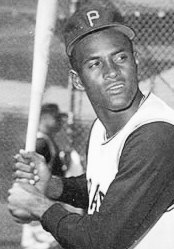
Mental operations could get a rush, as connections proliferated.  Short term memory couldn't keep up (though it didn't disappear: once when a group of us had a stoned discussion and everybody lost the thread, we successfully reconstructed the entire conversation, back to front), and I especially noticed that I had new access to long-term memories.  It seems strange to me now, but at 20, I was amazed to suddenly remember my childhood.  I recalled radio and television shows, boyhood friends and so on.  Once I not only recited the batting order of the 1960 Pittsburgh Pirates, but demonstrated the batting stances.  I mean, it was only 1968! But it seemed an amazing recovery of what seemed gone forever.  (Although I can pretty much still do this.)

Those I associated with were, like me, uninterested in hard drugs, but curious about psychedelics.  But we were marooned in a small town in the Midwest, and these were hard to come by.  I didn't do any that year--at least not deliberately.  And that was a problem I ran into elsewhere later, one major factor in why I stopped: unless you were wealthy and/or well-connected, you never really knew what you were getting.

That winter of 1967-68 we hosted a big time cannabis dealer from California who called himself Reverend Jim.  He didn't spend much time in the house, as he spread the word all over campus, but as his hosts we got plenty of free product. We smoked it, and made brownies. It was either considerably stronger than we were used to, or it was laced with something else, because once I became a lot more stoned than I intended. I wound up paralyzed in my bed, watching movies in my head. It wasn't unpleasant, but it didn't need repeating.

I remember sitting around one afternoon with one of Reverend Jim's traveling companions who was quoting the wisdom of someone he considered to be "heavy," or enlightened.  "He said, life is a shit sandwich--at best."  Not something that we naive love and peaceniks wanted to hear, even if it came from California.

While seniors like me were just getting our stoned feet wet, some of the incoming first years were already veterans.  I remember being impressed by one who said he didn't smoke tobacco, clearly implying he smoked only something else.  Their culture was already different, and grass was simply part of it.

Our campus culture seemed to change remarkably quickly as well.  I remember once participating in a couples evening that was as conventional as suburban young marrieds except that alcoholic drinks weren't served, only grass.  The main event was an ice cream feast, designed for the blind munchies.

In the next few years, I tried "LSD" a few times, and "mescaline" once.  I place these in quotation marks because I was skeptical even at the time that they were exactly and purely that.  My experiences were mixed.  But taken all together, they did make a difference, and I did gain some lasting insights and memorable experiences.  I dove deep into Abbey Road on "acid" in Berkeley.  In the Colorado mountain countryside on "mescaline" I saw the swirl in wood as liquid and moving, the embodiment of its process over time.  I peered down into microscopic depths, watching microbes and molecules in motion.  Pretty simple visual hallucinations but I nevertheless "saw" profound truths about the substantial but not quite visible support of things.  So when the science started catching up, I was ready for it.

I eventually became discouraged by the unreliability of the product, and by the unreliability of people.  On almost every psychedelic occasion, and quite a few cannabis ones, I had to bring myself down to cope with something or someone gone awry.  Those stoned conversations also began to lose their charm.  Once I listened to two people conversing who were evidently more stoned than I was, because it was very clear to me that they were each talking about something entirely different from what the other person was talking about.  And neither of them noticed.  It was fascinating in its way, but also disconcerting.

Eventually "the scene" also got darker, with darker drugs, violent politics and enabled psychotics.  But before that, in my senior year, we took cannabis and psychedelics seriously as the keys to a new counterculture--more honest, sharing, hip, fun, loving and open to different sensual and internal experiences, for which there seemed to be some precedent in Eastern religions, western exoteria and indigenous cultures.  So in addition to experiencing what we could, we read about it all.

1964 edition
First there was the classic The Doors of Perception by Aldous Huxley.  Originally published in 1956, it was an augmented account of his mescaline experience a few years before.  It introduced me to the idea that the brain functions as a limiting filter to shape the otherwise overwhelming sense data into usable conclusions (though in some ways this resembles Quine's analysis of language.)  Huxley likened it to a "reducing valve."  Today's neuroscientists use the concept of models--that the mind has models of the expected reality that perceptions should match or at least be measured against.  Psychedelics bypass the reducing valve and the models.

Huxley took mescaline several more times, and said he had greater and more profound experiences on LSD, which he took for the first time in 1955.  His support for psychedelics was striking, in light of the role played by the fictional drug soma in his most famous novel, Brave New World.  But he didn't waver, and in the final stage of cancer, fulfilled his intention of dying while on an LSD trip.

Timothy Leary, Richard Alpert and Ralph Metzner were Harvard professors exploring the therapeutic uses of psychedelics in the 50s and early 60s, concentrating finally on LSD.  After being fired from Harvard, Leary became its best known advocate, partly through the enthusiasm of poet Allen Ginsberg.  LSD was technically still legal when I first read this trio's 1964 book, The Psychedelic Experience in my senior year.

 Its most influential sections are about preparing for an LSD trip.  There was already propaganda around about "bad trips" and the potential dangers of LSD, and I knew it was a powerful drug, so I paid attention.  The book recommended having a Guide and perhaps "programming" the trip, and it especially emphasized the importance of set (your mental preparation and attitude) and setting (the place and physical conditions.)  Though we basically only did cannabis together at our place, the Temple was all about set and setting.  Ironically then, when I first did "LSD" about a year later, I tripped with slightly younger people who had no concept of set and setting, but I deferred to their greater experience.  Early on, I found myself in a crowd of people watching a violent movie, while trying to appear normal.  Fortunately, whatever I took wasn't all that strong and I was able to bring myself down to a steadier state.

LSD: The Problem-Solving Psychedelic by P.G. Stafford and B. H. Golightly was a paperback published in 1967.  It is a fascinating compendium of research findings suggesting therapeutic uses for mental disorders and the treatment of alcoholism and other addictions, as well as heightened creativity and life-changing insights among otherwise normal people.  But this was the last year that LSD was legal, even for research.  Medical and other research was basically forbidden and didn't happen for the next fifty years.


Nevertheless I continued to informally monitor related research.  I still have my 1972 copy of Altered States of Consciousness, a collection of research articles edited by Charles T. Tart, and another anthology from that year, Consciousness and Reality (edited by Charles Muses and Arthur M. Young) that has an aura of intellectual excitement and discovery.

 Before he became the gray-bearded guru of natural healing, Andrew Weil was a Harvard student involved (and in some ways implicated) in the Leary experiments and scandal, who published his own take on psychedelics in his book The Natural Mind, also published in 1972.

And then the rest was silence, except for occasional chapters in such arcane texts as the catch-all Alterations of Consciousness by Imants Baruss, which I reviewed for the San Francisco Chronicle in 2003, and the occasional account of a post-60s trip, as Sting's detailed description of taking ayahuasca in Brazil that opens his autobiographical Broken Music.

  That was the situation until the completely unexpected How to Change Your Mind in 2018 by Michael Pollan, best-selling author of The Omnivore's Dilemma.  As research began to cautiously revive around the world, Pollan produced this combination of reportage, interview and personal account that the New York Times named as one of the ten best nonfiction books of that year.

Pollan covers much of the history, including the scare stories about people on LSD going blind from staring at the sun, which 60 years later is exposed as fake news.  He confirms the continuing promise of psychedelics in addressing a range of illnesses and conditions, confirms LSD's power to spur creative re-thinking (many of those Silicon Valley innovators tripped out) and generally updates that 1967 paperback LSD: The Problem-Solving Psychedelic.  I found him most interesting on the plant-derived psychedelics, particularly mushroom-based.  These substances really do have life-changing and even "miraculous" effects.

Every study I've seen since Leary et al has confirmed the determinative importance of set and setting.  Pollan's own trips were conducted very much to that 60s script: he had a  guide, the setting was quiet and had objects to contemplate (though mostly his eyes were masked), music was played and so on.  These have become standard in the new, well-organized tripping, governed by a kind of New Age professionalism.

But the importance of set and setting were established long before Leary. Most plant-based psychedelics were used for many thousands of years by indigenous peoples in serious explorations of the larger reality. These traditional cultures used their psychedelics within ritual settings and with elders as guides--i.e. attention to set and setting.

What Pollan experienced on his trips made it impossible for him to ignore the so-called spiritual dimension, the beyond-ego experiences.  He confirms that the effects of these substances substantiate the descriptions of the mind's workings that have been refined over thousands of years by Buddhist meditators and other Eastern (and a few Western) practitioners.  These also are being confirmed by neuroscientists, and explored over the several decades in the Mind and Life conferences sponsored by the Dali Lama (I reviewed the books resulting from the first seven conferences in 2004, also for the San Francisco Chronicle.)  

This connection has a long history. Practitioners of Eastern religions attain their insights mostly without even plant-based substances, but with fasting and various forms of meditation.  Yet the insights are similar.  In the decades before he took his mescaline trip, Aldous Huxley studied Hindu and other Eastern texts and consulted with well-known gurus.  The Leary/Alpert/ Metzner The Psychedelic Experience was subtitled "A Manual Based on the Tibetan Book of the Dead."

Richard Alpert soon became Baba Ram Dass, and his first book Be Here Now (1971) became a revered text in certain quarters.  But that takes us into the counter-culture, subject of our next installment in this series.

To wind up the more specific elements of the substances themselves and their effects, there is now more of a distinction between cannabis and the psychedelics (LSD, and of increasing interest, psilocybin.)  Cannabis has been legalized in many states in the US through popular vote, but there is not the same acceptance for psychedelics.  In my past experience, at least some of the effects to some extent that are claimed for psychedelics were available with cannabis (assuming that's all I was ingesting.)   There may well be a qualitative difference, and in that sense I'm sorry I missed a true psychedelic experience.  Even in the lap of the cannabis industry, the likelihood that I'll run into a dependable opportunity isn't great.    

Saturday, March 12, 2022

History of My Reading: Flunking Evolution (Winter 1967-68)


“The evolutionary backdrop and the ecological setting, rather than the flashy on-stage protagonists of the drama, are more of my concern. Yet the answers are never simple, in part because the questions cannot be clearly phrased. The shadowed globe continues to spin. We are embedded in our history, in all our personal histories, and in theirs.”
Lynn Margulis

In order to fulfill my distribution requirements so I could graduate in the spring of 1968, I took "Evolution" in the winter of the 1967-68 school year.  Among the requirements Knox had then, was a certain number of of math and science courses.  I had taken math to the level of my incompetence and beyond, and one science course for non-majors, in Astronomy, taught by Dr. Priestly, head of the Physics department.  I did well enough, and Dr. Priestly seemed sanguine about the non-majors part.  So I planned to take his two other courses for non-majors, one on Science and Society that would be given in the spring, and one that the course catalog said would be given this winter. But it wasn't.  So I was stuck with a Biology department course on Evolution, given by a different teacher.

I recall never getting a handle on the subject, or the purpose of the course. It seemed too technical and disjointed for a non-science majors course, which it was supposed to be.  But I believe I was just barely passing.  Then it was time for the final.

Two things happened at that point, which were at least partly related. The first—and possibly most fateful---happened in the library.

I was also taking a philosophy course that term. (I’d taken several, starting my first year, and had considered it as a major, before committing to English Literature and Composition.) Perhaps it was for this philosophy course, but in any case I was reading a journal in philosophy in the library.

In what I seem to recall was just a book review, I read a sentence that was almost incidental. It said that the Darwin’s theory of Evolution was shaped in part by existing political and economic ideas and ideologies. It suggested that so-called Social Darwinism predated Darwin--and that these ideas and ideologies influenced Darwin's theory.

It was a sudden bolt of lightning to my conceptual framework, which is what I learned to call it in my first philosophy course. Scientific theories were, we were told and I had believed, based strictly on the scientific method of hypothesis and experiment (or evidence) to test the hypothesis. The idea of pure science, or "value-free science" was a kind of postulate, an axiom, if not a dogma. It was what you assumed as a starting point. The logic of Natural Selection emerges directly from meticulously studied evidence. Darwin’s theory was based on science, and nothing else.

 But in a sentence in a philosophy journal, I was told that it might not be necessarily so.   Science might also be guided, consciously or not, by other factors, including unacknowledged ideology.  As I learned later, this view of Darwin was neither new nor uncommon, but after a course in Evolution it was still new to me.

Oddly, although studying the Vietnam War had shown me the tangle of motives and ideology leading to deception and self-deception in politics and government, I still assumed the evidence-based objectivity of science itself, if not the ends to which that science was directed. Especially a science and a theory so remote from weapons development and social control.

But it could be I was also receiving an unconscious echo of my high school disillusion with Catholic dogma, and the claims that the Church's actions (like the Inquisition) were based entirely on religious doctrine. All that had also been exploded for me in a library--my Greensburg public library, in the reference room, where I read the eye-opening and hair-raising...Catholic Encyclopedia.   

So now this comment in the philosophy journal suggested that even the theory of evolution is not utterly impartial and objective, as piously claimed. I have since learned this view had a long history. But for me this was a discovery.  I had just found an opening to this idea, and sensed a glimmer of the other side. I was both stunned and excited. It was like the moment that nearly every first year philosophy student faces when presented with the argument that it’s possible that the world does not exist at all except in our heads. It becomes both an obvious and more complex argument pretty quickly, but at first, it’s a mind-blower.

So was this. To some, this may now be a commonplace observation: that the formulation, acceptance and rejection of scientific theories, including Darwin’s, are shaped in part by ideas outside of science, as well as ego, institutional power struggles and conventional inertia. To others it may still be unorthodox.

But to me in 1968 it was a new and electrifying notion. We hadn't learned it in Evolution class. I was very excited by the idea. It filled my head, and I wanted to learn more. I wanted to explore it.

Too late, as it turned out. Because there were no papers in the course, just this last big exam.

Which brings me to the second thing that happened.

In the days leading up to the final exam, we were supposed to view an exhibit of bones--fossils probably-- in a room on campus. There would be questions about those bones, and how they illustrate evolution, on the exam.

I went with a group of friends who were also in the class. The exhibit made no sense to me. I didn’t see how I was going to remember the shape of skulls and tiny white bones. I went into a Groucho Marx crazy scientist routine, perhaps with the help of a white lab coat I found on a hook. Nobody thought it was funny. Everybody was worried.

The night before the exam I walked around campus. In the library, at tables outside the dining rooms in Seymour Hall, students were frantically studying. It was clear as day to me that none of them expected to remember anything they were studying past the day of the exam. The exam was everything.

I had done the same thing before—studying for the exam, and the exam only. It was the drill. Play the game, that suddenly serious game. I knew I should suck it up and do it just one more time. But this time I could not bring myself to do it. It was a charade, it was a travesty, it was a tragedy. With the seriousness of what was going on around us, what might be happening to some of us next (like being drafted into the war), it was insane.

It had nothing to do with education, I felt so acutely, and nothing to do with reality. It even had little to do with the study of evolution as far as I was concerned.

I was supposed to be concentrating on the patterns of bones. Instead my head was swimming with this new idea that the theory of evolution, that science itself, was not so pure, was complex, perhaps more human. What did it all mean?

Sick at heart, I expressed some of these thoughts, and my desire to research and write about this, on the back of my exam the next day. Probably not as calmly as I just have.  On the exam itself I got as far as the first question on the bones, and stopped. Just stopped.  No More.  No More.

There are various ways now to describe this second thing that happened, and its relationship to the first. I tended towards self-righteous anger, and there was some of that. But the emotions were more complex and more complete. It was definitely some kind of crisis. Perhaps in a way, of conscience, or consciousness. So much suppressed, repressed, was rising. It made me suddenly very upset and very tired.

I failed the exam. That was enough so that I failed the course entirely. Eventually this would result in my not graduating with my class, or at all.  All of that wasn't settled until late in the spring, so I will continue this evolution in a future post.

 But the result of that moment in the library with the philosophy journal comment about evolution, I will tell now.  Especially because it involves the next several decades of my reading.

Paul Shepard
The first story I relate to that moment also leads back to Knox in for me a melancholy way. Three months or so before I hauled my stuff up the stairs to the third floor of Anderson House and began my college residence, a young family packed up their belongings and left Galesburg. The father was Paul Shepard, a much beloved and revered young teacher in the biology department for about a decade. His legacy lives on at Knox in Green Oaks, some 700 acres restored to natural prairie habitat. It was Shepard’s vision, and he directed Green Oaks for its first decade as well.

At the behest of a mutual friend, Prof. Doug Wilson of the English department, I bought Shepard’s first book, Man in the Landscape (1967)at the Knox bookstore.

I'm not sure when I read it all.  I recall being mesmerized by the writing in just the first chapter for awhile, which set me off dreaming and thinking.  But it may not have been until after I left Galesburg that I read enough of the book to understand that it is an ambitious and multi-disciplinary study in the area of what we came to call ecology. It dealt with the relationship of social and cultural beliefs to attitudes about the natural world, and how science was conducted. Shepard apparently taught a course by that title which must have been the basis for the book.

Doug Wilson and Paul Shepard. Photo by Flo Shepard.
In other words, it was just what would have intrigued and interested me. If our time at Knox had overlapped, I would have taken that course, and the course of my life might have been altered.

For one thing I would likely not not be worrying about a science course requirement in my senior year.  But that realization was to come, for this story is just beginning.

Apart from two books he co-edited I saw in the 70s, it wasn’t until the late 1980s that I chanced upon another Paul Shepard book on a bookstore sale table near the Public Market while visiting Seattle. Nature and Madness was even more mind-blowing. I saw there were several books between that first one and this one.

I found those two in the Squirrel Hill public library in Pittsburgh and was awed by those as well. They were Thinking Animals and The Tender Carnivore and the Sacred Game. Both dealt profoundly in aspects of animal and human evolution--and in the co-evolution of humans and the animals humans hunted.

Eventually I mentioned my discoveries and enthusiasm in a letter to Doug Wilson. He brokered the beginning of a correspondence between Paul Shepard and me.

Unfortunately it lasted only to the extent of two letters from me and one from him. Just after I arrived in Arcata in 1996, I learned that he had died from cancer.

I learned it by a letter from his widow, Florence Shepard, who noted our brief correspondence. Very soon she asked me if I wanted to write something for an issue of the Wild Duck Review about his work. I met Casey Walker, its editor, and writer Jack Turner (The Abstract Wild) for coffee here in Arcata at Los Bagels, and talked about the approach I would take. My article appeared in that special issue of August 1997, along with contributions by Stephen Kellert, Delores LaChapelle, C.L.Rawlins, Barbara Ras, Barbara Dean, Steve Chase, Joseph Meeker and Flo Shepard, and a poem by Gary Snyder. (I’ve republished a longer version of my essay here.)

By then, yes, I had realized that all the events that flowed from flunking that evolution course would likely have been quite different if Paul Shepard had still been teaching at Knox when I was a student there.

Flo and Paul Shepard
And even that isn’t the end of the story. In fairly short order, Flo Shepard asked me to create a website about Paul Shepard, featuring biographical information that she wrote and photos she provided; photos and descriptions of his books (including posthumous volumes) with quotes from reviews, plus other information and a couple of short Shepard essays not otherwise collected.  So I did.

Eventually that site became technically obsolete, but it was the basis of a subsequent site that Casey Walker assembled. Not too shabby for the guy who flunked evolution.

In that winter in early 1968 we were already awash in dreadful waves of information about air and water pollution and environmental destruction, and in predictions of ecological doom. That became my major interest brushing upon science in the 1970s—when I read two of the first academic collections on the new subject of ecology co-edited by Paul Shepard (The Subversive Science, still a classic, and Enviro/Mental.)

In grade school and high school I had been interested in astronomy and the sciences of the Space Age, so I later gravitated towards the new physics of the very large and the very small. But all along the way since college I kept my eye on the larger question of what influences a scientific theory.  I was reading Lewis Thomas, James Gleick, William Irwin Thompson and others, and watching the Nova programs and the great PBS series' by Jacob Bronowski, James Burke and Carl Sagan.

Then in the 1990s I became interested in the history of the theory of evolution through an interest in H.G. Wells and the future, and that reading and writing continued into the next two decades. I saw Wells interpretation of Darwin as key to his idea of the future, which became ours. I wrote about all this in my Soul of the Future series.  The relationship of  Darwin's Evolution and various ideologies over more than a century and a half turns out to be extremely rich, complicated and important.  Eventually I read a number of books on Darwin and evolution, and many more on issues these books raised, in areas of natural science, ecology, philosophy, anthropology, Indigenous "science" and so on.

 (For example, books related directly to Darwin still on my shelves include Before Darwin and Young Charles Darwin by Keith Thompson, Apes, Angels & Victorians by William Irvine, Darwin's Century by Loren Eiseley, Getting Darwin Wrong by Brendan Wallace, Darwin's Blind Spot by Frank Ryan, Alas, Poor Darwin ed. by Hilary Rose and Steven Rose,  Did Darwin Write the Origin Backwards? (philosophical essays) ed. by Elliott Sober, Life's Solution by Simon C. Morris, Evolutionary Origins of Morality ed. by Leonard D. Kataz, Life on Earth by Stanley A. Rice, as well as other books and authors mentioned in this post.)

But this continued reading was more than background for blog posts. Consider it irony, given my less than stellar academic record or experience in the sciences, but in the early 2000s I found myself becoming the go-to guy to review books on science for the general public at the San Francisco Chronicle, and wrote them also for Salon and other outlets. Perhaps their theory was that if I could make sense of it, other readers could, too. But of course the Chronicle has many scientifically literate readers in the Bay Area and down Stanford way, including eminent scientists. So I had to work at it.

Back cover of the paperback edition of Damasio's book,
with excerpts from my review at the top.
Nevertheless, for the SF Chronicle I reviewed a biography of Einstein, and a couple of books on brain science, including one by Antonio Damasio. (His agent later said that an overjoyed Demasio read the entire review to him over the phone.)

 I reviewed a half dozen or so books on psychology, and all nine books in the Mind and Life Series, derived from public discussions held by the Dalai Lama and Buddhist practitioners with scientists in a number of fields, including physics, neuroscience, psychology and biology.  One of the Mind and Life Institute cofounders was biologist Francisco Varela, who introduced the concept of autopoiesis, or self-regulating life.

For the North Coast Journal I reviewed books on the history of quantum theory, on astrophysics, paleoanthropology, two books on Darwin, one on cultural evolution, several more on psychology and another half dozen or so on climate science.

And partly because publishers kept sending me new books on science, I wrote about dozens more on this blog site.

Along the way I learned how impure science is. A theory may be accepted because of reputation, or denied because of ego and institutional politics. Those who even discovered information that called the standard view into question had their careers trashed, at least for a time.  I saw examples of this over and over, from archaeology to quantum physics, and some seemed pretty scandalous.

But this is apparently so widespread and so well known among scientists that they can joke about it. One of the books I reviewed for the Chronicle was The Big Bang: The Origin of the Universe by Simon Singh. In it Singh quotes physicist Max Planck saying that new ideas seldom win over adherents of old ones—usually a generation must pass while the new idea’s “opponents gradually die out.” He also quotes English geneticist J.B.S. Haldane’s four stages of acceptance for a scientific idea: 1. This is worthless nonsense. 2. This is an interesting, but perverse, point of view. 3. This is true, but quite unimportant. 4. I always said so.

But the role of ideology in the formation of a theory has also entered into the dialogue. And its clearest example has always been evolution. In my posts on H.G. Wells and his novel The Time Machine I’ve noted the ideological influences on Darwin and the ideologies that latched onto his theories as a triumphant exemplar.

It should be unsurprising—but instructive—that much of the actual science taught at Knox in 1968, including in that evolution course, is now considered wrong. Apropos of bones, dinosaurs were believed to have all been cold-blooded and slow of foot. T.H. Huxley’s suggestion that they were ancestors to birds was derided and forgotten. None of that is considered the true view any longer.

Life was divided into two kingdoms only: plants and animals.  Now there are six (though some scientists are abandoning the entire classification.)  Protozoa in 1968 were one-celled animals. They aren’t anymore, and some scientists consider the very word to be obsolete. In other sciences, such basic concepts as plate tectonics had not yet made it into textbooks, and even the Big Bang itself was not the accepted cosmological explanation until the late 1960s.

What has lasted is the lesson I learned that night in the library: to question, to probe, to analyze theories and how they are made. Seeing them in the larger context of society, history and ideology eventually makes for better science, and—for citizen non-scientists (and non-science majors)—better evaluation of scientific theories and findings.

But it may be even more important than that.

In 1968 the latest interpretations of Darwinian evolution were gene-centered. Gene centeredness became both especially prominent and popularized with Richard Dawkins’ 1975 book The Selfish Gene. That book, and the  gene as the determinant of evolutionary change via survival of the fittest , took the 19th century ideology supporting the predominant interpretation of Darwin to a condition close to dogma. That ideology begins with the master 19th century metaphor of the machine--lifeforms as cogs in the machine of evolution.

That ideology further emphasized violent competition, aggression, conquest, and man against nature.  Survival of the fittest, the struggle for existence, nature red in tooth and claw, winner take all, the war of all against all--they all were idolized as drivers of natural evolution and as the essence of animal and human nature, with no exception, and no room for compassion, cooperation, or co-existence.

But in subsequent decades, both the science and the ideological basis came under attack from different directions. (And perhaps I need to say here I am not at all talking about so-called creation science, or a denial of evolution itself.)

By the 1980s eminent paleontologist Stephen Jay Gould was attacking the Darwinian tenet that natural selection operating slowly over great periods of time is the main or only driver of change, despite the discrepancies in the fossil record (those little white bones presumably.)

He believed that the basis for this bias was more ideological than scientific: the insistence that natural selection is very gradual was because it came from a politically conservative class and time in England that favored gradual social change. A theory of more sudden change as well as gradual change—the “punctuated equilibrium” Gould favored—was too much like revolutionary political threats to the established order.

Today variations of punctuated equilibrium are more generally accepted, as is another more recent—and more revolutionary theory—proposed by biologist Lynn Margulis, who found in microscopic life the evidence that crucial steps in evolution were taken by means of symbiosis: separate organisms living together for mutual benefit, beginning with the evolution of microbial life.

Lynn Margulis
Perhaps it is possible that among the periodicals in the Knox library in the winter of 1967 was an issue of the Journal of Theoretic Biology which contained Margulis’ now-landmark first article setting forth the central tenets of her theory of symbiosis within the cell. It had been rejected by 16 other journals. But even when it appeared, it was derided. Though symbiosis is not the same as cooperation, it is close enough. It did not fit the prevailing ideology of selfishness.

Margulis persisted and found more evidence while the establishment had time to get used to the idea. She later joined with James Lovelock in developing the Gaia Theory, which is symbiosis on a grand scale. It is, as another biologist described it, symbiosis as seen from space.

Life, Margulis wrote, "does not 'adapt' to a passive physiochemical environment as most neo-Darwinians assume; instead, life actively produces and modifies its surroundings."  The biosphere is not "determined by a physical universe run by mechanical 'laws...the metabolizing biosphere is physiologically self-controlled."

 If science survives for another century, Lynn Margulis will be recognized as a major figure.  Far from being a war of individuals or species, or objects that operate according to 19th century machine metaphors, she has shown that life is completely interdependent.  The earth is not only our home--it is our body.

E
volutionary theory in the 21st century is moving towards multiple explanations. In their 2014 book Evolution in Four Dimensions (MIT Press), Eva Jablonka and Marion J. Lamb examine not just the genetic (itself a vastly more complex subject than got fixed in the public mind in the 1990s), but the epigenetic (non-DNA inheritance), behavioral (animal learning passed on) and symbolic (human heritage though language and other systems.)

Science is based on evidence, but evidence can be a tricky thing. Sometimes people see the evidence they look for, and they fail to see it if they are not looking for it. That includes scientists. One of the primary reasons for not seeing the evidence is that it does not fit into the current theory, or the current ideology.

This has been shown to be true countless times in the study of animals, when evidence of intelligence, tool-making and communication have been overlooked, because of the ideology of human exceptionalism, which itself derives as much from the ideological right of capitalist humans to exploit and lay waste to the rest of existence as it does from any religious or scientific dogma.

One important illustration is the work of primatologist Frans B.M. De Waal, who documented patterns of reconciliation behavior in primates (after fights, the participants would seek each other out and engage in friendly behavior.) Previous researchers hadn’t seen this because prevailing beliefs emphasized aggression and competition, and so they missed the signs.

It does not seem a coincidence to me that many of these beliefs—the selfish gene, animals as aggression and competition machines, human exceptionalism and so on, are all major underpinnings of capitalism, and its exploitation of the planet. Nineteenth century capitalists were at least conscious of co-opting evolution, and thereby guiding any science that deals with animal or human behavior. By the modern age, these sciences were functional captives of that ideology.

Contemporary British philosopher Mary Midgely has written eloquently on this broader subject of the ideology often unconsciously assumed in scientific theories, particularly in her book Evolution As A Religion. (Margulis also refers to the orthodox neo-Darwinism as "a minor twentieth century religious sect.")  Midgely points out that scientists attack others for basing their beliefs on ideology or religion, while failing to see the cultural myths and assumptions that underlie their own scientific views.

“Social Darwinism or Spencerism is the unofficial religion of the west,” Midgely writes. “And it is widely believed that the theory of evolution proves this kind of narrowly self-assertive motivation to be... fundamental, universal and in some sense the law of life. Mystical reverence for such deities as progress, nature and the life-force is then invoked to explain and justify cut-throat competition. As we have seen, such a view of the natural motivation of our species is simply a mistake, a projection of current interests.”

Many new discoveries run counter to the 19th century ideologies of man against nature rather than humanity embedded in nature, of capitalistic selfishness as natural but cooperation for a common good as unnatural in human or animal nature, and even human intelligence as entirely separate from animals.  And, the argument goes, this is all so embedded to our nature that it is useless to believe we can resist or change it.  What could be more basic than your selfish genes?  You can't fight it because it's human nature.  These ideologies survive and try to rule science as well as the rest of us, in Ted Carpenter’s phrase, “like a watch ticking in the pocket of a dead man.”

There are those who are tempted to inappropriately use the new research to support a different ideology, but animal research for example does find support for the existence of cooperation and altruism, perhaps even the empathy and imagination that are clearly survival tools for our species.  But taken together, the implications of this research are necessary correctives to the one-sidedness and especially the destructiveness of the ruling paradigms.

What does the new science regarding the origin of species tell us? That we must be talking about origins plural, for evolution is much more complex and involves several different pathways than suggested by Darwin and mandated by Dawkins. This is even truer in regard to evolution in a larger sense.

We must see this as the ideology it is, and what it means. Insofar as it is a rigid explanation of animal and human behavior, this ideology of complete selfishness, acting only in one’s self-interest, life as a war of all against all, all the time—is wrong. For more than a century it has excused human destruction that has led us to the brink of mass extinctions and an unrecognizable Earth. And it is still leading us there.

Failure to see this ideology for what it is—an ideology—is a major failure of science in the modern age. That the ideological underpinning of predatory capitalism are the same as those of evolutionary science is no coincidence. Capitalists at least were conscious of co-opting evolution, and thereby guiding any science that deals with animal or human behavior.

This dogma of evolution fit wonderfully well with capitalist economic theory—and why not? Capitalists were paying the bills. Although some scientists tried to refute these interpretations, the scientific mainstream continued to aid and abet this view.

All of this contributed to the seeming present inevitability of predatory capitalism which rules the world, and which has proven unable to modify itself in light of the findings of science, most conspicuously climate science.

 Fredric Jameson is reputed to have observed today it is easier to imagine the end of the world than it is to imagine the end of capitalism. Evolutionary theory and dependent theories of human nature have contributed to this stranglehold on the imagination. Yet predatory capitalism continues to bring the end of the world closer.

All our ecological "doom and gloom" of the late 1960s led to change, but not enough, and not fast or widespread enough. With the onrushing climate crisis, with mass extinctions and multiple ecological catastrophes underway or in the offing, time is running out.

Ours remains a crisis of consciousness. If humanity doesn’t fully commit to an ideology of interdependence and the science that supports it, then humanity as well as the world that supports it are in danger of extinction. Human civilization will turn out to be a bloody but hopeful experiment that didn’t quite make it far enough to respond to this challenge, largely if not entirely of its own creation. We’ve taken this course of evolution, and we’re flunking it, and taking the planet we know with us.

Monday, March 07, 2022

History of My Reading: Hazy Fate of Winter 1967-8

“The real job of the computer is not retrieval but discovery. Like the human memory, the process of recall is an act of discovery.”
Marshall McLuhan

Knox College winter 1968.  Photo by Kowinski
In another post, I describe the stranger from northern California who called himself Reverend Jim who showed up on campus (probably from Humboldt County, CA) with a small retinue and a quantity of weed the likes of which nobody there had experienced before.
That was the winter of 1967-1968, my senior year at Knox College.

Besides the wandering philosophical discussions (often enough the product of misunderstood words--somebody riffs on "presents" while somebody else responds about "presence"), the personal journeys of observing smoke curling into the lamplight, etc., there were the surprising memories and perspectives, especially a return to childhood modes.

We heard new sounds, saw new sights and seemed to see the old ones more clearly...and saw what we’d blinded ourselves to, for survival’s sake. Perspectives shifted suddenly, as when I was walking to campus on a frigid day and saw the grass below me as if from an airplane over a forest...It could have been a forest in Vietnam, where a B-52 could destroy 50 square miles on a single run.  Recall the chant at protests that year:  Work. Study.  Get Ahead. Kill.

For all the altered consciousness and raw emotions, some of us had been studying Vietnam, the war and the various political and historical contexts, sometimes with more rigor than devoted to course work, for several years. Our texts were the New York Review of Books, Ramparts magazine, the I.F. Stone Weekly and other periodicals, as well as books like Frank Harvey’s Air War: Vietnam and Raskin and Fall's The Viet-Nam Reader. So when the Pentagon Papers were finally made public in 1971, we pretty much already knew much of what was in them.  Again, this is discussed in more detail in another (future) post.

The war was heavy upon us that winter, although heavier on some more than others. With recent changes in the Selective Service laws, I faced the imminent prospect of being drafted immediately after my senior year concluded. This was before the lottery, and when draft calls were high. There were many reasons for my resistance, but the possibility and prospect of being forced to kill others for no compelling reason was my paramount concern. I wasn’t going to participate, but what the hell was I going to do?

At the same time, I was supposed to be planning my immediate future, which given the lack of other alternatives, meant continuing my education for an at least temporary academic life.  So I was supposed to be applying to graduate schools, knowing that it was unlikely I’d even get to begin.

I went to draft counselors in Chicago that year, including one who reacted joyfully when he saw the results of my hearing tests. Being deaf in one ear should disqualify me, he said. But given the high draft calls and the brutalities of the system, it wasn’t a sure thing. Another counselor told me to prepare for the worst.

There’s more to be said about my hearing impairment, which I’ve thought more about in subsequent years. It was not something that I (nor most anyone else) noticed much, but I've realized that it had its effects on daily life. It meant I had to expend more energy in listening, in sorting out sounds, and filling in imaginatively for what I didn’t hear distinctly. I got no rest from this attentiveness except in the assurance of silence, or complete control over my auditory environment. It’s part of what made having roommates so difficult without a solitary retreat, though I had that this year.  It also increased my fatigue, for which substance indulgence also likely played a role.

But day after day, confronting an array of uncertain choices and awful alternatives was forcing itself into my unwilling life. I was just beginning to learn that, even though I had various degrees of support amidst incomprehension and hostility, when it came down to it, absolutely no one around me not faced with this imminent prospect could fully understand it. In this I would be completely alone.

But I did know that my nagging, dragging-down sense of futility was shared by others. Wasn’t this show of dutifully taking courses just a useless farce, given what was to come? I remember the student who said—or howled—what difference does it make if I die with a good head?  (Ironically it was Peter Overton, who later became a pillar of Bay Area Buddhism.)

At times, the only shelter, the only safe harbor, was in the music.  From a Simon & Garfunkel single, "Hazy Shade of Winter":

Hang on to your hopes, my friend
That's an easy thing to say
But if your hopes should pass away
Simply pretend/ that you can build them again...

There was also everything going on around campus. Glancing at what I wrote and said at the time (much of it now looking less than cogent), it’s apparent that I was increasingly sensitive to the pain and confusion of other students, and anguished when nothing effective was being done to alleviate it. Over the years perhaps we’ve forgotten just how hard it all was, as apparently pampered and privileged as we were.  (A situation that is recurring apparently.)

In January I resigned my appointed position as a student representative on the faculty’s student affairs committee. I ended my frustration with those meetings—a kind of frustration that would recur over the years in similar settings—with a flourish, by giving a long interview to the Knox Student. I did so partly because Jeremy Gladstone and Peter Stetson were becoming the co-editors and this provided a “big story” for their first issue.

The interview ran off the bottom of the front page.  Towards the top of the page there is a hazy photo of a small group of us, silently protesting the Vietnam War (says the caption.)  It's very fuzzy but I'm there, wearing a borrowed hat, in my much maligned corduroy coat with dodgy fur collar, cord jacket underneath, shirt and flowered tie.  I was still getting my style points from the Beatles, though my look was more of a melange of Beatles and Young Professor.  I can't make out all the other figures, but I see Bill Thompson peeking out from behind me, Jack Herbig in the background, and Mike Shain standing to the right--I recognize him only by his scarf.  It appears to be snowing.

Leaving aside the question of how much of a jerk I was being in this interview, a key question was revealed. Reading this interview recently, especially between the lines, I notice that my complaints got more focused and emotional concerning Honor Board cheating cases. However I never got around to talking about the case that really distressed me. It would take me probably another decade before it became clearer to me what that was all about.

For sometime shortly after I’d joined the committee in my second or third year, we were called upon to decide whether a couple of students should be expelled (or perhaps suspended for a semester) for cheating on an exam. Cheating seemed to me a pretty clear-cut offense, although even the few details I remember about this case suggests it wasn’t so simple. I eventually joined in the unanimous guilty verdict.

Shortly afterward, a letter appeared in the Knox Student taking the committee to task for expelling a male student and exposing him to the military draft. (Even a suspension exposed him.) As a student representative I was singled out for my vote.

My first reaction to this letter by a student senior I knew by sight was anger that he hadn’t made this case to me before the vote. It would have made a difference.

Memory is a tricky thing. For years I was sure that this draft jeopardy wasn’t mentioned or discussed in the committee, but I’m no longer sure about that. I do know that the idea of making a moral choice based on the draft exposure jeopardy simply hadn’t occurred to me. I frankly had not conceptualized that I could (let alone should) make a decision based on this fact.  But once I heard it, I was immediately convinced.  If I had been presented with this argument, I would have argued for it in the committee, and would not have voted as I did.

It’s unlikely that argument would have prevailed in the committee, and my one vote wouldn’t have made a difference. But the consequences of that committee decision turned out to be very serious. One student expelled or suspended was drafted, he was sent to Vietnam, and he returned without one of his limbs.

 I don’t think I consciously faced this as my war crime until years later. But even that winter it’s clear I felt I didn’t want to be even ignorantly implicated in such consequence again. It added to my distrust of institutions: the military-industrial-academic complex.

Meanwhile I was also supposed to be concentrating on my studies of the moment. In particular that winter, I was scrambling to complete my “distribution requirements” in order to graduate.

Knox had extensive requirements in my years, more than it did in later years, or perhaps now. For some reason, requirements for foreign language, science and math requirements were lumped together.

I’d managed a year of Spanish and a year of math. I’d taken two years of Latin and two of French in high school, but I don’t think Latin was offered and I knew my French was inadequate for higher-level courses. So I took beginning Spanish my first year.

Our instructor—a native Spanish speaker from South America who I don’t recall seeing after that year—began the first class by saying that if we came to class and did the work, we would get no less than a C. And any girls in the class who wore short skirts and sat in the front row would get As. Was he kidding? We didn’t think so, but who knows. Anyway there were always girls in the front row.

language lab 1960
I still shudder when I think of that class. It was held in the language lab, and we spent all of our time at partitioned desks with earphone on, either listening to tapes or engaging in “conversation” with the instructor. By second semester I was losing it.  I could feel my sanity under attack.

I’m not qualified to say this system is bad for learning a language, but it was bad for me. The language lab was sterile, without human context. The language was disconnected from any human reason to learn it. I felt I was being indoctrinated, in some ostensibly friendly Nineteen Eighty-Four.

It was made worse because I wasn’t predisposed to learn a new language—as far as I was concerned, I was still learning English. That was enough for me.

Even so, I wasn’t incapable. After all, I learned enough Italian as a child to entertain my grandparents’ friends. My mother thought that I was essentially bilingual at age 4. (And of course, Italian wasn't offered.)  But I hadn’t learned to speak French in the classroom, and this was worse. There was no cultural or human context or motivation in that dark room.

I managed a C+ both semesters, but when I went to my first class in the next level of Spanish my second year—in a real classroom, with students really speaking the language-- it was apparent that I’d learned very little, and I was too far behind the level of other students to survive there. So I dropped that course.

My high school math had been spotty. I did well in geometry, mathematical logic and set theory, but poorly in algebra, and missed trig altogether due to an administrative botched experiment. But I managed to pass two semesters of math my first year at Knox, though barely. I have no idea how. I don’t remember anything about it, other than the mannerisms of the instructor, who I liked.

The only science I had in high school was biology. I wasn’t at all interested in the basic technicalities. I had been deeply interested in astronomy in grade school, and largely taught myself. So in quest of the remaining requirements in the fall of my senior year of college, I took the course known by generations of students as “Stars.”

Largely due to my early fascination with science fiction, astronomy was the one science I liked in grade school.  I kept a brown notebook in the fourth or fifth grade with all the known information about each planet in the solar system.

The Knox course was formally called “The Universe,” taught by the magisterial and well-named Dr. Priestley. I’d been tipped off that the key concept he hoped non-majors would get was that there is order in the Universe. (This was a simpler universe that science now sees.) So I made sure to get the phrase into all my papers and tests.

 And even though I sometimes showed up for class wearing a sign on my Lennon cap that said Captain Space, Dr. Priestley tolerated me, and I knew enough stuff to pass. (It was the first course I took on the new pass/fail system.)

After that, pass/fail couldn't be used for distribution requirements anymore.  However, when I took "Science and Society" in third term, which I believe was also Dr. Priestley. I got an A.

But I needed just one more course to complete my requirements. Unfortunately, several other sciences for non-major courses in the catalog weren’t actually offered. So in between these two, in the winter term, I took the only available course, Evolution.

To be continued...

Wednesday, February 09, 2022

Not So Simple Paul Simon


Homeward Bound:

The Life of Paul Simon

By Peter Ames Carlin

Henry Holt

 My trifecta of reading biographies over the past few months ended with this 2016 life of musical performer and songwriter Paul Simon.  While the Tom Stoppard bio had the participation of its subject, and the Mike Nichols the cooperation of his friends, author Peter Ames Carlin did not have those advantages here.  He never got to interview his subject, nor several other important figures, like Art Garfunkel (though I wonder if he may have secretly helped.)  But he includes numerous notes that catalogue his sources, most of them published.

 I’ve followed Simon’s career since “The Sounds of Silence,” including for awhile professionally.  But I didn’t know much about his early life—his youthful association with “Artie”—and especially his early  professional career(s), as a hustling pop songwriter, plugger and producer (including while still a college student) named Jerry Landis, transformed into a folk singer in small clubs in England. 

The love/hate, brotherly intimacy of Simon and Garfunkel over the years is an irresistible theme, beginning with an arresting image of the two of them in Paul’s bedroom working on their harmonies so intensely that while singing they studied the inside of each other’s mouths.  Their relationship now and again evoked unattractive aspects of their characters: Simon as a clueless bastard, and Garfunkel as a passive-aggressive manipulator.  But together they were among the most potent acts of their time, and this book reminds us of just how big they were as pop stars and a cultural force, from the early 60s well into the 70s. 

 Carlin is a pretty good storyteller, with flashes of eloquence.  His summaries of songs and his judgment on the music are puzzlingly inconsistent—sometimes revealing, sometimes obtuse.  Of course, some of that impression is influenced by my disagreement with the songs and albums he likes and doesn’t, as well as how he characterizes them.

 I can’t say how accurate his facts are, except for one minor error that touches upon personal knowledge.  In his post-S &G career, Simon didn’t perform live until just after his second album was released, Here Comes Rhymin’ Simon.  His first concert was in Boston, and Carlin quotes extensively from Jon Landau’s laudatory review.  However, Carlin writes that it appeared in the Boston Phoenix, which it did not.  I know this because at the time I was the Managing Editor/Arts for the Boston Phoenix, and edited the review we did publish, which was by music journalist Peter Herbst.  Jon Landau, who by that time was probably transitioning from Rolling Stone’s record review editor to its film critic, wrote on music for our Cambridge rival alternative weekly, the Real Paper.  (He later went on to become Bruce Springsteen's producer and manager.)

 Which leads to my one and only Paul Simon story. The day our review was published, I was beginning a vacation, and on my way to visit friends in the Twin Cities.  I was carrying our paper with me when my plane from Boston landed in Chicago, and I rushed across O’Hare Airport to get to my connecting flight.  Along the way I mused idily, what if I ran into Paul Simon?   Minutes later, I did.  He was chatting with a young woman in an airline uniform near a ticket counter.  I thrust my newspaper into his hands, with the news that a review of his first concert was inside.  Then I remembered.  I had attended the concert myself, and I was as dazzled as Jon Landau was.  But Peter Herbst wasn’t, quite.  His review was mixed.

 So I mumbled something about enjoying the concert, when the young woman started to take an interest, and Simon looked at me and said curtly, “don’t say another thing.”  Evidently she didn’t know who he was, and he was enjoying that—perhaps enjoying making time with her without relying on the superstar aura.  I backed out of there as gracefully as I could (not very) and ran for my flight.

 Carlin answers one petty question I had, regarding the sudden change in Simon’s hairline: transplant or appliance?  According to Carlin, appliance.  Perhaps Simon got advice on the subject from Mike Nichols, with whom he worked and befriended.  Nichols' use of S&G songs in The Graduate revived their career at that point.

Carlin writes enough about Paul Simon's relationship with his father to suggest its complexities. But I remain curious about Paul Simon’s relationship with his slightly older brother, also a musician and (according to Carlin) a better guitar player.  He’s mentioned a few times but there are no scenes with them together.  Did they ever play together?  If not, why not?  I believe I saw his brother once—at that Boston concert, where he was helping to set up.  He looked like Paul’s twin, except with facial hair.  I’ve looked for mention of him ever since, but it’s as if he didn’t exist.  

 Carlin is especially enthusiastic about Simon’s music since (and including) Graceland (he misses only one album so far, released since 2016.)  But his description of how most of these records were made makes me a little queasy.  Even given the way music works and the fact that no musical composition is wholly original, I’m not sure how I feel about the process of using music invented by others in the studio and putting your own copyright on it.  As much as I liked many of these songs (and those recorded in Jamaica for an earlier album), when I listen to Graceland and Rhythm of the Saints now, the clash between the music (and where it comes from) and the very urban Manhattan/US contemporary lyrics jars me.  Still, I’m curious now about those more recent records I haven’t heard.

 The album which precedes Graceland was Hearts & Bones, originally conceived as a S&G record, that did poorly commercially.  Carlin seems to agree with the general sentiment at the time, but I liked that album very much when it came out, particularly “Rene and Georgia Magritte…” and now it’s apparently considered one of Simon’s best.  (Then again I remain fond of the S&G album Bookends, which apparently even Simon feels is inferior. It’s thin maybe, but what’s there anchors that time for me.)

 Carlin also denigrates the S&G song “The Dangling Conversation,” and quotes Simon as agreeing that it’s kind of an undergraduate ditty.  Since I was an undergrad at the time—and my strongest memory of the song is hearing it played repeatedly on the campus coffee shop jukebox—I don’t find that disqualifying. It was a great undergraduate song.

 Carlin mentions the late, unlikely pairing of Simon with Bob Dylan in a series of concerts.  They were rivals in the early 60s, and Simon was not shy about criticizing Dylan then.  Simon probably has more in common with another legend he toured with in recent years: Sting.  They both broke up groups at their commercial height, and both used their solo careers to explore new areas of music and songwriting.

 Carlin provides texture to the known history, and a lot of food for thought.  But nothing anybody writes or doesn’t write, nor any flaws in Simon’s character, can dispute the worth of the work.  He’s written so many great songs—from “Sounds of Silence” through "Mother and Child Reunion," “Kodachrome,” “My Little Town” and the most famous ones, like “Bridge” and “The Boxer.”  Then there are lesser- known gems like “Duncan,” “Only Living Boy in New York” and so on.

 And then there are the transcendent ones, the songs so nearly perfect that they are unassailable.  “American Tune,” “Slip Sliding Away” and “Still Crazy After All These Years” are my choices in that category.  They are quintessentially Paul Simon songs, and also among the few songs that most still speak to me, and speak for me.

 Since this book was originally published, Robert Hillburn’s Paul Simon: The Life has appeared, which did have Simon’s full participation.  I haven’t read this yet, so it will be interesting to see how it differs. Paul Simon didn’t do many interviews, at least until recent years, but he was always articulate and precise. He was much more forthcoming about the process of writing his songs, and I’d love to see more of that in print. Carlin’s book may not be the definitive life of Paul Simon but it seems a professional and provocative start.