Showing posts with label 1971. Show all posts

Monday, August 19, 2024

History of My Reading: Phoenix in Flight/ Boston 1972


For young writers in the 1920s it was Paris.  In the 30s it was  the WPA Federal Writers Project and various literary and theatrical communities in New York. In the 40s it was radio and Hollywood.  In the 50s it was television. In the 60s, improbably, it was theatre—in London, New York and even Eastern Europe. (Unless you were at least equally a musician, and then it was rock music. For a few, there was also the Andy Warhol scene in New York.)

  In the 1970s it was the alternative press, including the new rock music publications, and the New Journalism of New York-based magazines. 

 These were the entry points, the new and exciting places hungry for talent and maybe even community. They were where it was happening, but also, crucially, they were the prime opportunities of their day. 

   This was the opportunity I stumbled into, when I began writing humble book reviews for the alternative weekly, Boston After Dark in 1971.  It was one of the new weeklies sometimes described as “sea-level,” because they were midway between the underground press and the established daily newspapers.  They were also called “countercultural,” and they certainly were aimed at a young readership, with emphasis on rock and other entertainment and arts, as well as more or less radical politics.  With all of its colleges and universities, the Boston area had a huge potential readership. 

I had a book review assignment for early November but I first delivered an unsolicited but timely piece on poet Pablo Neruda winning the Nobel Prize. That was the first to be published, followed a couple of weeks later by a review of Sylvia Plath’s now classic novel The Bell-Jar.  I’m not sure if this was assigned, but the book was newly published in America in 1971.  The first review that definitely was assigned was Paul Dixon’s Think Tanks, a nonfiction appraisal on those little known but influential institutions, published in early December.

 I delivered my pieces in person, sometimes hanging around for feedback from Jake Kugel, the literary editor, and hopefully to get another assignment and some more books. Once that December he told me that the staff Christmas party was taking place at a restaurant and bar nearby, and that I should go over. I did, but there was almost no one there yet.  I was sitting alone at a small table with my free drink when an amazingly beautiful young woman walked in, looked around and left.  She turned out to be Janet Maslin, one of the Arts Editors at Boston After Dark.  John Koch, the senior movie reviewer, and Ben Gerson, the music editor and chief writer, were the others.

 On another visit to Jake, he sent me back up the corridor to Ben Gerson’s office, who was pretty open to new writers for record reviews.  Ben pointed to a pile of records stacked against a wall, told me to pick out a couple, and write 150 words or so on them.  I’d earn $5 for each review published, plus I got to keep the record. 

By then I had already started writing for Creem magazine, which published my movie reviews and even a short piece of fiction, as well as record reviews (the first national review for Bonnie Raitt) and music features (my first was on James Taylor.) With a few pieces for Creem as well as B.A.D., Dave Marsh and Lester Bangs told me how to write to record companies and request to be put on their lists for new albums. They sent me a list of contacts. Some responded, some didn’t, but pretty soon I was getting free records through the mail.  Warners was particularly generous, I recall.  I also wrote reviews occasionally for other publications, such as Time Out. That’s how I got to be one of the first generation of rock critics, at a time that rock artists were big business.

 There were concerts and club dates galore as well as records, and I covered some, mostly in Boston but also on trips to New York City.  My first one-on-one interview was with Bill Withers in his trailer before a summer concert on Boston Common. He probably sensed I was nervous so we sat together on a step to the trailer and chatted.  I asked him about the theme running through his new album; he said he didn’t think anyone would notice that there was one.  

Harrison with Pete Ham of Badfinger
My first big concert assignment was Badfinger, and I dressed up in a three-piece corduroy suit.  Before the concert I got up from my seat and walked up the aisle to the outer area, and heard this titter in the crowd. I then realized that they might have thought for a second I was George Harrison, who’d produced Badfiner’s latest album.  I had the long hair and beard as well as the cord suit.

 The life of a rock critic also included attendance at various promotional events, which always featured free food and drink.  A few times a limo actually picked me up at the B.A.D. office.  My friend Mike Shain, writing for Broadcasting Magazine then, said there were freelancers in New York who pretty much lived on the food at these events.

 Rock music as a serious cultural force was so new that there were few books on it then.  Mostly we read magazines and music tabloids, especially Rolling Stone, but also others that have come and gone.  And of course we read each other.  The coverage in established newspapers and magazines was sparse and generally laughable.

 I reviewed albums by David Bowie, Aretha Franklin, Harry Nilsson, the Bee Gees, Little Feat, Bob Seger, Paul Simon, Ravi Shankar and the Incredible String Band as well as the now mostly forgotten (but remembered and revered by some) Jackie Lomax, Family, Kenny Rankin, the Hoodoo Rhythm Devils and Jim Carroll, and the completely obscure Audience and Formerly Fat Harry. Some reviews are embarrassing now (I didn’t understand Steely Dan’s first album) but I was maybe ahead of my time on others (I was much in the minority in proclaiming John Cale’s “Paris 1919” a masterpiece, which it is now acknowledged to be.)  I was hardly a music scholar, even about the roots of rock music before the 1950s, but the power of that music in those years was emotional.

 Besides Dave Marsh and Lester Bangs in the Midwest, the titans of rock criticism were Robert Christgau at the Village Voice, and Jon Landau, the record review editor of Rolling Stone in San Francisco, who actually lived near Cambridge, and wrote for its weekly, the Phoenix.  I met Christgau a few times, through Mike Shain, and later was friends with his younger sister Georgia.  I knew Jon Landau a little better, especially after he and Janet Maslin became an item.

Boston After Dark had its offices then at 1108 Bolyston Street in what likely was an old industrial building, close to the Bolyston Street subway station. (It looks like the building is now part of the Berklee School of Music.)  The paper was composed on the first floor, and the editorial and business offices were up a long flight of stairs on the second floor.  The door opened onto to the central reception area. Back to the right was the entry to the advertising and business offices.  Ahead were the editorial offices.  There weren’t many of them.

 Walking down that corridor, past the room sometimes occupied by a staff photographer and/or cartoonist, the first office on the left was Ben Gerson’s.  John Koch and Janet Maslin were in the next office on the left, opposite Jake Kugel’s on the right.  These consisted of a desk or two surrounded by plasterboard walls and a door.

 At the end of the corridor was a room occupied by assistant editor Kate Herriges and her intern, Mike Baron.  But a sharp right immediately before this area led to a large room that was basically the office of the Editor (by early 1972, Teddy Gross) but was also the entire news department. True to its name, Boston After Dark had begun as an entertainment paper, with gradually expanding news. For awhile it especially was home to veteran journalists of “the movement,” such as Carl Ogelsby, Alexander Cockburn, Derek Shearer, Frank Browning and others.   

Soon I was also writing a few movie reviews but mainly I did books—all kinds of books: fiction (short story collections by John Updike and Doris Lessing, novels by Vonnegut, Margaret Drabble and Don DeLillo, and posthumous novels by Hemingway and Camus), poetry (including Ann Sexton, James Wright, D.H. Lawrence, James Tate, Jonathan Williams) and poetry anthologies; literary criticism, psychology, anthropology (including Elaine Morgan’s The Descent of Woman), linguistics, politics, education and memoir (Run-Through, John Houseman’s nearly 500 page evocation of working with Orson Welles in the 1930s Federal Theatre project and the Mercury Theatre, which I’ve recently re-read with great pleasure.) 

 A number of my reviews were of books of countercultural interest, like a novel by Raymond Mungo (author of the classic hippie memoirs Famous Long Ago and Total Loss Farm), Michael Weller’s play Moonchildren, and Digger guru Emmett Grogan’s bitter memoir, as well as the latest pop psychology, including astrology and the occult.  I was enchanted by the novel Hide Fox, And All After by 17 year old Rafael Yglesias, who went on to a writing career in books, movies and television.

 I also got (or created) some reviewing opportunities related to old enthusiasms.  I wrote about Richard Ellmann’s Ulysses On the Liffey, a fairly short book based on a series of lectures about the structure of Joyce’s novel.  In college and afterwards I idolized Joyce as well as Ellmann’s hefty biography.  I also contrived to review a couple of books by Thoreau, including one we’d used in Doug Wilson’s Emerson and Thoreau course at Knox College, along with a newer enthusiasm, Henry Miller’s The Books in My Life.

 In fact, to this day my shelves include books I reviewed or at least mentioned then, that I was unlikely to acquire otherwise: Penelope Gilliatt’s wonderful stories in Nobody’s Business, Lewis Mumford’s Interpretations and Forecasts, The Unknown Lewis Carroll, Evan S. Connell’s Points of a Compass Rose, Reynold Price’’s Things Themselves, Suzi Gablik’s Magritte (the first in depth treatment of that artist), poet Paul Eluard’s Capital of Pain and poet Michael Benedikt’s Mole Notes. Reviewing William Irwin Thompson’s first book (Imagination of an Insurrection) led to looking out for his subsequent books over ensuing decades.  The same was true for several other authors. 

One of the books I no longer have, however, is Dow Mossman’s novel Stones of Summer. A very long first novel that quickly disappeared, it has since become legendary, especially due to a documentary film made about it and its iconic status, as well as its reclusive author who never published again.  It turns out that my review was just about the only one it received, perhaps 250 mostly admiring words.  The documentary director heard of its existence after he’d made his movie, so although two people I know (and who do not know each other) are interviewed in his film, I am not.  Plus I had by then sold this apparently rare first edition along with others to a Pittsburgh bookstore in 1996, to lighten the load of the Ryder truck I drove here to California.  It’s worth a lot more now than I was paid for it. 

Joyce Carol Oates in 1972
Book reviews didn’t pay much—the book itself was the treasure. Still, you can’t eat them, so I aimed for some sort of weekly stipend.  I lobbied for a book review column, which would include a main review and short notices of other books received, to encourage publishers to send us more.  By spring of 1972 my “Book Report” column was appearing.  And we were getting loads of new books from presses large and small. I was getting letters from writers I reviewed or mentioned.  A note from Joyce Carol Oates, probably responding to my laudatory review of her nonfiction book on tragedy in fiction, resulted in a correspondence of a half-dozen or so letters.

 I also got letters from readers, some appreciative but others disputing or correcting me, and even a few threats. Other staff members and people I knew or just ran into often commented on my reviews and other pieces.  This helped make me conscious of reading eyes, so I was even more carefully about checking facts and spelling, and avoiding other mistakes.  If it wasn’t before, this instilled a consciousness and habits of care that has been part of my writing process the rest of my life. 

As for how I learned to write book reviews at all, the answer is simple: by reading book reviews. Those magazines I subscribed to in high school ostensibly for speech club all contained book reviews—from the newsweeklies to The New Republic, the Atlantic and the New Yorker, and a magazine I recall reading the first year or so of college, the Saturday Review.  I also happened to begin reading the New York Times Sunday Book Review regularly just as its most glorious era began with the editorship of John Leonard, the best reviewer and editor I ever encountered as a reader, before or since.

 I absorbed the rules of the form (including the journalistic part of conveying information about the author and the book, etc.) and a sense of their style and their possibilities. And I learned from my peers. It was the same basic process by which I learned to write all other journalistic forms.

  Apart from the journalism basics I learned in high school social studies, I didn’t have a single journalism course.  I learned by reading and by writing.  My college education as a liberal arts English literature and composition major helped of course, in general and various specific ways.  But that education led up a path of graduate school (or a writers workshop) and the combination of college teaching and literary writing.  I had wandered off that path, never to return.  

 Eventually that year, when Jake Kugel left, I became responsible for managing this surfeit of incoming books as Books Editor (Celia Gilbert became the Literary Editor, responsible among other things for the poems the paper published.) In terms of sheer volume at least, I’d come a long way from borrowing two books for two weeks from the Greensburg Public Library. 


I
n late summer of 1972, we returned from a weekend to learn that our publisher, Steven Mindich, had bought out his Cambridge rival, the Phoenix. We were now the Boston Phoenix.  A few Cambridge Phoenix writers elected to come over, but most stayed and reconstituted themselves as a staff-owned weekly called The Real Paper.  There was a stir—one of the former Phoenix writers (Andrew Kopkind) referred to Mindich in our pages as a “hip capitalist.” Steve and I had our differences, but I admired the moment he came to an editorial meeting. “I am not a hip capitalist,” he announced.  “I am a capitalist.” Still, for most of us, nothing much changed, at least not immediately.

 Also that summer, while racial tensions over busing in Boston were erupting in sporadic riots, the Rolling Stones played the Boston Garden.  I was there with a half-dozen others from the Phoenix.  We were high up and far away from the stage as we watched a tiny Stevie Wonder perform, and when he ran out of tunes, we waited for the Stones to appear.  

An hour or so went by before Boston Mayor Kevin White appeared at the microphone instead of Mick Jagger.  He told us that Jagger and Keith Richards had been arrested for an altercation with a photographer after getting off their plane in Rhode Island, but that he’d gotten them released and they were on their way. After the cheering stopped, his voice dropped dramatically. “Another part of my city is burning,” he said.  He was pulling police from the Garden area to help with the emergency. He asked the crowd to act responsibly.

 We had about another hour to wait, but the mood turned giddy, and frisbies and beachballs began to appear, being tossed from level to level, with notable catches roundly cheered.  Finally the Stones appeared, but I was too exhausted by then to appreciate much.  I don’t think there was much energy left in the rest of the crowd, either.  
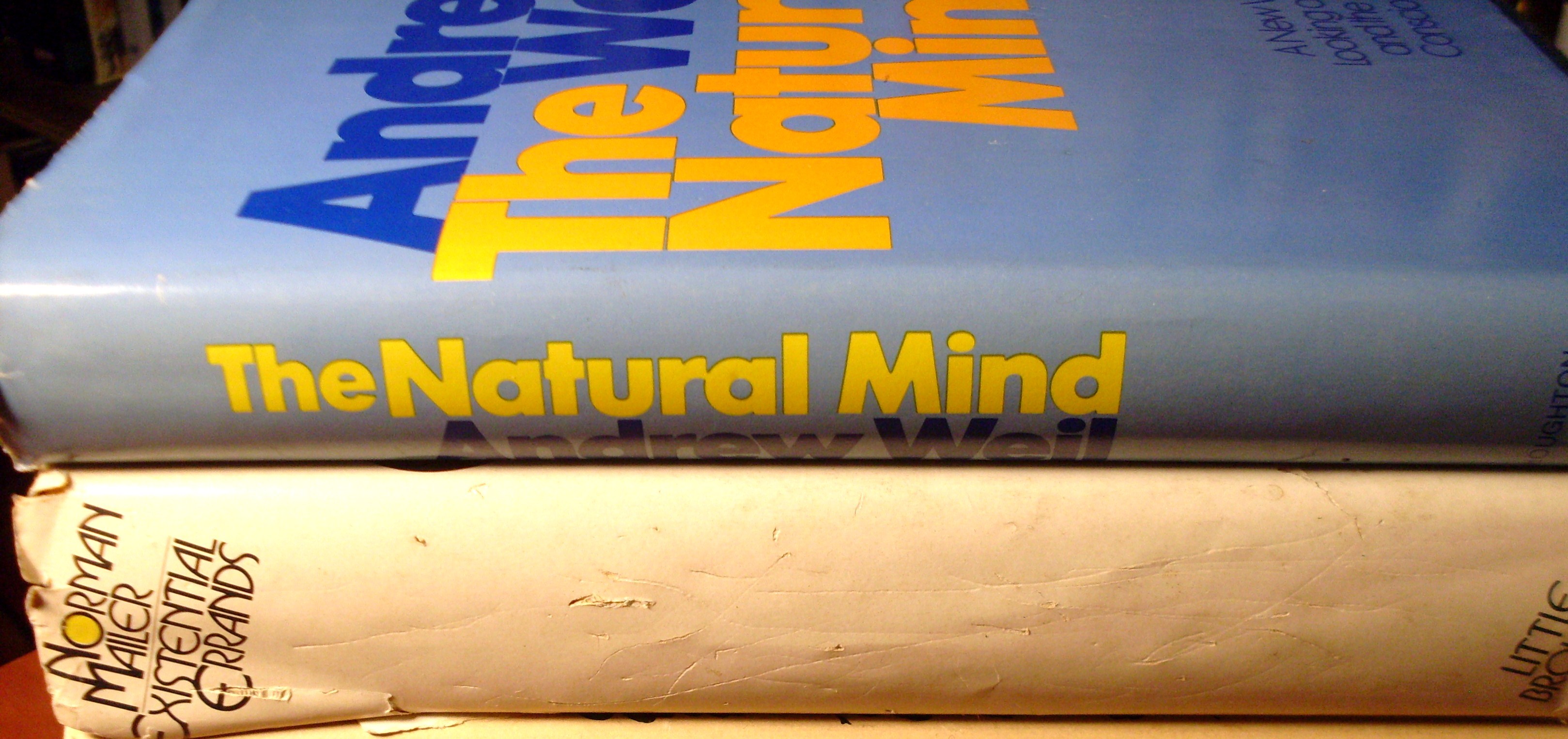
 I probably reviewed more books than I remember, but as far as I know, no B.A.D./ Boston Phoenix archives exist anymore for 1971 and most of 1972--at least, not online.  My bookshelves remind me of some, but I have clips of most of those I mentioned.  As book review editor, cutting out clips of reviews was part of my job as I conceived it.  I kept some of my own but mostly I clipped everybody's, to send to publishers of the books reviewed. This was especially important if I'd written or called to request review copies. This gave us credibility as a publication that regularly wrote about books and authors.  If nothing else, it probably encouraged publishers to send us more books. But it got their attention in another way, as I was to discover.

 I described the basic physical layout of the B.A.D., now Boston Phoenix offices, with the business side separated from the editorial side by the reception area.  This was more than a physical separation.  There was (in those days) something called The Wall between business (specifically advertising) and editorial. It meant that editorial did not take advertisers into account when deciding what to cover or print.  This protected editorial integrity, while giving the ad reps cover when advertisers were unhappy about something that appeared.  

But this didn’t stop certain efforts at persuasion, gentle or otherwise, from Barry M., the head of advertising sales.  Barry came to me with various ideas for things I should write about, basically because they were good for advertising. (Or things he was afraid we were going to write about that might be bad for advertising.) I listened to him, and though I got angry a few times, he was a genial guy and I basically saw it as a game we played, because I never accepted a single idea he offered.

 In addition to the regular weekly paper, which by mid- 1972 sometimes came in two sections (news and arts), we published occasional supplements on particular subjects.  The largest as I recall was the Music Supplement.  I wrote several pieces for those, including the article I had the most fun researching, on the iconic countercultural comedy group, Firesign Theatre. Their hilarious recorded narratives were filled with puns and countercultural references and themes.  This was at a time that shaggy strangers who were lined up to get into rock concerts might while away the time by combining to reproduce a Firesign Theatre scene from memory. At one point I had all four of its members on the phone for an interview, which was as funny and surreal as their albums. 

 Then I proposed a Book Supplement, which was approved.  But not by Barry.  He came to moan to me about how he couldn’t see how to sell ads for it.  There were two major publishers in town: Little, Brown, and Houghton-Mifflin, and lots of bookstores.  But how was he going to fill all those pages?  I didn’t know, I said, and I didn’t care.

 I edited our first books supplement in fall 1972 (November 28 issue.) Unfortunately I haven't yet found a complete copy if I have one somewhere. I did locate a couple of pages from it, with my essay on Philip Roth, about his complaint that American reality was more bizarre than anything a fiction writer could imagine, along with a review of his latest novel, The Breast. The piece was headlined "The Gripes of Roth," suggesting I'd learned something from John Leonard's amazing headlines in the Times Sunday Book Review.  The pages also have the beginning of Victor Burg's piece on the latest works of several Southern writers, including Flannery O'Connor's collected stories, Walker Percy's Love in the Ruins, Eudora Welty's The Optimist's Daughter and essays by Reynolds Price.  I met Victor at his day job of presiding over the Harvard Bookstore.  I believe there was another piece on Southern writers, by a  young woman who grew up in New Orleans and never written for publication before.

 A word about Walker Percy, who seems to be forgotten but was then a respected and in some ways seminal writer, and still deserves to be read.  Re-reading Love In the Ruins today, it first of all reminds me of two things: where I first heard of Early Times bourbon, and how apocalyptic those years were, the late 60s through the mid-70s, which he had projected into an alternative near future tale.  Walker portrays the extreme division in American life and  politics in terms that look very familiar today.  The breadth of those divisions was perhaps obscured by the most obvious cause: the still-ongoing war in southeast Asia. 
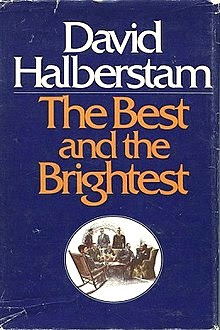
Speaking of which, this book supplement may also have been the occasion for a review of David Halberstam’s The Best and the Brightest, which suggested that hubris in high places was a chief cause for getting into Vietnam and staying there. There may well have been an interview with the author included. 

In any case this did appear, even if not in the book supplement.  I was part of the Halberstam interview, held in his room in the Ritz hotel, where major New York publishers liked to house their top authors when they visited Boston.  Halberstam’s speaking voice, even in conversation, was at once authoritative and intimate, almost conspiratorial. He had an easy yet urgent way of describing his books as if he was letting listeners in on amazing things he’d just discovered. His interviews were tremendous assets, evident in this one, for his first of many books. Any criticism of the Vietnam war was still controversial, but this book was an immediate success. By early 1973 it was the #1 Best Seller on the New York Times list.

I was also part of an interview at the Ritz with Jerzy Kosinski, who published probably his best novel, Being There in 1971, and The Devil Tree in 1973.  I’m guessing it was the occasion of a paperback edition of Being There in 1972.  He turned out to be an dazzling raconteur who had us mesmerized with bizarre but convincing tales, mostly about his own life in Poland, Europe and America.  This is something else that might have appeared in the supplement.

Some surviving notes indicate I prepared a number of short reviews and lists: Fred Barron wrote short reviews of books on film, Mike Baron on books on Tarzan, Wayne Biddle on fiction, Adrienne Rich and Liz Fenton on books by and about women.  

 In any case, while I was getting the final editorial copy ready for this first book supplement, Barry bolted through the Wall from advertising, showed up at my desk very excited.  The ads for the supplement were rolling in, including the first national ads he’d ever sold for books.  He wanted to know when we could do another one.

As I recall we also got good response from readers, including a letter on McGovern for President stationery from a professor of English at Northeastern who took out a subscription, not because of our (mostly my) positive coverage of the McGovern campaign (read on), but because of the writing in our book supplement. 

 I wrote on other subjects as well in 1972.  I did music concert features on T-Rex and Neil Young, stories on music artists who appeared at the summer series on Boston Common (including Arlo Guthrie, the aforementioned Bill Withers and the last concert appearance anywhere by Smokey Robinson with the Miracles) as well as at least one news story on the music biz. 

 But I also did arts section cover stories, including one on Buckminster Fuller and another on Dick Cavett.  The week that latter story was in the current issue, I got a disorienting jolt one night. I was watching Cavett and about to turn it off, when I saw the next guest was comedian Mort Sahl.  He entered carrying a copy of my Cavett story (“Does the Emmy Spell Cancellation for Cavett?” Spoiler alert: it did.)  Sahl then read a few lines from the story, and the camera focused on the newspaper, with my byline. So my name appeared on Dick Cavett, though without my person. (It turned out Sahl had a week’s engagement at a club in western Massachusetts, where he saw the paper.)

 I ended the year with a series of stories that appeared in the front section of the Boston Phoenix, all concerning the 1972 election campaign between incumbent Richard Nixon and Democratic nominee George McGovern.  For reasons lost to history, I was assigned—or perhaps just permitted—to cover McGovern’s day-long, early October campaign stop in Boston. 

It was a bleak moment in a baffling campaign year. The country was riven by the Vietnam War, and McGovern had a clear plan to end it immediately. Never very popular, Nixon was embroiled in scandal, especially with the first reporting on what came to be called Watergate.  But there was still considerable hostility towards the anti-war movement, and my generation in particular.   The polls—just beginning to be a force in American politics—showed Nixon overwhelmingly ahead. Yet McGovern was getting increasingly large and enthusiastic crowds at his rallies, and after the contentious convention the Democratic party seemed to be uniting behind him.  So I focused my story on how the McGovern campaign and the press covering it evaluated the candidate’s chances.

  Before I started, I spoke with Tim Crouse, who lived in Cambridge and whose pieces on the media covering this campaign that eventually became his classic book, The Boys on the Bus, had begun appearing in Rolling Stone. He suggested people to talk to for my story.

 With my press credentials, I got to the noon rally early and stole a quick interview with Senator Eugene McCarthy, one of the antiwar candidates in 1968.  I witnessed him meeting long-time Massachusett’s congressman and former Speaker of the House John McCormack.  I characterized this as the meeting of the Saint and the Pol.  “Should I genuflect?” I heard McCormack say, probably the best line in my story.  I talked with other campaign operatives, and eventually with campaign manager Frank Mankiewicz (an interview on the campaign bus to the airport) but I also spoke with various members of the press covering the campaign, in an enormous room full of tobacco smoke and typewriters at the Sheraton Plaza Hotel.

 At first I was just dazzled-- all these reporters from wire services and large newspapers across the country, pretty much all friendly and accessible.  When the most eminent of reporters entered—the New York Times columnist James “Scotty” Reston-- the waves parted before him.  He gave me a courtly nod, a kind of welcome to a newcomer, and maybe a blessing. 

As I reported in my piece, the traveling press saw a campaign that by traditional measures (crowd size and enthusiasm, party support and organization) looked like a winner.  I spoke with Connie Chung, then a young CBS News reporter attached to the campaign (smart, playful and more vibrantly beautiful than TV cameras ever captured), who also summed it up that way, and added: “Then I go back to Washington and they tell me he’s blowing it, look at the polls.” 

 I was also present when McGovern spoke to a small group of young people working for his campaign outside the hotel, and asked him a question or two as we shook hands there. 

My resulting piece was the front page lead.  When it was decided that it would be, I was summoned by editor Teddy Gross for a close edit session.  I learned more in that session than in years, before or after.  I had the same feeling a few other times over the decades, in particular with copy editors, but it was rare.  Reading now the five pieces I wrote over the next few weeks, this is clearly the best.

 It also happened to be published in Teddy Gross’ last issue as Editor.  Kerry Gruson, an associate editor for news, became the interim editor while a not very urgent search for a permanent replacement began.  Very early she said she would not take the job herself, a decision she came to regret.

 In the October 17 issue I had two pieces in the news section.  One was another piece on the McGovern campaign, when it came back to Boston for an evening fundraiser, a Gala which featured Hollywood stars (Tommy Smothers, Warren Beatty, Shirley McLaine) and political stars (Senator Ted Kennedy, the teenage Caroline Kennedy.)  Other politicians spoke as well-- they told jokes (as I noted in my piece) while the Hollywood stars made political speeches. 

Cassie Mackin
Again, I was an accepted citizen in the huge but this time mostly empty press room (where I ambushed Warren Beatty, evidently looking for NBC News reporter Cassie Mackin.  His answers to my questions were short, embarrassed and as useless as he meant them to be.) Later, during McGovern's speech, I stood in the press area near the front taking notes and looked over at the only other reporter who seemed to be doing the same--the aforementioned Cassie Mackin.  Tall, blond and outspoken, she was later targeted by the Nixon people and pretty much driven off the air.  She looked back at me and flashed a quick, incandescent smile. 

 Members of McGovern’s family were also at the gala, including his teenage daughter, Mary, who at some point ran past me in the company of a laughing Caroline Kennedy.  I ended my piece by re-stating the stakes of this election through these two teenage girls. Referring to McGovern’s dedication to transforming the political life of the country, I wrote: “One could not see Caroline Kennedy and not remember what that dedication means, and hope that the boy she was smiling at from the stage would at least be spared the killing and the dying, that Mary McGovern at least could be spared the further twisting of conscience, the frustration and the terrible absorption of energy that the war has brought to being young in America.”

 My second piece in that issue was a long exposition on the Nixon administration’s attempts to intimidate and control the press—efforts that would become even more obvious and effective in coming years.

 Along with the influence of polls, another new wrinkle in American politics was the role of television network projections of outcomes based on computer analyses. Computers had been used to predict vote totals as early as the 1952 presidential election, but even in 1960 they were treated as a novelty, a sideshow.  In 1972 they threatened to become a major factor. 

 I got a tip from someone—probably Mike Shain in New York, who couldn’t use the information himself—that NBC was planning for the possibility of announcing the presidential winner before the polls were closed in all the states. This had never happened. So I reported this in October 31 issue, along with reactions I solicited, from the ACLU for instance.  The response was divided.  Some saw it as a free speech issue, others as essentially disenfranchising western voters, and possibly affecting the election because the projections became self-fulfilling prophesy.

 This possibility was related to the overall danger that potential voters—especially potential McGovern voters-- would see all the coverage of the polls and then the projections, and become too discouraged to vote. They would simply give up hope.

 My pieces seemed to respond to the feeling I was picking up, even among the antiwar young, that either McGovern was insufficiently radical, or that no candidate who promised to immediately end the Vietnam war could win.  The McGovern campaign itself seemed to sense this, for in Boston and elsewhere they had the candidate stand under banners or behind a podium that said simply, “President McGovern.” Conceiving of the possibility seemed half the fight. (Erstwhile Yippies Jerry Rubin and Abbie Hoffman co-authored a paperback titled Vote! in which they tried to persuade their readership that McGovern was one of them, sort of.)

 On the front page of our last issue before Election Day, we confronted the doubts about voting for McGovern with two stories.  A short book had been published outlining how McGovern could surprise everyone and win, mostly because of a huge youth vote. It was excerpted, under a picture of the famous photograph of Harry Truman in 1948 holding up a newspaper proclaiming his defeat, the morning after he’d won.

   Under that began my story about the many reasons to vote against Nixon, including the corruption that had already been at least partially exposed by Woodward and Bernstein in Washington.  (McGovern himself had proclaimed the Nixon administration “the most corrupt in American history,” but no one listened to that, either.) 

 I spent election night as a reporter at McGovern headquarters. It was filled with anxious but noisy supporters and campaign workers early in the evening, as a few young staffers stared at numbers coming into their computer terminals, eventually rendered speechless. Indeed at least one network did project McGovern’s defeat well before California polls closed, and the room emptied out as if by magic.  Local politicians in particular disappeared.  Someone eventually came down to the lonely podium to thank the few shell-shocked campaign workers who were still around.  But the silence in that room was like nothing I’d experienced, despite the fact that McGovern had won Massachusetts.  Unfortunately, it was the only state he did win. 

J. Anthony Lukas
Some weeks later, when New York Times reporter Anthony Lukas came to town to report on why Massachusetts was the exception, he had dinner with Kerry Gruson and she brought me along (he knew Kerry through her father Sydney Gruson, a Times executive.)  Kerry gallantly suggested one factor in the Massachusetts vote might be my series of stories in the Boston Phoenix.
(This was the winter that men were wearing fur hats, and Lukas was particularly proud of his, because he got it in Russia. )

 In months to come, as the war in southeast Asia got even worse, and the Watergate hearings and later the Impeachment hearings gripped the nation, I had a locally popular bumper stickers slapped on my guitar case, which I took on all my plane trips.  It said: “Don’t Blame Me/I’m From Massachusetts.

 In 1972, the Boston Phoenix editorial staff was largely comprised of people in their twenties, most of them graduates of local colleges: principally Harvard (and Radcliffe), Brandeis and Boston University (BU). That was true of regular freelancers as well.  A slim majority were male, and I don’t recall a single person of color.

 I was friends with many of the people I worked with, including support staff.  We were part of each other’s social lives—we were swimming in the culture we were reporting, so I would often attend music events with Ben Gerson and others covering music, for example. We all went to movies together in various combinations.  Janet Maslin sometimes enlisted me to accompany her to movies she was reviewing, especially at theatres in a dodgy part of town. 

 I socialized most with those on the arts and entertainment side, but I did become friends with Kerry Gruson, before and after she became interim editor.  We had an odd moment that seemed significant when we both unexpectedly came back to the office after a weekend with dramatically shorter hair.    

 For reasons I don’t recall if I ever knew, Kerry invited me to Thanksgiving dinner at the house in Essex that she shared with her boyfriend at the time.  Her father was also coming, and in fact, they picked me up at my East Cambridge apartment for the hour or so drive to Essex.  They had a typical father-daughter moment on the way, when Sydney remarked on my Polish name and suggested his family might be Polish.  “We are not Polish,” Kerry said emphatically, in that “Oh, Dad” tone. 

 By the time we sat down to dinner at a long table, I was surprised to see that I was the only Phoenix staffer there.  As mentioned, Sydney Gruson was a New York Times executive.  He had been a reporter and distinguished foreign editor.  (His wife and Kerry’s mother, Florence Lewis, was also been a Times reporter in Europe.  What I don’t think I knew at the time was that 1972 was the year of their divorce.)  

Gloria Emerson
Because of Sydney’s presence, there were several Times reporters there, including Pulitzer Prize winners Gloria Emerson (who won hers for Vietnam reporting) and Anthony Lukas.  I mostly watched and listened. After dinner, I was packed into a car going back to Boston.  I was in the back seat, squeezed between Anthony Lukas and Gloria Emerson: the filling of a Pulitzer sandwich.  Lukas was so tight against me that when we turned to each other to converse, we were practically kissing.  On my other side Gloria soon fell asleep, with her head on my shoulder.

 But that somewhat out of body experience wasn’t the end of my day—I had another Thanksgiving dinner to attend that evening.  This one was hosted by Martha, the Phoenix receptionist.  She lived in my general neighborhood of East Cambridge with several housemates, and I’d been to their house several times.  I found myself again at a long table, this time with a few others from the Phoenix plus a number of others I knew and didn’t know.  This was a more relaxed and raucous group—at least I was more relaxed.  I found myself seated between two women I’d had at least flirtations with, and at one point was holding hands under the table with both at the same time.  A group of us ended up trooping off to a nearby blues club, after which I had just a short walk home.

My biggest problems with the Phoenix was in getting paid.  We had some real conflicts over both rates of payment and promptness.  But though I was the regular book columnist, and even filled in as music editor while Ben Gerson was away, I was essentially still a freelancers, and freelance writers were often treated poorly, and not just by this publication. 

 But then I got the chance for an actual weekly salary. I believe it was towards the end of the year that Steve Mindich offered me a job that had not previously existed.  The Phoenix was about to launch a redesign, and it would now regularly appear in two sections.  He offered me the new position of Managing Editor/Arts, with the Second Section as my responsibility.  The salary (which would cover my writing and continued tenure as Books Editor) was substantial: not only more than I had ever made (that would be easy) but more than my parents were making (though I didn't know it at the time.) 

 By the time I went back to Greensburg for a Christmas visit, I had accepted.  I would begin my new work in the new year—a year that turned out to hold more than one major change.

Saturday, October 21, 2023

History of My Reading: Cambridge Baptism 1970-1

Carol and me with kittens from Stuff's litter at our Cambridge apt.
I returned with Carol and company to Cambridge after my Cummington community experience in August 1970.  By this time Carol and her Knox College friends had moved into a summer sublet—probably more of a housesitting gig—on a quiet leafy side street at 13 Ellery St., apt.4.  It was about half a block from the central artery of Massachusetts Avenue, known colloquially as Mass Ave: a roughly 16 mile road that begins in Boston and defines the heart of Cambridge before heading onward past Somerville to Concord and the fabled Lexington Green, and beyond.  
13 Ellery St.

It wasn’t until I’d gone to college in the Midwest that I heard people give city directions in terms of north/south, east/west (cf. “Go north three blocks and turn west.”) In western Pennsylvania as in most of the northeast, cities were ordered by the borders of serpentine rivers and eccentric coastlines, as well as hills and ridges and valleys.  So while Cambridge is vaguely north of Boston, it is connected by Mass Ave in a way that defies the compass.  Orientation reverts to directions like left and right.

 So emerging from the tree-shadowed Ellery Street to busy, noisy Mass Ave puts Central Square (Cambridge) and Boston to your left, and Harvard Square a few long blocks to your right. While I was living there the rest of that summer, the first commercial building to the right on Mass Ave housed several businesses, including the F-Stop camera store, Cheap Thrills records, a music and musical instrument store, and the Orson Welles Cinema.  At the time I first saw it, the Welles was a single screen, so-called “repertory cinema” showing foreign and offbeat American movies. (It had a film school as well, though that was not immediately obvious to me.) 

Orson Welles at the Orson Welles
The Orson Welles intrigued me. I’d been increasingly interested in film and filmmaking. I had one film course at Iowa, and in my months at Buffalo I got to know film professor (and McLuhan pal) Gerald O’Grady.  I attended a number of his film classes, especially when they were showing movies.

 Carol had gotten interested in film, too, especially after she read The Film Director as Superstar by Joseph Gelmis, a collection of interviews (Kubrick, Bertolucci, Lindsay Anderson, Richard Lester, John Cassavettes and a very young Francis Ford Coppola, among others), a book I’d left with her when I was at Cummington.

 We emerged from one of our first movies there when I saw a familiar face in the lobby.  It was Steve Goldberg, formerly of Knox College, who turned out to be the theatre manager.  He remembered me, and in the course of our conversation, suggested I try writing for the local weekly paper called the Phoenix.  I laughed before I nodded an acknowledgement. I didn’t see where I would fit in. I knew nothing about Boston or Cambridge, and though I’d seen the Phoenix a few times, I still didn’t have a handle on it.  It was more seriously journalistic than an underground newspaper, but it wasn’t like a daily either. A few years later in his defining New Yorker piece, Calvin Trillin would describe the growing number of such journals as “sea-level” newspapers. Today, their descendants are usually lumped together as “alternative.” 

(As if meeting a former Knox student there wasn’t coincidence enough, I soon after walked into the music store next door to see behind the counter someone I’d known at Greensburg (PA) Central Catholic High School. Paul Lenart had been a year ahead of me, and had gone off to Columbia University on a football scholarship, which made him a subject of my envy since that was my aspirational and unaffordable first choice school.  But he’d been injured early on, lost his scholarship and was now a guitarist in a regionally popular band that sometimes played at Jack’s bar near Central Square, famous then for featuring Bonnie Raitt before she went national.  Eventually he sold me my next guitar.)

Pierrot Le Fou
I soon had my first immersive film experience, when the Welles programmed a Jean-Luc Godard festival, a bill of Godard double-features that changed every couple of days.  I got a discount ticket book and saw many of them, almost all for the first time (among them “Band of Outsiders,” “Alphaville,” “Contempt,” “Masculin Feminin,” and my favorite, “Pierrot le Fou” with Jean-Paul Belmondo and Anna Karina), eventually watching from the back row while drinking coffee and smoking Gauloise cigarettes.  Mass Ave and the Welles would turn out to be mainstays of my time in Cambridge and Boston.

 Past the Orson Welles, two particular wonders of Harvard Square awaited.  First, the bookstores.  There was one before the square, but more past the high brick walls of Harvard Yard that began the Square proper. Harvard Bookstore was right there on Mass Ave, shortly to be joined by its book annex, with hurt books and remainders.  Around the corner was the Grolier Bookshop, reputed to be a gathering place for poets, though I never experienced this.  It was one of the contacts that Robert Creeley wrote down for me.

 The huge Harvard Coop had a big book section. There were more bookstores on Brattle Street behind it, including one of my favorites, Reading International.  Across from there and below street level on Mt. Auburn St. was Passim, a bookstore during the day, and a music venue at night—it had formerly been Club 47, where Joan Baez first sang in concert, among many other luminaries of the folk revival 1960s.

 But bookstores weren’t the only sources of books.  There were two Ecology Action storefronts and a couple of other such organizations that collected and gave away surplus books, and since it was Cambridge, the quality was high.  I scored a mother lode of books at one such place on a memorable afternoon, and walked out embarrassed at my haul, but ecstatic.

 I was soon reading Henry Miller for the first time, and his rhapsodizing descriptions of Paris bookstores suggested that this might be my Paris. That feeling was reinforced by the cafes, some with outdoor seating, an anomaly in America at the time. There were not varieties of coffees available on every corner in the 70s, but in and around Harvard Square there were coffees closer to their foreign origins, such as the Turkish coffee in a dark café buried in a complex of shops.  

Harvard Sq 1970.  BK photo.
Soon I had a favorite place: the unpretentious Patisserie below street level on the section of Brattle Street that wound around to the left as you faced the Harvard Coop.  Its menu was modest but everything tasted great.  I loved especially their almond croissants. Its French coffee had a taste still unique in my experience.  It tasted blue, the equivalent of Gauloise smoke.  I was a frequent enough customer that the owner (who was Greek) knew me by sight, and remarked on how long it might have been since I was there last.

 The riches of the cafes included the newspapers left by patrons and strewn around, not only the Boston Globe and the counterculture and political papers but the New York Times and Washington Post.  There were magazines of all kinds from everywhere at several of the bookstores, with walls of them at the Out of Town News just outside the Harvard Square subway entrance.

 The cafes completed the mental ambience of the bookstores, and I felt as comfortable as I got, reading and writing in them. That extended to less exotic but still strange venues, like the ice cream place with the delicate 1890s wrought iron tables and chairs, and the Pewter Pot, which served a variety of muffins (very big in Boston) and 15 cent coffee in Pewter mugs.  I was reading and writing there once when I glanced up and saw a man passing quickly by the window, looking my way with a wistful half smile. I was sure it was the writer and actor Buck Henry. And it might have been, for this was Harvard Square, where I routinely saw Nobel Prize winners bicycling by.

 The apartment on Ellery Street was large and well kept, though mostly empty.  It was on the top floor, with easy access to the flat roof, where a lot of sunbathing had gone on all summer, and continued while I was there.  But with fall, the sublet was up, Carol’s friends returned to school, and we had to look for another place. 

Repainted and gentrified, 325 Columbia St.
now. First floor apt. was ours.
We clearly couldn’t afford anything so spacious in such a prime area, but we did find a large room at the front of a duplex in East Cambridge, at 325 Columbia Street. (According to a notebook, I found it by answering an ad in the Phoenix titled ISMAEL COME HOME.)  The street turned out to be a kind of local truck route, so the rumbling was fairly constant, but I eventually got used to it.

 We painted our room teal blue, with lighter blue around the sort-of bay windows.  We painted the living room in shades of sea green and violet. The previous tenants had left a lot of psychedelic posters, which I cut up and affixed to a wall in the narrow hallway as collages. (Through unforwarded mail and some detective work, I learned that this apartment had been the gathering place for poets and others in the antiwar movement, and that poet Denise Levertov had often been there. She confirmed this in an exchange of letters. We had met my senior year at Knox.) 

My Cambridge reading started there with authors unauthorized in my college lit classes.  Both Carol and I read Jack Kerouac, beginning with The Dharma Bums (in which a character based on Gary Snyder has a large role) and Big Sur, even before On the Road.

 I moved on to Henry Miller, whose style I found enthralling despite the sometimes questionable content: the novels Tropic of Cancer (my sun sign) and Tropic of Capricorn (Carol’s), his narrative nonfiction (The Air Conditioned Nightmare, The Colossus of Maroussi) and essays (The Books in My Life and The Wisdom of the Heart, in which he described his Zen-like approach to writing.)There was soon something of a Henry Miller boom in the 70s, and at the Orson Welles I saw an autobiographical film on him, and another on his compatriot Anais Nin (I also acquired and read some of her volumes of diary entries which were then popular.)

 I tried reading William Burroughs, whose theories of writing—especially his cut-up method—fascinated me, but I didn’t match up with his resulting fiction.  There were others, but I most recall Kerouac’s ecstatic discoveries as reflecting the flavor of those first few months for us on Columbia Street.

 I was still attracted to poetry with a surrealistic flavor. I read Robert Bly’s translations of Pablo Neruda, more of Bill Knott (who I’d encountered in New Haven) and a new poet, James Tate, who I heard read and met in Cambridge. (He had exasperated tales of trying to help Knott just get through life and empty the garbage.) I’d admired Jon Anderson’s first book of poems, Looking for Jonathan, in 1968, and now the harder edged Death and Friends in 1970.  

Gino Severini self-portrait
In the next months my reading expanded in different directions.  For example, I began seeking out books on the modern artists of the early twentieth century, from the Dadaists to those artists who clustered in Paris—Surrealists, Cubists, Futurists and more.  It was then I discovered the Italian Futurist Gino Severini—the only one of that group who lived in Paris and knew everyone from Picasso to Erik Satie. With the same last name as my mother, I learned he might have been a blood relative of my grandfather, but even if only a relative in imagination, he became a guide over the years. 

 At the same time I also discovered Dorothea Tanning, the only American and only woman enrolled in the Paris Surrealists.  She was a native of Galesburg, Illinois, and (as I later found) a Knox College student who preceded me (by several decades) as an editor of the college literary magazine.  My fascination with this place and period, which had begun with the expatriate writers like Joyce, Fitzgerald and Hemingway, brought me around through the painters to other writers, particularly the French poets Guillaume Apollinaire (another friend of Gino) and Paul Eluard. 

Thanks to the extensive collection of cheap art prints at the Harvard Coop department store (the large ones were a dollar), we had our own modern gallery (though the Vermeer in the living room—a print I still have—was the exception): a Magritte and Picassos in our room, a Max Ernst in the kitchen and a Paul Klee in the bathroom, which otherwise featured a large ceramic bathtub with a Moby Dick shower curtain but no shower, and an ancient pull-chain flush toilet.

 I continued reading about ecology, including Paul Shepard’s second anthology, Environ/Mental.  I don’t remember what precipitated it, but I began reading Buckminster Fuller obsessively.  The autobiographical sections in Ideas and Integrities grabbed me—his despair at his lack of worldly success and acceptance of his ideas that drove him to the edge of Lake Michigan, contemplating suicide.  That resonated.  But even navigating his strange vocabulary I saw him as literally a sailor (he’d served in the Navy) who knew what he was talking about with his concept of Spaceship Earth—that all we needed to live was aboard, but we were limited mostly to what was on the ship. 

 Fuller’s concept of an “anticipatory design science” made a lot of sense, even if I couldn’t follow all his proposals. A few years later I attended one of his improvised lectures at M.I.T., and saw him up close as I joined a cluster around him afterwards to hear more.

 I got hold of a new anthology for students called Worlds in the Making, which related ecology to the future.  I was already looking at the future as a subject, and even collected these strange paperbacks that came out every year in the early 70s, with professional psychics (a lot of them from Florida) who predicted events of the coming year.  There were always several predictions that Fidel Castro would be assassinated.  Years later, when the CIA plots to kill Castro were exposed (including one involving an exploding cigar), it seemed that these were less seers than spooks, or at least they knew some. Fidel probably outlived them all.

 Carol and I were also reading ostensibly more serious books in the psychedelic/countercultural vein, including on astrology, and we got our charts done (I’ve lost mine but I still have Carol’s.) I was nervously consulting the I Ching, which never quite assuaged my frustrations at my lack of worldly progress, probably not the best attitude.

 And we were surrounded by lots and lots of music. For awhile we didn’t have any at home, but Carol made a trip back to Chicago and shipped more of her belongings to Columbia Street, including the component stereo she’d had at Knox. By the end of 1970, the Beatles breakup led to an efflorescence of new albums: McCartney’s solo album (which we had from the previous spring), Lennon and Ono’s separate Plastic Ono Band albums, Ringo’s “Sentimental Journey” and “Beaucoups of Blues,” and George Harrison’s triple album, “All Things Must Pass.” The flood continued in 1971 with “Ram” (McCartney), “Imagine” (Lennon) and the multi-disk live album from Harrison’s all-star concert for Bangla Desh, the first such charity event. 

J.T. & Carole King
James Taylor was a kind of favorite son in Boston, and the “Sweet Baby James” album that made him a star was played everywhere.  “After the Goldrush” also came out in 1970, and began my Neil Young obsession.  Carol and I had to be selective in the concerts we attended, but we did see Neil Young play in Boston, and caught a concert in the now legendary James Taylor and Carole King tour.  The strangest concert I remember we attended was when Poco opened for the Moody Blues. We went to hear Poco, assuming the Boston crowd was there for the psychedelic Moody Blues.  But Poco blew that audience away, and nobody much was in the mood for the Moody heaviness afterwards.

 There were also free concerts, including a few in the Cambridge Common, just beyond Harvard Square.  Carol and I heard the distant music one Sunday in Harvard Square and walked over there.  We passed a smiling young woman coming the other way and asked her who was playing.  “It’s a beautiful day,” she said.  We agreed, it was a beautiful, sunny day.  But who was playing?  She laughed.  “It’s A Beautiful Day.”  Yes, there was such a group—I remember staring stoned at their album cover a few years before in Galesburg. 

The ex-Beatles releases, the back-and-forth accusation songs of Lennon and McCartney, and John and Yoko’s events and interviews were widely discussed in the pages of Rolling Stone and other music papers as well as the Boston area weeklies, and among people we met.  Lennon’s first album and Neil Young’s “Goldrush” in particular grabbed me and didn’t let go for years.  But Carol and I also listened alot to John Phillips’ (of the Mamas and Papas) solo album, even though the music media dismissed it. I don’t think I ever quite convinced her of the brilliance of the Bee Gees though, even if I played their “Odessa” double album too often. 


In a new relationship and a home of our own, and with the stimulations of my Cambridge baptism, I was bursting with creative expressions.  I wrote in every form from verse to polemic.  I was writing songs at a furious clip, enlisting Carol to add bits of gentle percussion to tapes I made of them, at first just to not forget what I’d written.

  Inspired by Dadaist Kurt Schwitters, I resumed constructing collages, as did Carol.  I briefly continued my Cummington experimentations with painting.  And I devised and physically made a board game—the Cambridge Conspiracy Game.  It was arranged like a Monopoly board but with Cambridge sites. Its purpose however was as a kind of anti-Monopoly. The object was not competition.  The only way to win was for players to cooperate.  Everybody won, or everybody lost.

In the beginning we led a kind of John and Yoko existence--both of us taking photos, making artworks, collaborating on music.  We explored Cambridge and Boston, but we also spent a lot of time in our blue room, and in our neighborhood. Columbia Street extended down from Mass Ave on the Boston side edge of Central Square a considerable distance before it got to us. Our building was a bit run down, and so was the immediate neighborhood. It was not fashionable or even recognizably Cambridge. It evidently had been Irish and (a bit further on) Italian, but was now mostly Portuguese. 

  We shopped for major groceries at the Purity Supreme supermarket in Central Square, but we also explored the shops in Inman Square: a walk down Columbia St. for a long block in the opposite direction from Mass Ave, and then the streets to the left that eventually led to the Harvard Square area.

  My impression was that Inman Square had once been the Italian area, and there was a very good but decently priced Italian restaurant there, that we could afford occasionally. There was also an authentic German bakery, and a large deli restaurant called S&S, that is apparently still there.

Inman Sq. early 1970s
 There was an old fashioned 5&10 next to a small grocery that sold $1 bottles of French Bordeaux wine (vin ordinaire in Paris), not far from a blues club. Legal Seafoods was the Cambridge choice for fresh seafood. We took our clothes to the Laundromat in Inman Square, where each washer and dryer had an individual name inscribed on it.  If we wanted to leave while our clothes were still in process, the Italian who owned it would watch over them, and we might come back to see them folded and waiting for us.

 This end of Cambridge was noisy and sooty, as urban a place as I’d ever lived. But we also belonged to a co-op that every week delivered organic vegetables from nearby farms (in the revolution talk of the day, it was called the Food Conspiracy.)  We also were asked to work in the fields periodically, which I remember doing once.  For awhile Carol and I tried the brown rice diet recommended by John and Yoko, so we wouldn’t be “sampaku” (supposedly you were if there was white all around your eyeballs, and it wasn’t a good sign.)  We gave that up pretty quickly, and I wrote a song about it. 

 I extended my ecology commitments to the household, perhaps a little too much (a succession of housemates weren’t thrilled.) But I was motivated to do kitchen cleanup and some of the cooking.  Carol made amazing Irish stew I still remember.

 Early on we added a tricolor kitten to the household, a female we named Stuff, on the theory that cats respond to sibilants when called. Soon Carol adopted a young stray, a black male we called Muk (I think as a reference to milk, which he loved.)  However, we failed to monitor their maturation, and soon we had a pregnant Stuff.

  One day I awoke to find that Carol and our housemate Andrea had panicked when they thought Stuff wasn’t delivering properly, and had rushed her to the vet who said she was fine, but that adventure caused Stuff’s labor to stop.  We had to take her back to induce birth, and by then I was the only one with the nerve to be present for the actual births.  Stuff had six kittens of various hues and combinations, including a silver gray male.  We decided to keep him, and named him Gray.  Those three cats—Stuff, Muk and Gray-- would be under my care for the next twenty years.

 All this may sound idyllic but of course it wasn’t quite. We both had demons to work through, and after the initial overriding bliss, we had each other to get used to.  Neither of us had anything but vague direction, and so along with the freedom of exploration, we had anxieties.  Plus the complications of family pressures, housemates, and a few neighborhood and apartment problems, etc. But complications is all they were. We had what Carol would later describe as a good little life.  

Carol started out working as a waitress at the counter of the Brigham’s ice cream shop in Central Square, which was also a kind of luncheonette, with coffee, sandwiches, etc. She wore a light brown uniform and dispensed “frappes” (Bostonese for milk shakes) and ice cream cones with “Jimmies” (sprinkles) on top. She soon figured out how to sneak me almost free meals.  She thought the manager didn’t notice, but it turned out he did, and didn’t care. 

 The main Cambridge post office building was nearby, and it may have been an employee having lunch at Brigham’s that alerted Carol to job openings at that post office. She took the Civil Service exam and was quickly hired, perhaps as a temporary for the Christmas season rush, but she was kept on afterwards.  To my surprise she liked it there, especially her co-workers, and she visibly began to open up again to the outside world.

 I “took in” typing, edited and rewrote graduate school papers, and had temp jobs, such as working in college bookstores during textbook rush or doing inventory, and painting the vast interior of a former Harvard eating club preparing to become a restaurant, Grendel’s Den on Winthrop St. and across Brattle from my Patisserie, near Harvard Square. It’s still there.  (Though I thought I did good work on those walls and ceilings, I was fired for insubordination, for sticking up for a colleague being bullied. He probably thought I was a dope for doing so.) 

hawker later in 70s (not me)
I eventually added a weekly gig as a “hawker,” selling one or both of the counterculture papers on a street corner (in my case, at Prospect and Mass Ave at Central Square in Cambridge.) By then—probably early 1971—the Cambridge-based Phoenix had been joined by Boston After Dark, which had started out as a tabloid of mostly entertainment listings and stories, but by then had expanded to a full weekly newspaper, with news and arts coverage.

 Unlike most alternative weeklies since, these papers weren’t given away, but sold. Both had gained initial circulation with free classified ads, personals mostly.  The next attraction was coverage of the kinds of arts and entertainment that appealed to young readers, including the hordes of college students at the many colleges and universities in the Boston area.  The writers were also young, and spoke the same language, unlike the stodgy dailies.  That applied to the cultural and political coverage and point of view of news stories.  There was a huge potential readership that had nowhere else to go locally.

 For some reason lost to history, I gravitated towards selling Boston After Dark.  I took the T (Boston area’s subway/light rail system, which Carol likened to amusement park rides) to the Boston printing plant, picked up and paid for the number of papers I was gambling I could sell, and transited back to my Cambridge corner.

 There were a lot of hawkers.  Every corner in and near Harvard Square was taken, and often enough, one or two of the corners near me in Central Square were also claimed. There were occasional turf wars, but generally hawkers respected the claims of regulars.   Where I was, the clientele came mainly from surrounding office buildings, usually at lunchtimes.  My best customers were young women from those offices, who bought their copy from me with their friends watching from the floors above.  

 Since I didn’t always sell them all, I had lots of opportunities to read what was in them.  I read the Phoenix as well. Meanwhile, I fantasized my own publication, complete with articles I’d like to see in it. Eventually the light bulb went off, and I realized I might pitch these existing publications with those ideas.  That took a surprisingly long time.

 I was always sending things out, poems and stories but increasingly also reviews and articles.  I had my first acceptance in Rolling Stone, with an unsolicited review of the book, A Child’s Garden of Verses for the Revolution, by my erstwhile teacher and correspondent, William Eastlake. I did a piece on Henry Miller accepted by a west coast publication called Organ.  The editor liked it, and agreed to assign a piece on Buckminster Fuller.  I think the magazine folded before it could be published, but I did get paid. 

I’ve found the notebook from this time which contains my first draft of a long poem called “Ears.”  I remember it as inspired by a Kenneth Koch poem on the theme of eyes that I heard him read, but I can’t locate that poem and don’t remember where the reading was. A version of “Ears” as well as several other poems and a prose piece of impressions of Cambridge, appeared in a one-off publication called Words Cambridge in spring 1971.  The people who appeared in it put the publication together, assembling and binding it in the offices of the Orson Welles cinema.  Another version of “Ears” would appear at the end of the year in a more professionally produced though also short-lived literary magazine, Cotelydon. 

Carol 1968 at Knox. Bill Thompson photo.
Both Carol and I had various physical complaints that sent us for tests at the Cambridge hospital and especially to Massachusetts General, which because it was a teaching hospital, was more open to doing tests for people who couldn’t otherwise pay for them, as long as students could observe or participate.  My tests proved inconclusive.  The best advice I got was “drink more water.”

 So I was not unduly concerned when Carol went for tests at Mass General, after my repeated urging. Her health had always been somewhat shaky, but there had been two recent incidents in which she’d been overcome by fatigue.  We’d attended a screening at the Orson Welles and met the filmmaker Stan Vanderbeek, who was about to show one of his films beamed by multiple projectors onto the inner dome of a building—the Moviedrome at Stony Point in New York state.  The audience would be lying on the floor looking up.  The film would last for several hours—a truly immersive experience.  We signed up for the bus to go, but when the day approached Carol suddenly felt extremely tired, so we cancelled.

 Another wave of fatigue prevented us from meeting up with some Knox friends.  We were literally out our front door when she said she had to go back.  The prospect of a long bus ride to the Moviedrome had been daunting, but this outing was not going to be so strenuous.  It seemed more serious.  

 I was back in our room when she returned from her visit to Mass General.  I asked her what the doctor said.  She brought up something else that had us both laughing.  Then I asked her again what the doctor said.  She suddenly burst into tears.  

 After initial tests she had been sent to a doctor in the hospital who diagnosed her with what was then called Hodgkin’s Disease (now Hodgkins lymphoma.)  Through her tears, and fear that she would die, she provided what turned out to be an accurate account of what the doctor said (I’ve unfortunately forgotten his name.)  

The diagnosis was serious, he said, but the good news was a new treatment that had excellent results, available at only two hospitals in the U.S.: Stanford and Massachusetts General.  It involved removing the spleen, followed by two rounds of treatments, some combination of radiation and chemotherapy. Because they'd caught it at an early stage, after that she should be fine. 

 She repeated the words but did not seem to believe them until I repeated them back to her. Part of her despair resulted from a stop at a library or bookstore on the way home where she read that the disease was usually fatal. But soon she accepted the assurances she brought back from her doctor. Later I did what research I could, which confirmed what she’d been told.

 In the early 1970s, it seemed most cancers were mysterious and fatal. Not many years before that, the word “cancer” was not even uttered in polite company (comedian Billy Crystal had a routine that reflected this.)  I was becoming a little familiar with the radiation and chemotherapy treatments because my mother had recently undergone some, and would undergo more, after Carol completed hers. But I wasn’t around for most of my mother’s, and my parents were generally secretive about such things, so I was somewhere between discreet (not wanting to embarrass my mother) and frightened. It was very different with Carol.

Outside our Columbia St. apt. we each took
a photo of the other
 I was there with her completely, every moment, every step. I was at the hospital for her spleen removal operation, and her initial treatments. Sometimes, instead of remaining in the waiting room, I would spend the estimated time outside on Boston Common before returning.  Carol waited her turn in an area reserved for patients, where she befriended a few regulars also waiting for their treatments, and heard their stories.  Some had much less hopeful prospects.  Later, when she felt stronger and self-reliance was important to her, she bolstered her confidence by going to the treatments on her own. She found her courage, partly in making it ordinary.

  At home, I took care of her as best I could.  We talked about everything involved, what she thought and how she felt, and I tended, however watchfully, to follow her lead.  She needed to comprehend and cope with what was happening to her.  A part of her body was cut out, and the rest of it subjected to the damage (including to her beautiful hair) caused by radiation and chemicals, as well as the eventual healing. 

 I could also offer a different perspective.   “You felt your body broken,” begins a poem I wrote to her, “but I saw it whole/with such/ joy at its aliveness/its softness and beauty/that the tubes hanging out/were proof only/that your loveliness/was present/transcendent…” 

 She wanted above all to be not sick, so we tried to keep things as normal as possible. She had taken up knitting, as did her friends at the hospital, to pass the time before and after treatments.  She knitted at home as well, including a six foot long, blue and green scarf for me—not often very practical (except for Doctor Who conventions) but beautiful.  I still display it. When effects of the treatments accumulated, we watched a lot of TV on our small black and white set, and she began painting, as well as making rude sculptures out of play dough.  

Carol on one of our visits to Cape Cod. BK photo

The cats helped, particularly the kittens while we had them (we placed them in other homes when they were old enough. Stuff had a second litter of four, all black.)  I recall sitting in our armchair reading, while several of the kittens chased each other, up one of my arms and down the other.

 Looking back through our earlier correspondence, a pattern of precedent emerged from the previous year—particularly Carol’s series of inexplicable fevers and fatigue.  She had been hospitalized in Galesburg months before I arrived, and one of the reasons she didn’t want to go back was her fear that she would die there.

 Over the years I’ve wondered what fate led us to Boston, where this disease could be treated.  Though the treatments themselves had serious medical consequences for her years later (they are no longer done in the same way), and both the disease and the treatments may have led to her final illness, she nevertheless had another fifty years of what might even be characterized as a fabulous life.

  Jeremy Gladstone visited us in Cambridge, on his way back to Europe (he didn't finish his dinner with us because he was "shrinking his stomach" in preparation for being on the road.)  He and Carol had a previous relationship (they’d lived together in the same house in Galesburg and the same rooms as I had the year before) and they remained friends.  They corresponded when he was in Lausanne, in French-speaking Switzerland.  He assured her that she could teach English there, and urged her to at least make a long visit. Carol was intrigued, and having the goal of a European trip helped her through her treatments.  

In the fall of 1971 I finally sent an article to Boston After Dark, with a letter inquiring about writing book reviews. The associate arts editor Jake Kugel wrote back, said he liked the article but couldn’t use it, and suggested I come in to the office to see what books they had that they wanted reviewed.  I did, and came away with at least one.  But before my first review was due, it was announced that the Chilean poet Pablo Neruda would receive the 1971 Nobel Prize in Literature.  I dashed off an article about him and sent it to Kugel.  It was published in early November.

 By the end of the year I’d published two book reviews (including one of Sylvia Plath’s novel The Bell Jar) and an article on Norman Mailer in Boston After Dark.  Meanwhile, I was in touch with Dave Marsh, editor of the Detroit-based magazine Creem (actually, their address was Walled Lake, Michigan.) Though the now-legendary Creem was mostly a rock music magazine, it published more. I may have published a review of The Greening of America there, but the first I recall of a flurry of pieces for Creem—a review of the movie “Omega Man” starring Charleston Heston—appeared in December. 

 Suddenly the apparently random aspects of my life seemed to be coalescing in these opportunities—the aimless observations of counterculture in Boulder and Berkeley, the seemingly wasted hours watching movies, listening to the latest music and discussing it all in perilous detail, and the instinctive reading and cultural curiosity, as well as the years of unread writing, of absorbing and searching for forms and expression.

 Now I was suddenly getting published regularly and meeting new people, especially at Boston After Dark.  But Carol still felt intimidated by what she perceived of that world, which was becoming my world.  And then she felt well enough, and it came time for the dream of Europe to become real.

  I went with her to Logan airport and saw her off for her first trip to England, Greece and France (sending me a pile of postcards) before settling in Switzerland.  She worked part time while taking French courses every morning, and she learned to drive.  Eventually, true to Jeremy's prediction, she  was hired as an English teacher in Lausanne.  She came back for visits and follow-ups at Mass General a couple of times.  At the end of one of these visits of several weeks (including a trip to see her parents in Chicago), I put her on the train to New York, where she would get a direct flight to Switzerland. But before the train left I impulsively bought myself a ticket to New York (it was all of $10 then) and joined her, intending to return on the next train back.  On the way she decided to stay longer, so we spent a few days in New York (hosted by Michael Shain) and Cambridge and again in New York, before she flew back to Europe.

 I have many blue airmail letters from those first years she was in Switzerland.  Early on, there was some thought of my joining her there or in England, but as my involvement in Boston increased and her attraction and commitment to Europe solidified, those thoughts faded.  Years passed, and eventually she wrote that she was getting married to someone she met there. I could only wish her well.  I didn’t hear from her for many years shortly after that. It was clear that she blossomed in Europe, just as we both suspected she would not be fulfilled if she stayed.   Our roads and our lives diverged. But we always had Cambridge.